At a Glance: Arabic songs for kids can make letters, numbers, colors, animals, food, greetings, and daily routines easier to hear and remember. Start with one short song, listen together, repeat only a few words, then use those words during play or a normal family routine. The 15 suggestions below remain in the same order as the current article.
Some days, a child will sing one chorus for an hour and completely ignore the careful vocabulary game you planned. That is not a failed lesson. It is often the moment the language starts to feel familiar. Arabic songs for kids give children repeated sounds, useful words, and a reason to join in without feeling tested.
This collection brings together 15 Arabic children’s songs about the Arabic alphabet, counting, family, routines, animals, colors, jobs, food, the body, seasons, and celebrations. The songs work well for young beginners, but older children can also use them to review vocabulary and improve listening.
You do not need to explain every lyric. Pick one or two words, sing along badly if necessary, point, move, laugh, and return to the same song another day. That small amount of repetition is usually more useful than turning the song into a quiz.
Why Songs Can Help Children Learn Arabic
Songs combine sound, rhythm, repetition, and meaning. The American Speech-Language-Hearing Association recommends music and singing as enjoyable ways to introduce another language and suggests talking about lyrics and bringing music into play.
Singing also gives children a low-pressure chance to copy Arabic sounds before they are ready to speak in full sentences. The National Association for the Education of Young Children encourages families to notice new words in songs, discuss what they mean, and connect music to movement and homemade instruments.
How to Use Arabic Kids Songs Without Turning Them into Homework
- Preview the song first. Check the language variety, pace, visuals, and whether the content suits your child.
- Listen once for enjoyment. Let your child watch, move, or simply listen without questions.
- Choose two or three words. Repeat only the easiest or most useful words from the song.
- Add an action. Clap, count toys, point to body parts, sort colors, or act out a routine.
- Bring one word into real life. Use it at breakfast, while getting dressed, during play, or on a walk.
For a wider home routine, see How to Teach Arabic to Your Kids at Home.
Essential Arabic Songs for Beginners (Ages 3–6)
Children in their early stages need simplicity and slow rhythms. This is why it is recommended to start with short and repetitive songs that enable them to pick up new words easily with no harm.
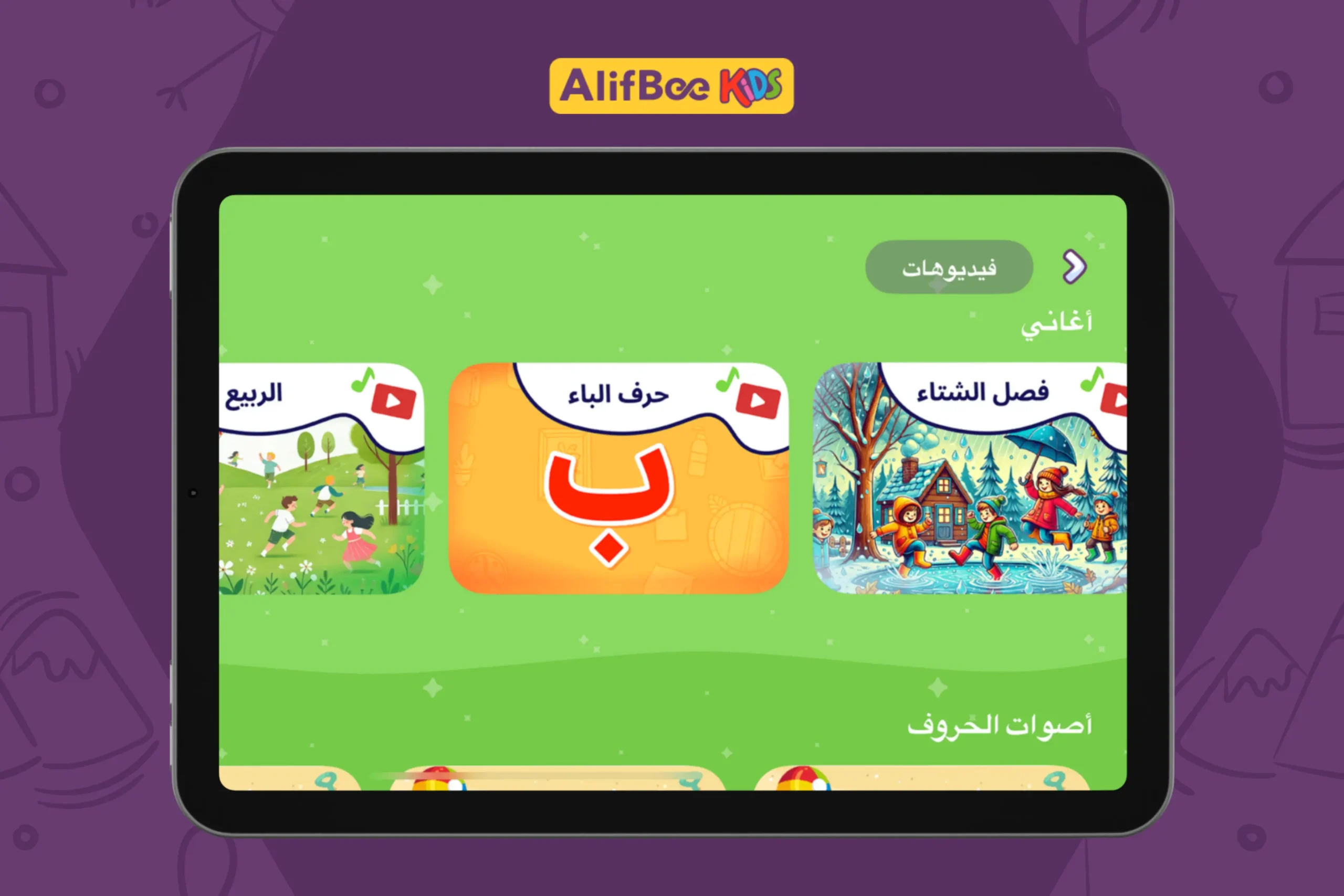
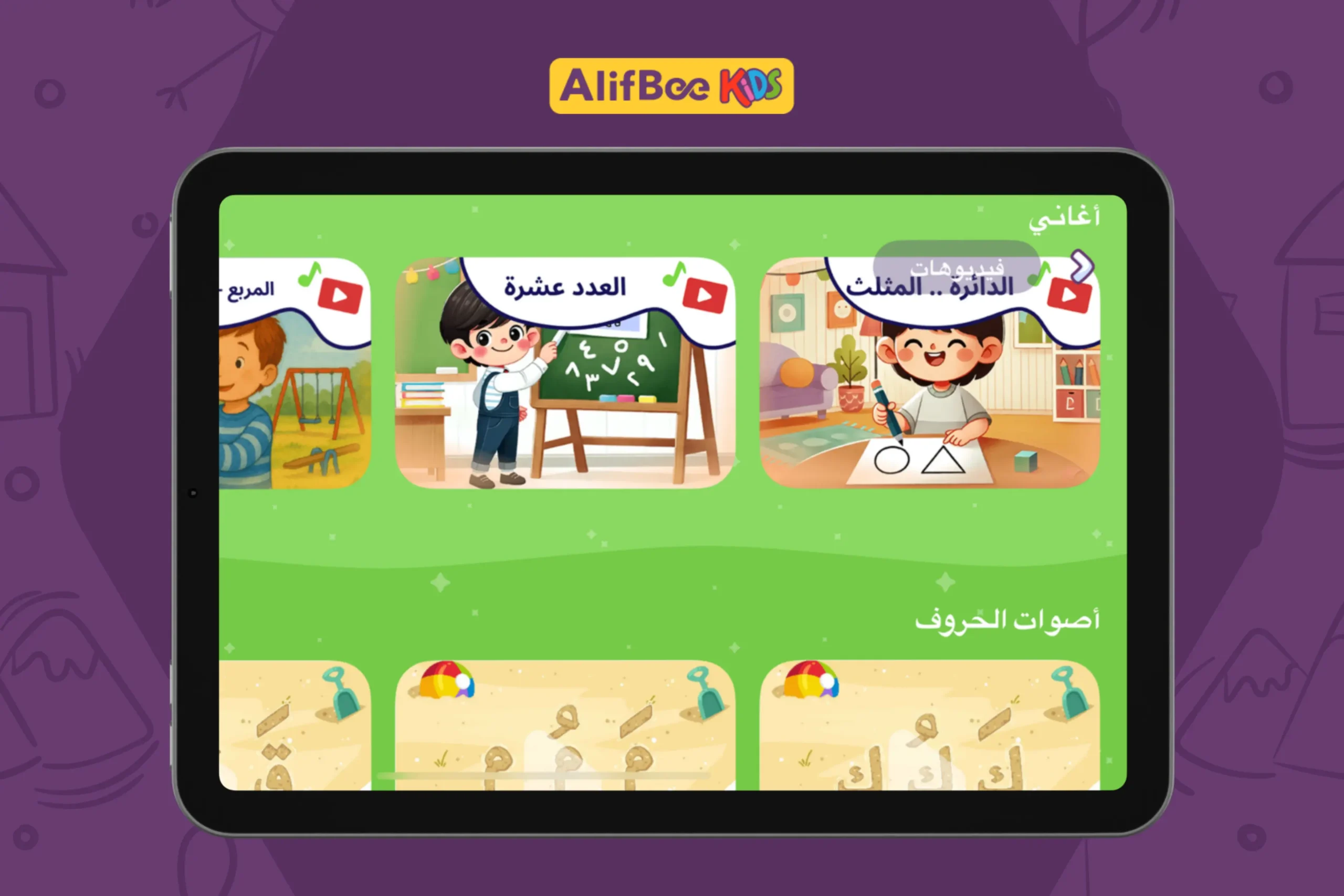
AlifBee Kids offers a wide range of educational songs that teach kids about math, seasons, jobs, transportation, the Arabic Alphabet, family and a lot more.
There are also many songs and nursery rhymes with simple lyrics that have useful topics for kids in this age period, such as the Arabic Alphabet, Numbers, family and daily routine, Animals, greetings and colors.
Check the following list we have compiled:
Arabic Songs for Beginners: Letters and Numbers
1. Arabic Alphabet
An Arabic alphabet song is one of the easiest entry points for a complete beginner. Children hear the letter names in a fixed sequence, and the melody gives them a pattern to return to. Do not worry if your child only joins in for the final few letters at first. Familiarity comes before confident recall.
After the song, choose one letter and find it in a book, on a poster, or in the Arabic alphabet worksheets for kids.
2. Arabic Numbers 1 - 10
Counting songs are naturally repetitive, which makes them useful for toddlers, preschoolers, and older beginners. Let your child count fingers, steps, blocks, or snack pieces while listening. A child who is not ready to sing may still point or hold up the correct number.
Continue the practice with Arabic Numbers for Kids, which adds pronunciation, number recognition, and simple games.
Songs About Family and Daily Routines
3. Family in Arabic
Family words have an immediate emotional connection. As the song plays, point to family photos or ask your child to choose the person being mentioned. This turns a vocabulary list into something personal and easier to remember. A simple follow-up is to make a tiny family album and label one new person each week.
4. Morning Routine
Routine songs help children connect Arabic with actions they already know: waking up, washing, brushing, dressing, eating, and leaving the house. Play this song at the same point in the morning for a few days, then pause before one familiar word and see whether your child fills it in. Keep the tone playful. A rushed school morning is not the best time for correction.
5. Animals
Animal songs are popular because children can imitate sounds and movements even before they remember the Arabic names. Ask your child to hop, crawl, roar, or point to the correct picture. Movement gives the new word a clear meaning without translation.
You can extend the theme with the animal section in 100 Arabic Words Every Child Should Learn First.
6. Greetings
A greetings song gives children language they can use immediately. Practice one greeting at the start of the day and one farewell at bedtime or when leaving the house. Real use matters more than memorizing every line. Parents who do not speak much Arabic can learn the short phrases alongside their child.
7. Colors
Color songs work best when the child can see the color at the same time. Place crayons, blocks, socks, or toy cars nearby and ask your child to hold up the matching item. Begin with two or three colors instead of trying to cover the full rainbow in one sitting.
For pronunciation and games, link the song to Colors in Arabic for Kids.
Educational Arabic Songs for Wider Vocabulary (Ages 6–10)
A professions song introduces words that are harder to demonstrate with objects at home. Pictures and role-play help. After listening, choose one job and pretend to do it: a doctor checks a toy, a teacher reads a book, or a chef prepares an imaginary meal. One role is enough. The aim is to give the word a story, not to test the entire song.
8. Professions and Jobs
Arabic Songs About Food
9. Vegetables songs from AlifBee Kids
Use the vegetables song before a meal, while unpacking groceries, or during pretend play. Let your child match one real vegetable or picture to the word they hear. Food vocabulary tends to stay useful because it returns again and again in family life. Even a child who refuses the vegetable may happily learn its name.
10. Fruit Song in Arabic
Fruit offers color, shape, taste, and smell, so it is easy to turn the song into a small sensory activity. Put two fruits on the table, say their names, and let your child choose one. Later, ask which fruit appeared in the song.
The Fruits in Arabic for Kids guide gives more vocabulary and child-friendly practice ideas.
11. My Lunch Box
This song brings several food words into one familiar setting. Try it while packing a lunch box or preparing a snack. Ask your child to name, point to, or choose one item. If they answer in English, repeat the Arabic word naturally rather than stopping the activity. The small correction is enough.
Songs About the Body, Seasons, and Culture
12 - 13. Human Organs
Keep the two current human-organ songs in their existing order. Body vocabulary becomes much easier when children can point, touch, bend, and move. With younger children, focus on visible body parts first. With older children, the songs can introduce simple internal organs and their basic functions.
For an offline follow-up, use the pointing and mirror games in Body Parts in Arabic for Kids.
14. Four Seasons
A seasons song connects weather, clothes, nature, and yearly routines. Pause after each season and ask one simple question: What do we wear? What happens outside? Which season do you like? Children can answer with a picture, gesture, or one word. The conversation matters more than a complete sentence.
15. Song about Celebrations and Cultural Holidays
Songs about celebrations introduce cultural vocabulary in a warm, memorable context. Before playing the song, briefly explain the occasion and any family tradition your child already knows. Afterward, invite them to draw a card, choose a favorite image, or tell you what people do during the celebration. Preview the lyrics so you can explain unfamiliar cultural references in an age-appropriate way.
How to Choose the Best Arabic Songs for Toddlers and Older Kids
- For toddlers and preschoolers: choose short songs, clear voices, repeated phrases, visible actions, and familiar topics such as animals, family, colors, and routines.
- For ages 6 and above: add songs with longer phrases, stories, jobs, food groups, seasons, and cultural themes.
- For Arabic beginners: prefer a slower pace and Modern Standard Arabic when the goal is broad comprehension, while also allowing dialect songs that reflect your family and community.
- For bilingual children: repeat the same song across several days and use one or two words outside the song.
- For video content: preview it, avoid autoplay when possible, and watch together with younger children.
The American Academy of Pediatrics’ parent guidance emphasizes the value of co-viewing media so adults can help children understand and connect what they see to real life. For more balance ideas, read Can Screen Time for Kids Be Good?.
Where to Find More Arabic Songs for Children
Parents and teachers often need a reliable place to return to, rather than a new random video every day. Preview each source and choose the language variety, pace, and values that fit your child.
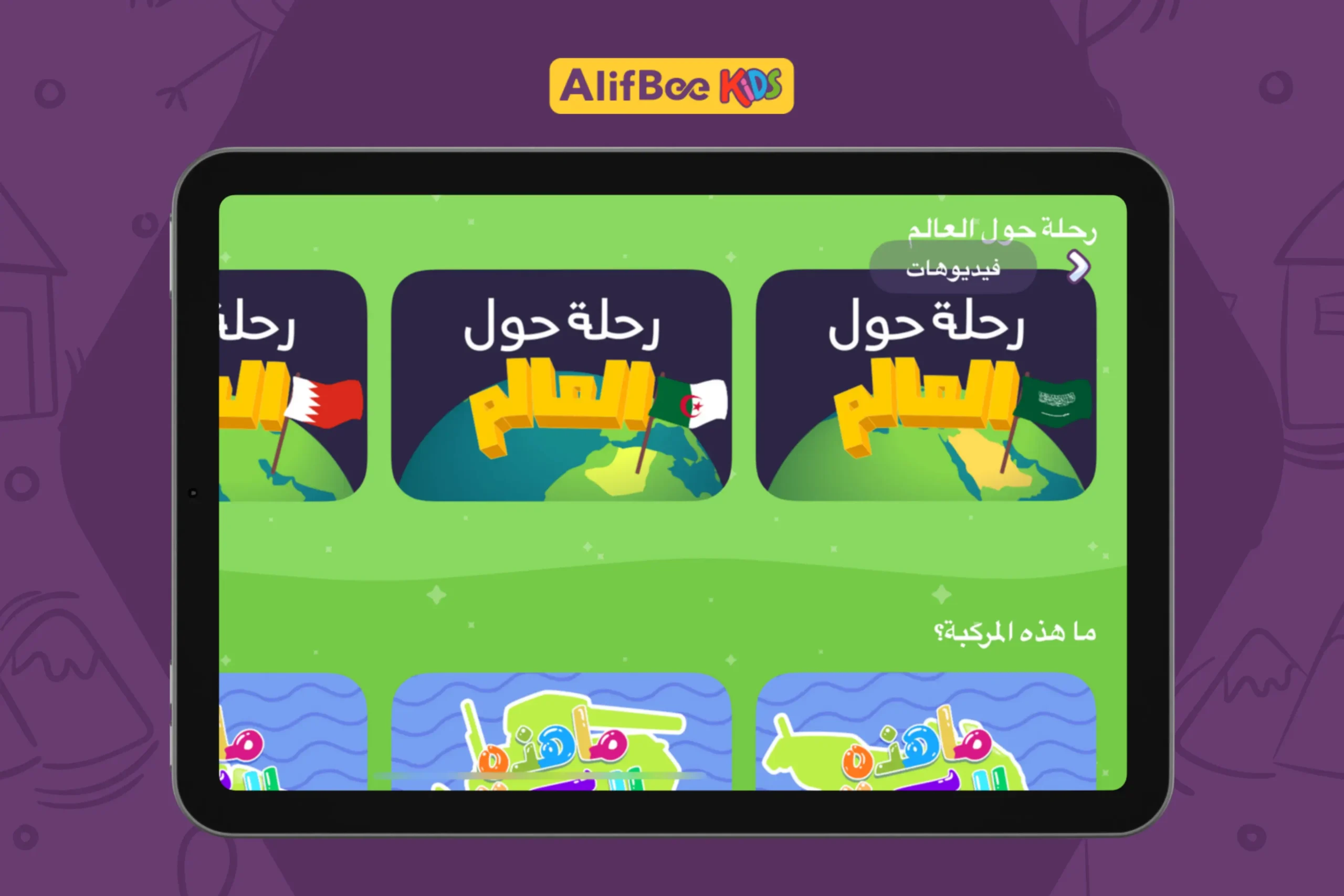
AlifBee Kids: The app combines songs with guided activities, games, stories, listening, and vocabulary practice, so a song can lead into a broader learning path.
Reem’s World: A useful option for gentle, story-style songs about family, kindness, values, and basic social language.
One4Kids: Offers animated songs and short videos on the alphabet, numbers, food, animals, routines, and moral or cultural themes.
Adam Wa Mishmish: Known for animated Arabic kids songs about letters, counting, body parts, colors, animals, and common phrases.
Final Word
The best Arabic songs for kids are not necessarily the longest, newest, or most polished. They are the songs your child wants to hear again, the ones that lead to a word at breakfast, a silly movement in the living room, or a greeting used without prompting.
Keep the original 15 songs in this list, return to them slowly, and let repetition do some of the work. A child may not sing today. They may listen, point, or smile at one familiar word. That still counts.
Want a full Arabic learning experience your child enjoys every day? Try AlifBee Kids — the app that teaches Arabic through songs, games, stories, and playful activities designed for young learners.
Practice with AlifBee Kids
AlifBee Kids brings songs, stories, games, and guided Arabic activities together for young learners. Use a song for warm-up, continue with an interactive activity, then repeat one word away from the screen.
Arabic Songs in AlifBee Kids
FAQs
Are Arabic songs good for learning Arabic?
Yes, they can support listening, pronunciation, vocabulary, and confidence, especially when children hear the same useful words several times and use them during play or daily routines. Songs work best as part of a wider mix of conversation, stories, games, and guided practice.
What are the best Arabic songs for toddlers?
Choose short songs with clear voices, repeated words, simple actions, and familiar topics. Alphabet, counting, animals, colors, family, and morning-routine songs are usually easier for toddlers than songs with long stories or fast lyrics.
Should children listen to Modern Standard Arabic or dialect songs?
Both can be useful. Modern Standard Arabic supports broad understanding, reading, and formal learning. Dialect songs help children connect with family and everyday speech. Many families use both, depending on their goals.
How often should my child listen to the same Arabic song?
There is no fixed number. Repeating one song across several days is often more useful than playing many new songs once. Stop before it feels forced, and return to favorites naturally.
Can children learn Arabic from YouTube songs alone?
Songs on YouTube can provide valuable exposure, but passive watching is not enough for most children. Watch together when possible, repeat a few words, add movement, and use one word later in a real situation.
Do I need Arabic song lyrics or English translations?
Lyrics and translations can help adults understand the content, but young children do not need a line-by-line translation. Start with the meaning of a few key words and let the visuals, actions, and repetition carry the rest.