At a Glance: Teach kids the Eastern Arabic numerals, Arabic words, and pronunciation for numbers from 1-10. Start by helping them say and recognize the numbers, then match quantities and practice writing. Keep practice short and playful by counting toys, snacks, steps, or claps
Numbers from one to ten are often the first little words a child enjoys repeating in a new language. Learning Arabic numbers 1 to 10 can feel just as satisfying, especially when each new word is connected to fingers, blocks, fruit, or steps on the stairs.
This guide helps your child count to ten in Arabic, recognize the Eastern Arabic numerals, and practice the numbers through songs, games, stories, and everyday routines. You do not need to turn it into a long lesson. A few focused minutes, repeated often, can be enough.
Arabic Numbers, Arabic Numerals, and Number Words
The phrase “Arabic numbers” can be confusing because it may refer to three related things:
- Western Arabic numerals: 0, 1, 2, 3, 4, 5, 6, 7, 8, and 9. These are the digits used widely in English and around the world.
- Eastern Arabic numerals: ٠, ١, ٢, ٣, ٤, ٥, ٦, ٧, ٨, and ٩. These appear in many Arabic-speaking countries, especially in the eastern Arab world and the Gulf.
- Arabic number words: the spoken and written words, such as wāḥid for one and khamsah for five.
Both numeral sets are useful. A child may see 5 in one book and ٥ in another, while hearing the same Arabic number word. The distinction is also explained in this open Arabic-learning resource from Northwestern University.
Why Teach Kids Arabic Numbers 1-10 First?
Simply, so they can count to ten in Arabic. The best starting point for any kid who wants to learn Arabic numbers is counting. They are so practical and used every day that a child may quickly grasp and apply these figures in real-life situations.
Kids benefit from knowledge of the Arabic numerical system in several ways. Mastering the numbers from one to ten builds a strong foundation for future math and language learning while strengthening memory and cognitive skills.
Arabic Numbers Chart 1-10
Language note: Dialects may use forms such as itnēn for two or talāta for three. That is normal. This chart uses Modern Standard Arabic so children have a consistent reference point.
| Meaning | Pronunciation | Arabic Word | Eastern Arabic Numeral |
|---|---|---|---|
|
One |
wāḥid |
واحد |
١ |
|
Two |
ithnān |
اثنان |
٢ |
|
Three |
thalātha |
ثلاثة |
٣ |
|
Four |
arbaʿa
|
أربعة |
٤ |
|
Five |
khamsa |
خمسة |
٥ |
|
Six |
sitta |
ستة |
٦ |
|
Seven |
sabʿa |
سبعة |
٧ |
|
Eight |
thamāniya |
ثمانية |
٨ |
|
Nine |
tisʿa |
تسعة |
٩ |
|
Ten |
ʿashara |
عشرة |
١٠ |
Count to Ten in Arabic
Say the sequence slowly at first, then repeat it with a steady rhythm:
Count Aloud · wāḥid, ithnān, thalāthah, arbaʿah, khamsah · sittah, sabʿah, thamāniyah, tisʿah, ʿasharah |
Three pronunciation details can help:
- The th in thalāthah is like the th in “think.”
- The symbol ʿ represents the Arabic sound ʿayn. Young beginners do not need to perfect it immediately. Clear listening and gentle imitation come first.
- Long vowels, shown here with marks such as ā, should be held slightly longer than short vowels.
A Simple Order for Teaching Arabic Numbers to Kids
It is tempting to show a chart and ask a child to memorize it. A better approach is to build the idea of numbers step by step. The U.S. Institute of Education Sciences guide to early math recommends a developmental progression that connects quantities, counting, comparison, and numeral recognition.
- Say and hear the number. Point to one object and say wāḥid. Point to two objects and say ithnān.
- Match the word to a quantity. Let your child place three blocks beside the number three or clap five times.
- Recognize the numeral. Show ٣ and ask, “Can you find three buttons?”
- Trace and write. Once the symbol is familiar, let your child trace it with a finger, crayon, or pencil.
- Use it in real life. Count snacks, stairs, toy cars, socks, or family members during ordinary moments.
Fun and Easy Ways for Kids to Learn Arabic Numbers
When it comes to teaching kids, it is crucial to keep the lesson interesting and engaging. Therefore, here are some tips to help your child learn Arabic numbers:
1. Use Songs and Rhymes
A number song becomes more useful when children do something with it. Clap once for wāḥid, twice for ithnān, and continue until ten. You can find a number song and other beginner themes in our guide to Arabic songs for kids.
2. Flashcards and Visual Aids
Make two small card sets. Put Eastern Arabic numerals on one set and groups of objects on the other. Your child can match ٥ with five stars or five dots. For more ideas, see how to use Arabic flashcards through movement, memory games, and active recall.
3. Daily Counting Practice
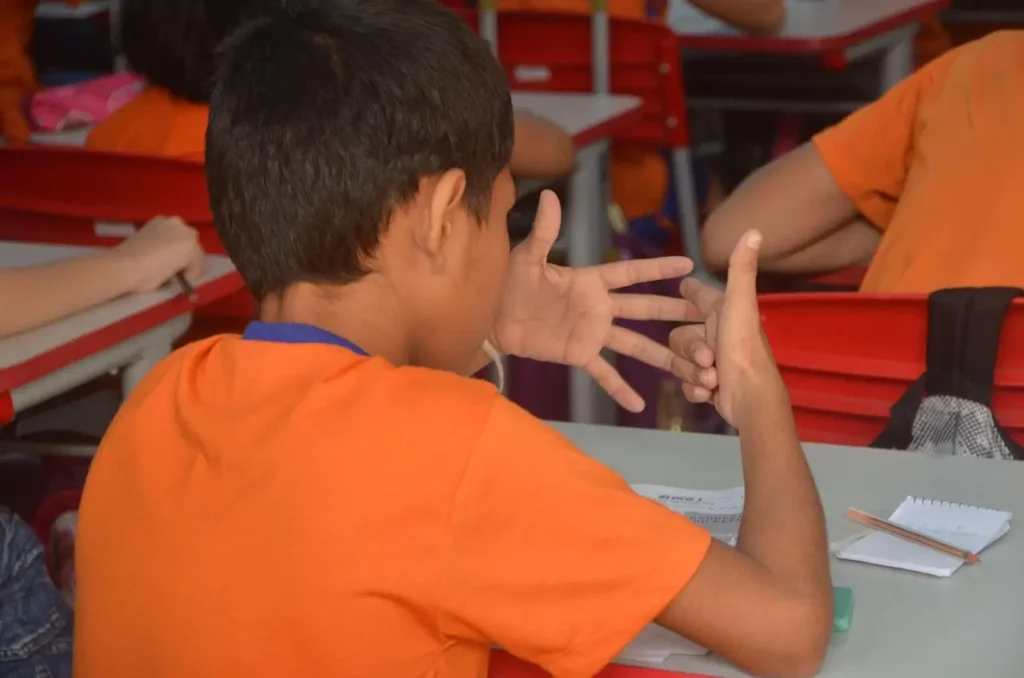
Start with objects your child already wants to touch. Put four grapes on a plate, line up six car toys, or collect eight pebbles. Ask your child to touch each item while saying the Arabic number. This helps connect the spoken word to an actual quantity.
Count spoons while setting the table, steps as you walk upstairs, or pieces of fruit at snack time. NAEYC encourages families to use ordinary routines for early math talk, because the numbers become meaningful rather than isolated facts.
4. Interactive Games and Apps
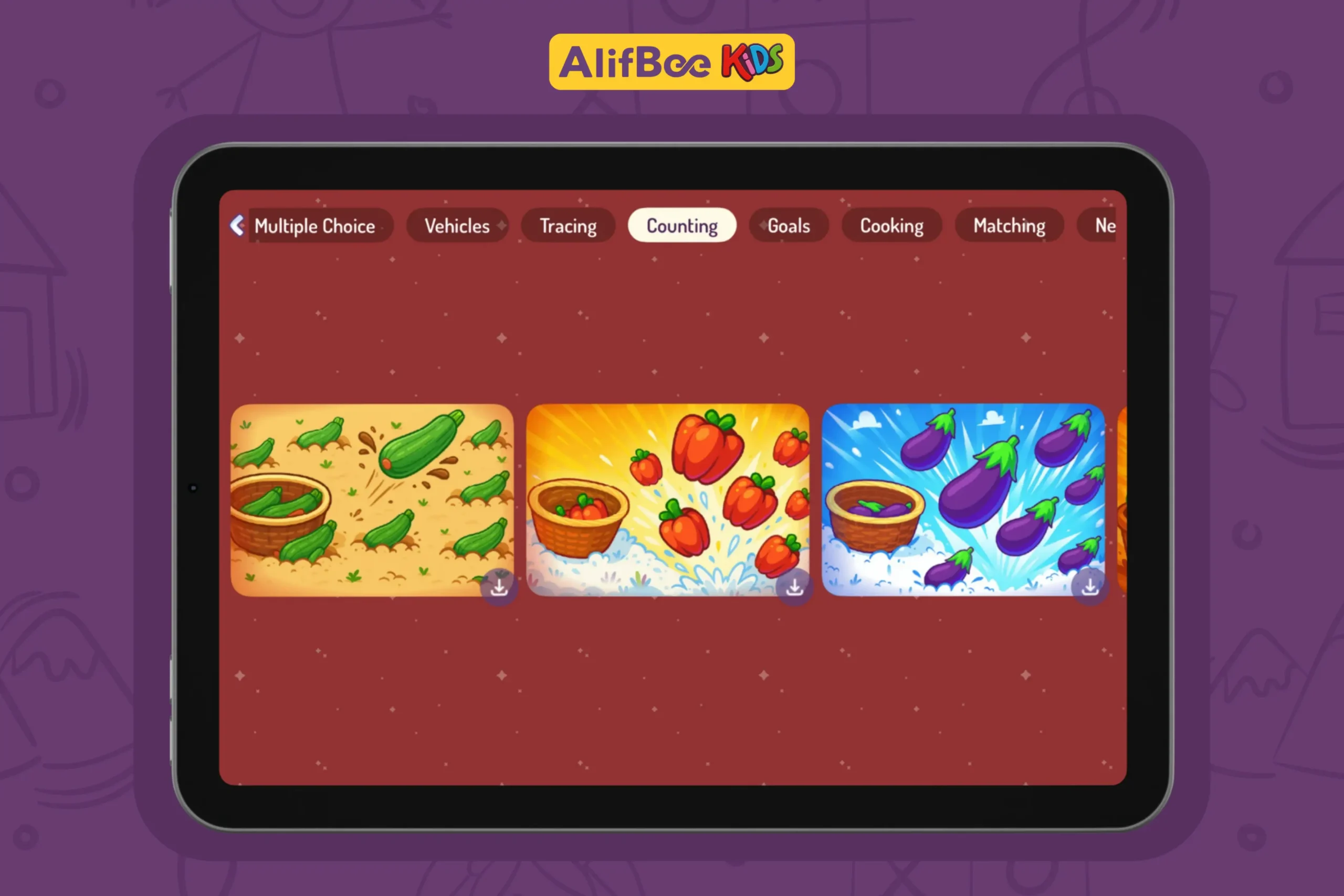
A variety of apps and online games, such as the AlifBee App, can enhance kids’ learning of Arabic numbers. Search for apps and games that offer challenges for kids when learning Arabic, which makes it a fun practice. You can trace every figure in some applications.
Learning Arabic numbers through games and apps is both fun and effective. Always ensure that you encourage and support your child throughout their educational journey.
5. Storytelling with Numbers
Try teaching your kids the Arabic language by involving Arabic numbers in relatable stories. Use examples like “A cat had three (thalātha) kittens.”, or “The monkey ate five (khamsa) bananas.” This will help your child understand and easily grasp how Arabic numbers are used in day-to-day life.
6. Practice Writing Arabic Digits
Learning the Arabic numbers goes much beyond just pronunciation and identification. Once the kids can confidently identify the forms and pronunciation of Arabic digits 1 to 10, they may write numbers by hand. Many free printable worksheets with dotted lines are available online to assist your child in mastering writing and tracing each number.
Quick Tips for Parents Teaching Arabic Numbers
The following brief, practical suggestions will help your child learn and understand Arabic much more easily:
- Be Consistent: Even five minutes a day of practice can have a remarkable impact. Short, regular practice sessions are more effective than occasional long ones. Consistent repetition helps children remember numbers more easily.
- Praise Effort, Not Perfection: Celebrate your child’s effort, even if they don’t get the basics right away. Encouragement fosters self-confidence and a desire for knowledge. Remind them that mistakes are a normal part of learning and that they should keep trying.
- Mix English & Arabic: Use both English and Arabic until your child feels comfortable with the new words. For example, say “one (wāḥid)” and “two (ithnān)” during everyday activities. Gradually increasing the use of Arabic helps children build confidence naturally.
- Learn Together as a Family: Studying a fresh language is more fun in a group. Bring siblings or other relatives. Either count together or create a fun game for everyone to play.
A 5-Minute Arabic Counting Routine
| Time | Activity | Example |
|---|---|---|
|
1 minute |
Listen and repeat |
Say the numbers 1-5 slowly, then 6-10. |
|
1 minute |
Count objects |
Count five blocks or eight crayons. |
|
1 minute |
Find the numeral |
Ask your child to point to ٣, ٦, or ٩. |
|
1 minute |
Trace or write |
Practice tracing or writing just one or two numerals. |
|
1 minute |
Quick game |
Finish with a quick game by jumping, clapping, or matching a card. |
Final Word
The journey may be exciting and fulfilling for children learning Arabic. A good place to start is by learning the Arabic numbers 1–10 through entertaining games, music, and flashcards. These playful methods turn learning into an adventure, adding interest and success to the process.
Your child will quickly learn these first steps with regular practice and plenty of encouragement, thereby developing a solid foundation for their Arabic learning path. They will eventually count to ten in Arabic with confidence and a smile.
How AlifBee Kids Supports Number Practice
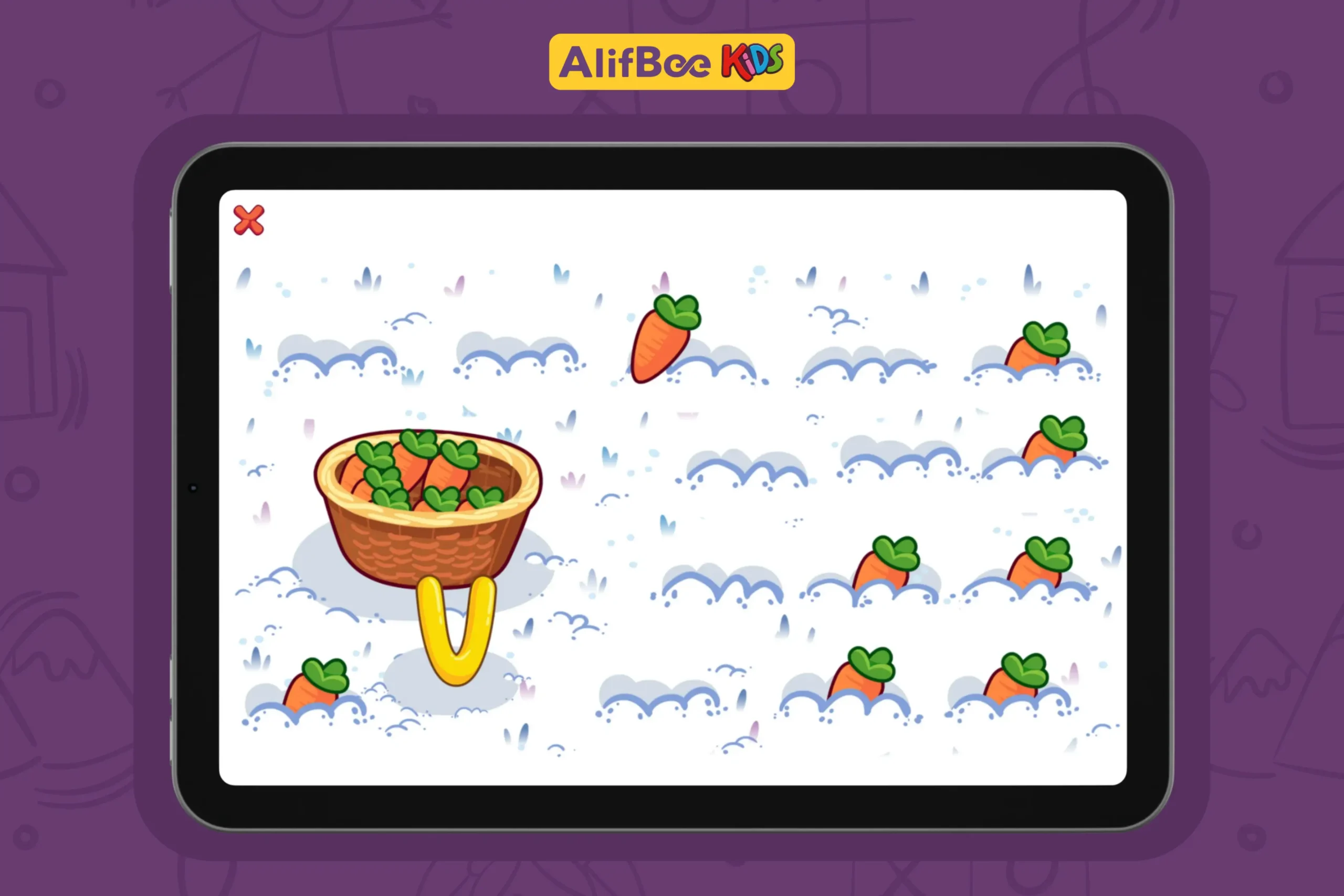
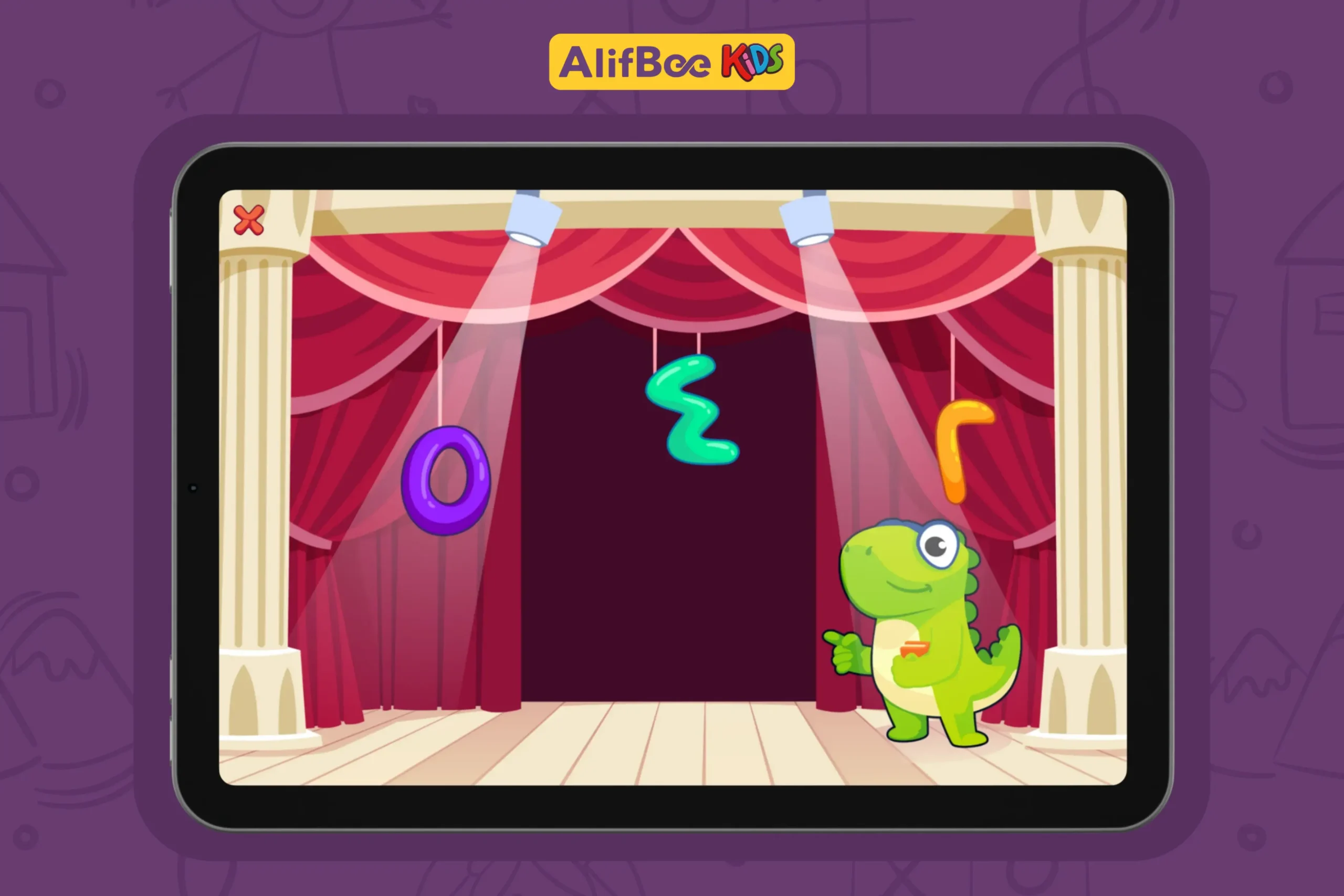
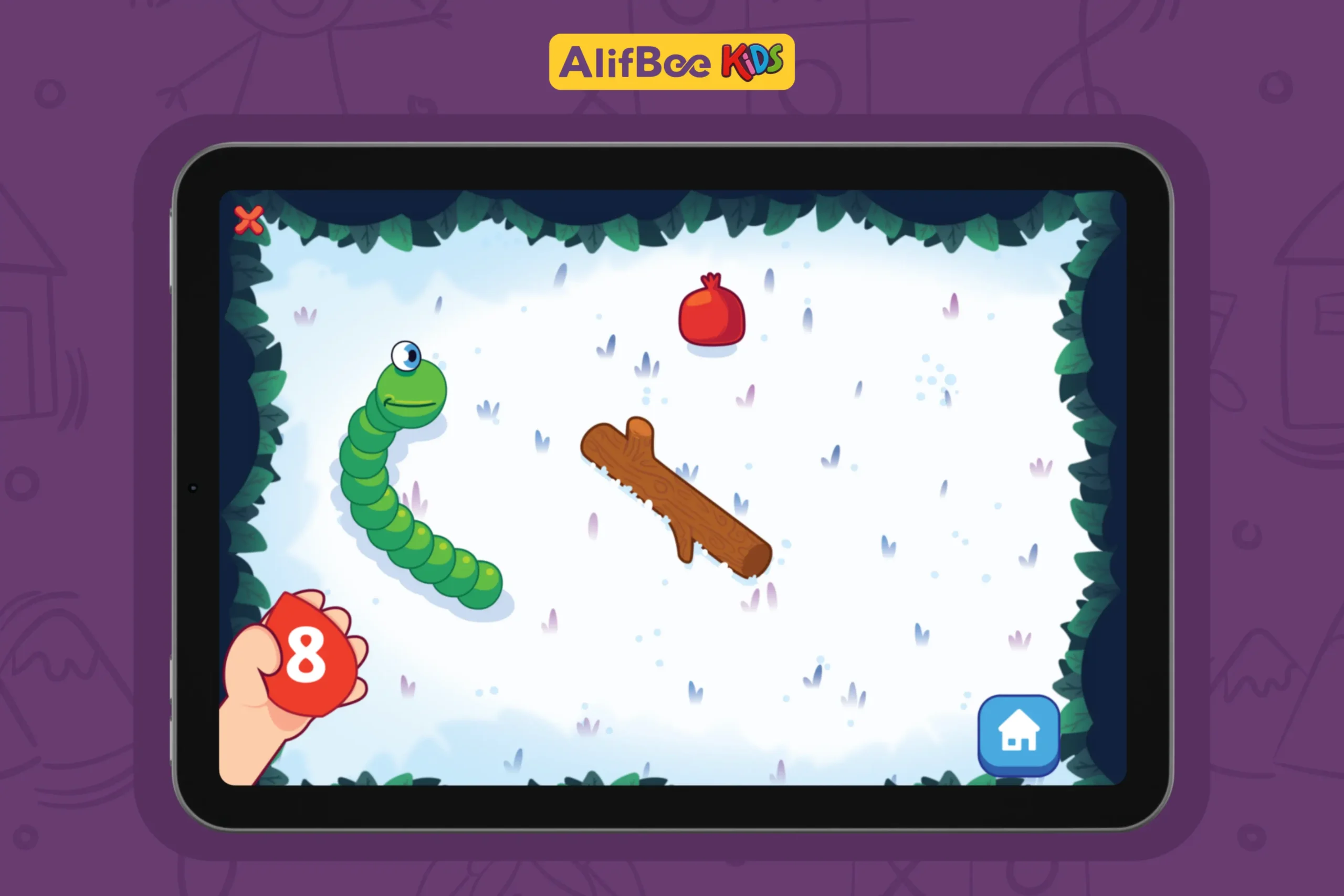
AlifBee Kids is designed for young Arabic learners aged 2-8. Children can hear clear Arabic, trace number shapes, match images, and practice through short activities instead of relying on a single number chart. The app works best as one part of a balanced routine that also includes conversation, play, songs, and offline counting.
For a broader home routine, read How to Teach Arabic to Your Kids at Home. Then use the app to give your child guided practice and immediate feedback.
Free Printable Practice Pack of Arabic Numbers (1-10)
Download our free printable practice pack to help your child learn and practice Arabic numerals.
Use it as a joyful exercise tool; you only need to download and print it. This will serve as one of the most effective tools to help your child learn the Arabic numbers 1-10.
You can also download the Arabic Numbers Poster and hang it in your child’s classroom or bedroom.