At a Glance: Tajweed helps children learn to recite the Quran with care, giving Arabic letters their correct sounds and pronunciation. Start with listening and letter sounds, then introduce one Tajweed rule at a time through short surahs, repetition, and gentle correction.
You may want your child to recite the Quran correctly but wonder where to begin. Should you teach Arabic letters first, explain Tajweed terms, or ask your child to repeat after a reciter? The answer depends on what your child can already hear, recognize, and read. This guide explains the basic Tajweed rules for kids and how to practice them without turning Quran time into a long grammar lesson.
What Is Tajweed for Kids?
Tajweed is the set of pronunciation rules used when reciting the Quran. It involves producing letters from their proper articulation points and observing features such as lengthening, merging, and nasal sounds.
For a child, the simplest explanation is: “Tajweed helps us give each Quranic letter its proper sound.” Children can hear and copy these sounds before they know the technical names.
Tajweed and Tartil: What Is the Difference?
Some people confuse Tajweed and Tartil, although there is a subtle and important difference between them:
- Tajweed: includes the set of rules that govern the pronunciation of letters, their attributes, and their rules.
- Tartil: is the slow, deliberate way of recitation that reveals the meanings of the Quran and aids in contemplation.
Thus, Tartil is the practical application of Tajweed. When a child masters the rules of Tajweed, they will be able to recite beautifully and correctly.
Basic Tajweed Rules for Kids
Choose a single rule, model its sound, and let your child listen before asking them to name it. The following are useful early concepts.
Madd: Stretching a Sound
Madd means lengthening a vowel sound when the recitation calls for it. Begin with an audible contrast between a short vowel and a longer one. The exact length depends on the type of madd, so use a reliable reciter or teacher as your model.
Ghunnah: A Nasal Sound
Ghunnah is a nasal resonance heard in particular Tajweed situations, including a noon or meem with shaddah. Invite your child to listen for the humming quality rather than exaggerating it.
Four Rules of Noon Sakinah and Tanween
Noon sakinah is a noon with sukoon. Tanween is a final vowel ending that includes an “n” sound in pronunciation. What comes next can change how that sound is recited.
Rule | Child-friendly explanation | Example from Quranic wording |
Izhar (clear pronunciation) | Pronounce the noon sound clearly before a throat letter. | مِنْ هَادٍ |
Idgham (merging) | Blend the noon sound into the next letter. Some kinds have ghunnah; others do not. | فَمَنْ يَعْمَلْ |
Iqlab (changing) | Before baa, change the noon sound to a hidden meem sound with ghunnah. | مِنْ بَعْدِ |
Ikhfa (concealing) | Partly conceal the noon sound and keep the nasal resonance. | مِنْ شَرِّ |
These are pronunciation examples, not independent vocabulary drills. Read the full verse with an accurate recitation model so the child hears the rule in context. Different rules also have details beyond this beginner summary.
How to Teach Tajweed to Kids Step by Step
1. Listen before explaining
Play a short, clear Quran recitation and listen together. Reciters such as al-Husary and al-Minshawi can provide useful models. Repeat one short phrase, then invite your child to echo it. Focus on one sound rather than correcting everything.
2. Connect Arabic letters to their sounds
Show how a letter is produced. For example, baa begins with the lips coming together. Use a mirror or letter card to make the movement visible. If your child is still learning the alphabet, start with our Arabic alphabet guide:
How to Teach the Arabic Alphabet for Kids
3. Introduce one rule at a time
Once your child can recognize some letters and read short vowelled words, demonstrate an easy feature such as a stretched vowel or a clear noon sound. Listen, repeat, and point to the relevant letters in a short passage. Do not introduce all four noon rules in one sitting.
4. Practice with short surahs
Choose a familiar short surah. Play one verse, pause, and let your child recite it. Offer a brief correction if needed and repeat the same verse later. Accurate listening matters more than the number of verses completed.
If you are planning the wider Quran-learning journey, our parent guide covers the steps from listening and letters to surahs and memorization:
How to Teach Quran to Kids: A Step-by-Step Guide
A Simple 10-Minute Tajweed Practice Routine
Time | Activity |
2 minutes | Listen to a short verse together. |
3 minutes | Repeat one word or phrase and focus on its sound. |
3 minutes | Find the sound or rule in the written verse. |
2 minutes | Recite again and praise a specific improvement. |
Ten minutes is an example, not a fixed target. Shorter sessions may work better for younger children. If a sound is difficult, return to listening and practice it with a qualified teacher or proficient reciter.
How to Make Tajweed Practice Enjoyable
Try a listening game: recite or play two short examples and ask your child which one contains a long vowel. Give them colored markers to spot the target letter in a printed verse, or let them add a star to a progress chart after several careful attempts. You can also practice side by side so your child hears you learning and correcting your own recitation.
For children still learning letter shapes, printable practice can support the reading foundation. See:
Arabic Alphabet Worksheets for Kids
Why Teach Tajweed from an Early Age?
Tajweed gives children a way to approach the Quran attentively and respectfully. Listening closely to individual sounds can support more accurate recitation, while gradual progress helps children feel comfortable reading aloud. It can also become a shared family routine centered on the Quran. These are useful teaching goals, not guaranteed outcomes for every child.
Using Digital Tools to Support Tajweed Practice
An app or audio lesson can help children hear examples repeatedly, but accurate feedback is especially valuable for pronunciation. The original article mentions an “Alif Baa Kids” app with Tajweed games and progress levels; verify the current product name and those specific features before publishing a promotional claim. For now, use any suitable listening tool as a supplement to guided recitation rather than a replacement for it.
The Importance of Learning Tajweed Rules for Children
There is great importance in teaching Tajweed rules to children, which we will mention to you below:
- Instilling love for the Quran in their hearts from a young age: When a child learns to recite the Quran correctly and beautifully, their soul connects with the Quran and they feel proud of their ability to read it with mastery.
- Developing pronunciation and Arabic language skills: Tajweed helps the child pronounce letters from their correct articulation points, which improves their language and pronunciation in general life.
- Enhancing focus and attention: Memorizing the rules and applying them during recitation develops the child’s ability to focus, as they need to observe letters and movements accurately.
- Increasing self-confidence: When a child reads in front of others with a beautiful voice, they feel confident and proud, which positively reflects on their personality.
How to encourage my child to learn Tajweed rules
Teaching Tajweed requires more patience and encouragement than rote memorization. Here are some practical ways:
- Make learning part of the daily routine by dedicating a short time each day, for example, 10 minutes, to read simple verses applying a specific rule.
- Use visual and interactive tools, as children love pictures and colors. Therefore, use colorful books or cards with Quranic examples.
- Teach children through play by turning the rule into a game, making Tajweed a fun educational game.
- Be a good role model for your children. When a child sees their father or teacher reciting the Quran with beautiful Tajweed, they will want to imitate them.
Role modeling is the greatest means of teaching. - Praise your child and give them symbolic rewards each time they master a Tajweed rule, which keeps them motivated to learn.
- Use interactive applications that give your child a sense of interaction and enjoyment while learning.
Tajweed Rules in the Alif Baa Kids App
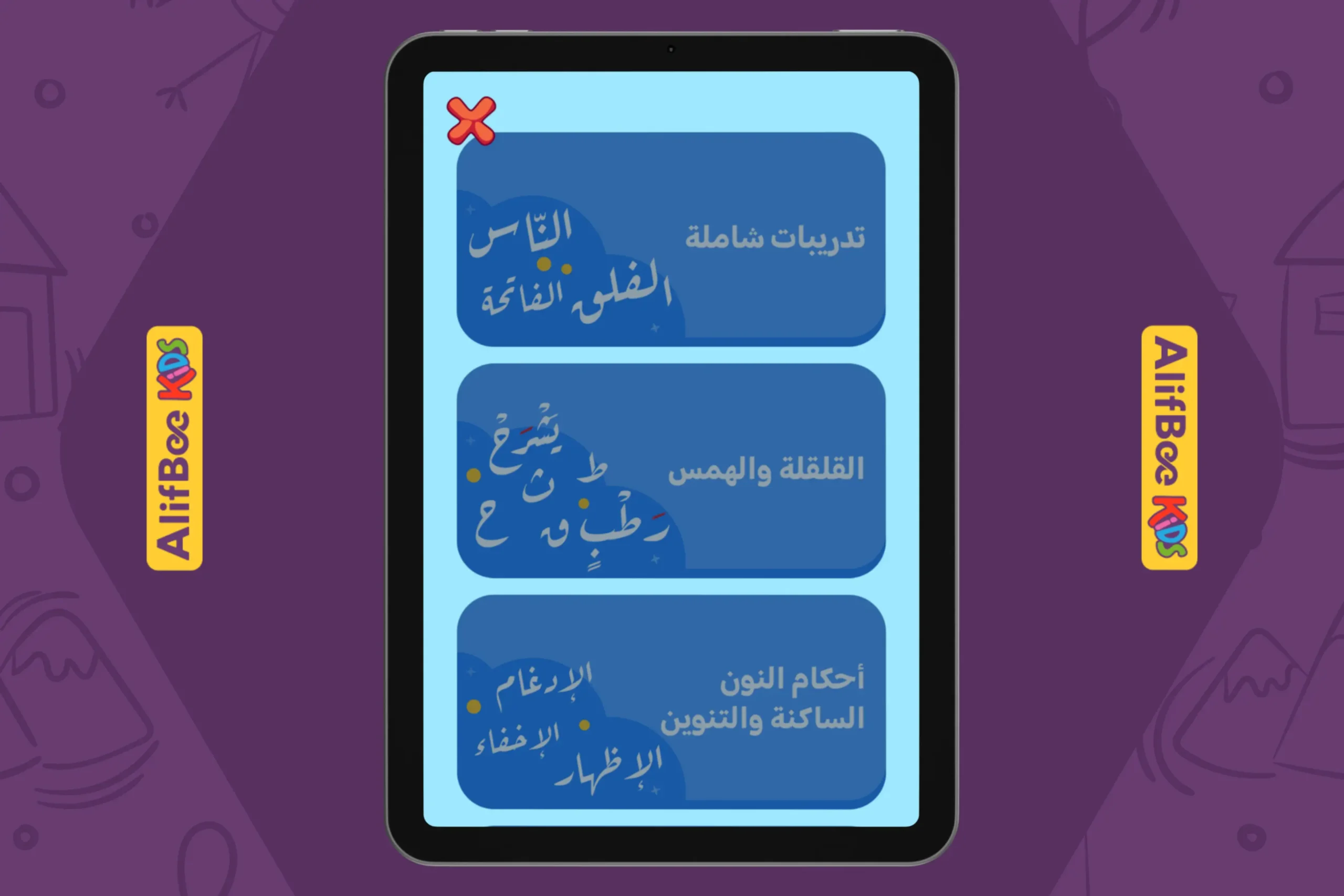
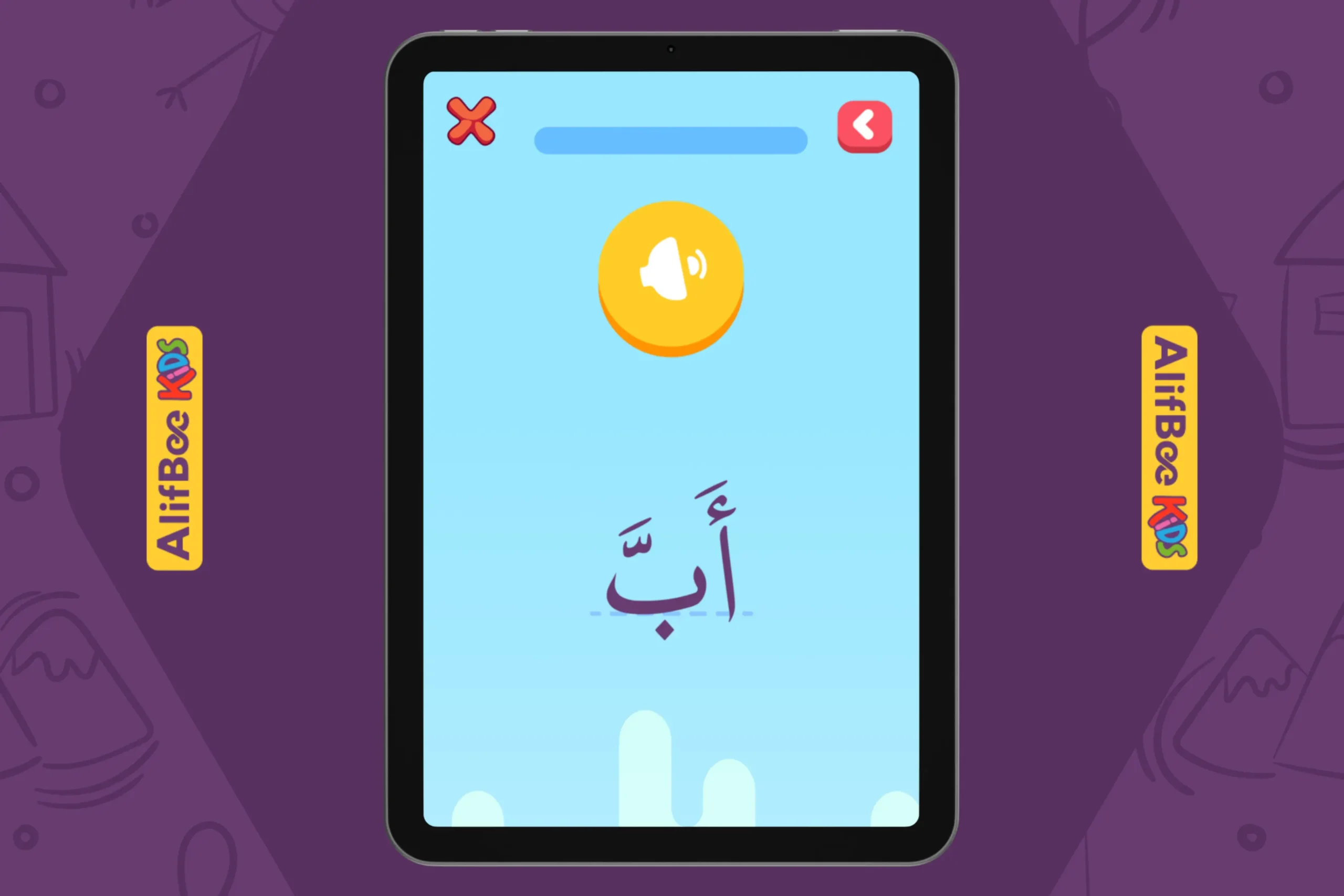
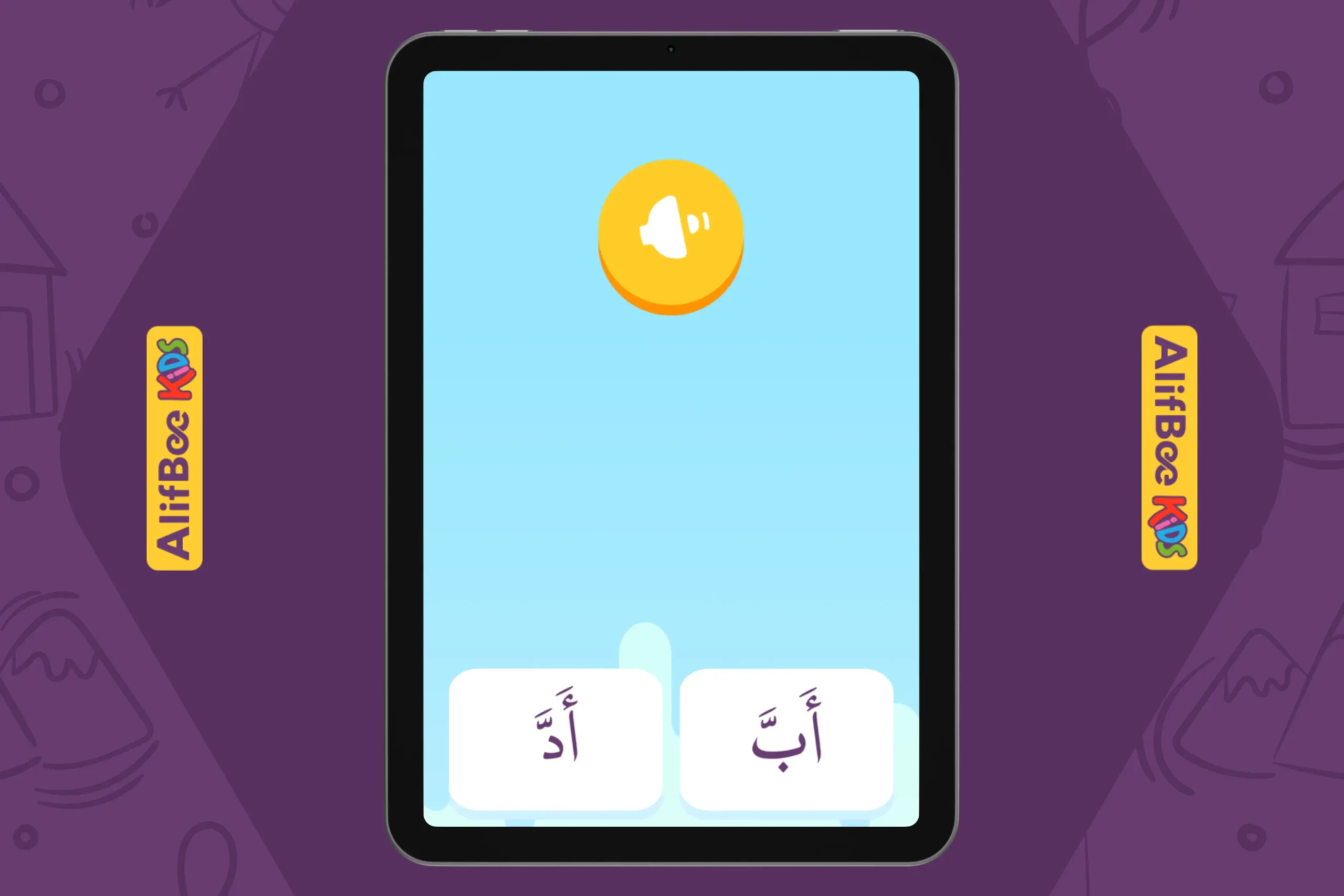
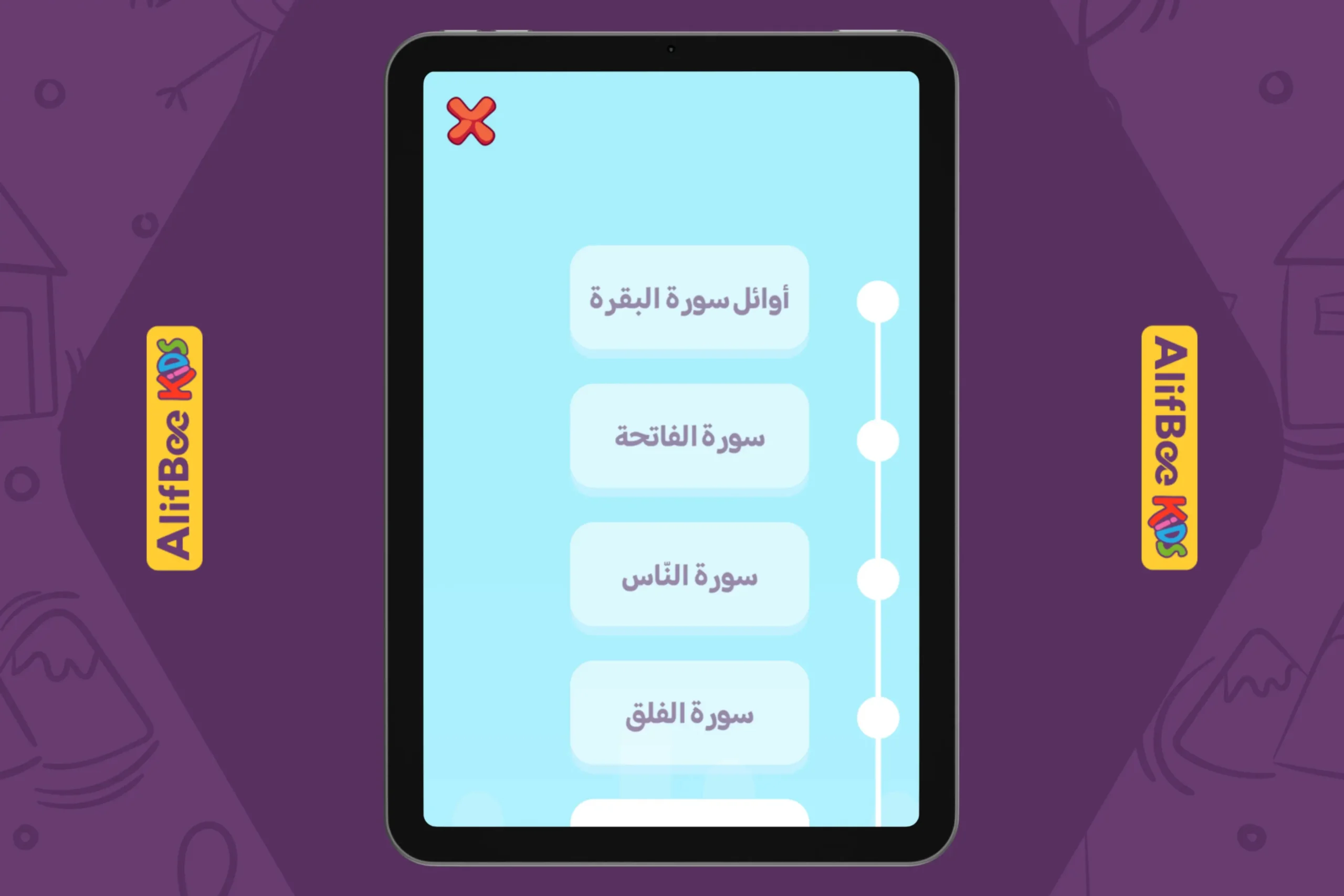
The Alif Baa Kids app is one of the most important modern educational tools that teaches children Tajweed rules in fun and simplified interactive ways. It features an attractive visual design suitable for children, with comfortable colors, illustrative drawings, and educational games such as choosing the correct rule or distinguishing the sound of Ghunnah and Madd. It progresses through levels from easiest to hardest, allowing the child to advance with confidence. Therefore, parents can allocate time for a daily lesson on Alif Baa, discuss what the child has learned, and finally, ask them to apply what they have learned to a short Surah.

Conclusion
Teaching Tajweed rules to children is not just about memorizing pronunciation rules; it is about instilling spiritual and aesthetic values in their souls from a young age. Every letter pronounced with mastery is an act of worship, and every moment a child spends with the Quran brings them closer to Allah. Therefore, make Tajweed a fun journey, full of encouragement, stories, games, and useful applications. With time, you will see how your child transforms from a young learner into a proficient reciter, their voice echoing with the verses of Allah in the manner of the Prophet, peace be upon him.