At a Glance: The Arabic alphabet has 28 basic letters and is written from right to left. To teach it well, help your child connect each letter’s name, shape, and sound. Start with two or three letters at a time, use short multisensory activities, introduce connected forms gradually, and move to simple words only after the child can recognize several letters confidently.
A child can sing the full alphabet song and still hesitate when one letter appears on a page. That is normal. Reciting the sequence, recognizing a shape, producing its sound, and reading it inside a word are related skills, but they are not exactly the same skill.
This guide shows you how to teach the Arabic alphabet for kids in manageable stages. You will find the full 28-letter chart, simple pronunciation cues, playful activities, a short daily routine, and clear advice on when to introduce writing, connected letters, and short vowels.
For a broader home-learning plan, read 7 Methods to Teach Arabic to Your Kids at Home.
What Do Children Need to Learn About Arabic Letters?
Arabic uses 28 basic letters and is written from right to left in a cursive, generally connected script. Northwestern University’s Arabic alphabet guide explains these core features clearly. Several letters also help represent long vowels, while small marks called harakāt show short vowel sounds in beginner texts.
For a young learner, the main building blocks are:
- Letter recognition: noticing the letter even when the font or size changes.
- Letter names and sounds: knowing what the letter is called and the sound it usually represents.
- Dot patterns: distinguishing letters that share a base shape but have different dots.
- Writing direction: beginning on the right and moving toward the left.
- Connected forms: recognizing how a letter looks at the beginning, middle, or end of a word.
- Short vowels: combining a known letter with fatḥah, kasrah, or ḍammah when the child is ready.
Early-literacy guidance from Reading Rockets also separates letter names, shapes, sounds, and writing. This is a useful reminder for Arabic too: a child may understand one part before the others.
Full Arabic Alphabet Chart for Kids
The chart below uses Modern Standard Arabic letter names and beginner-friendly sound cues. English comparisons are only approximations.
| Example and meaning | Simple sound cue | Letter name | Arabic |
|---|---|---|---|
|
أَسَد — ʾasad — lion |
long ā; may carry hamza |
alif |
ا |
|
بَاب — bāb — door |
b as in book |
bāʾ |
ب |
|
تُفَّاحَة — tuffāḥah — apple |
t as in top |
tāʾ |
ت |
|
ثَعْلَب — thaʿlab — fox |
th as in think |
thāʾ |
ث |
|
جَمَل — jamal — camel |
j as in jam in MSA |
jīm |
ج |
|
حِصَان — ḥiṣān — horse |
deep, breathy h |
ḥāʾ |
ح |
|
خُبْز — khubz — bread |
kh, like loch |
khāʾ |
خ |
|
دُبّ — dubb — bear |
d as in door |
dāl |
د |
|
ذَهَب — dhahab — gold |
th as in this |
dhāl |
ذ |
|
رُمَّان — rummān — pomegranate |
light rolled or tapped r |
rāʾ |
ر |
|
زَهْرَة — zahrah — flower |
z as in zoo |
zāy |
ز |
|
سَمَكَة — samakah — fish |
s as in sun |
sīn |
س |
|
شَمْس — shams — sun |
sh as in shoe |
shīn |
ش |
|
صَقْر — ṣaqr — falcon |
heavy s |
ṣād |
ص |
|
ضِفْدَع — ḍifdaʿ — frog |
heavy d |
ḍād |
ض |
|
طَائِر — ṭāʾir — bird |
heavy theavy t |
ṭāʾ |
ط |
|
ظَرْف — ẓarf — envelope |
heavy dh or z-like sound |
ẓāʾ |
ظ |
|
عِنَب — ʿinab — grapes |
voiced throat sound |
ʿayn |
ع |
|
غَزَال — ghazāl — gazelle |
guttural gh |
ghayn |
غ |
|
فِيل — fīl — elephant |
f as in fish |
fāʾ |
ف |
|
قَمَر — qamar — moon |
deep q from the back of the mouth |
qāf |
ق |
|
كِتَاب — kitāb — book |
k as in kite |
kāf |
ك |
|
لَيْمُون — laymūn — lemon |
l as in lamp |
lām |
ل |
|
مَوْزَة — mawzah — banana |
m as in moon |
mīm |
م |
|
نَمْلَة — namlah — ant |
n as in nest |
nūn |
ن |
|
هِلَال — hilāl — crescent |
h as in house |
hāʾ |
ه |
|
وَرْدَة — wardah — rose |
w, or long ū |
wāw |
و |
|
يَد — yad — hand |
y, or long ī |
yāʾ |
ي |
Letters such as ḥāʾ, khāʾ, ʿayn, ghayn, qāf, and the emphatic sounds need careful listening because they do not have exact English matches.
Why Arabic Letters Change Shape in Words
Most Arabic letters connect to neighboring letters, so their appearance changes slightly depending on position. The basic identity remains the same. A child does not need to memorize four unrelated drawings; help them notice the shared body of the letter and the small strokes that allow it to join.
| Position | Form of bāʾ | Example |
|---|---|---|
|
Isolated |
ب |
بَ |
|
Beginning |
بـ |
بَيْت |
|
Middle |
ـبـ |
حَبل |
|
End |
ـب |
حليب |
Six letters do not connect to the letter that follows them. Introduce this as a reading pattern after your child knows several isolated letters. There is no need to turn it into a long rule lesson on day one.
| Pattern | Letters |
|---|---|
|
Do not connect to the next letter |
ا د ذ ر ز و |
How to Teach the Arabic Alphabet to Kids Step by Step
Step 1: Start with Two or Three Letters at a Time
Showing all 28 letters at once can make the page look like a wall of unfamiliar symbols. Keep the full chart visible, but teach only a small set in one session. Choose letters that are easy to distinguish at first, then revisit them on several days before adding more.
Alphabetical order gives children a familiar sequence, while shape families help them compare similar forms. A practical approach uses both: follow the general alif-to-yāʾ order, but pause to show how related letters differ by dots.
Step 2: Teach the Letter Name, Shape, and Sound Together
Point to the letter, say its name, produce its sound, and connect it with one familiar word or picture. Keep the sequence short. For example: “This is bāʾ. It makes a b sound. Bāb means door.” Then let your child find the same letter on a card or poster.
Reading Rockets recommends explicit, systematic opportunities to connect printed letters with spoken sounds. Their practical letter-and-sound activities for parents include matching sounds to cards, names, objects, and sensory writing.
Step 3: Use Shape Families to Explain Similar Arabic Letters
Several Arabic letters share the same basic shape and differ mainly by the number or position of dots. Rather than pretending the similarity is not confusing, make it the lesson. Ask: “What stayed the same? What changed?” Let the child add missing dots, sort cards, or build the base shape from clay before changing the dot pattern.
Useful teaching language Try saying: “These letters are cousins. Their body is the same, but their dots tell us their names and sounds.” This gives the child a simple visual rule without turning the activity into a grammar lecture. |
Step 4: Add Listening, Songs, and Clear Audio
Some Arabic sounds are difficult to copy from an English description. Let your child hear them often through a teacher, native or highly proficient speaker, or carefully produced audio. An Arabic alphabet song can help with sequence and repetition, but pause the song sometimes and ask the child to identify individual letters outside the melody.
Use the alphabet song alongside the wider collection of Arabic songs for kids, not as the only learning method.
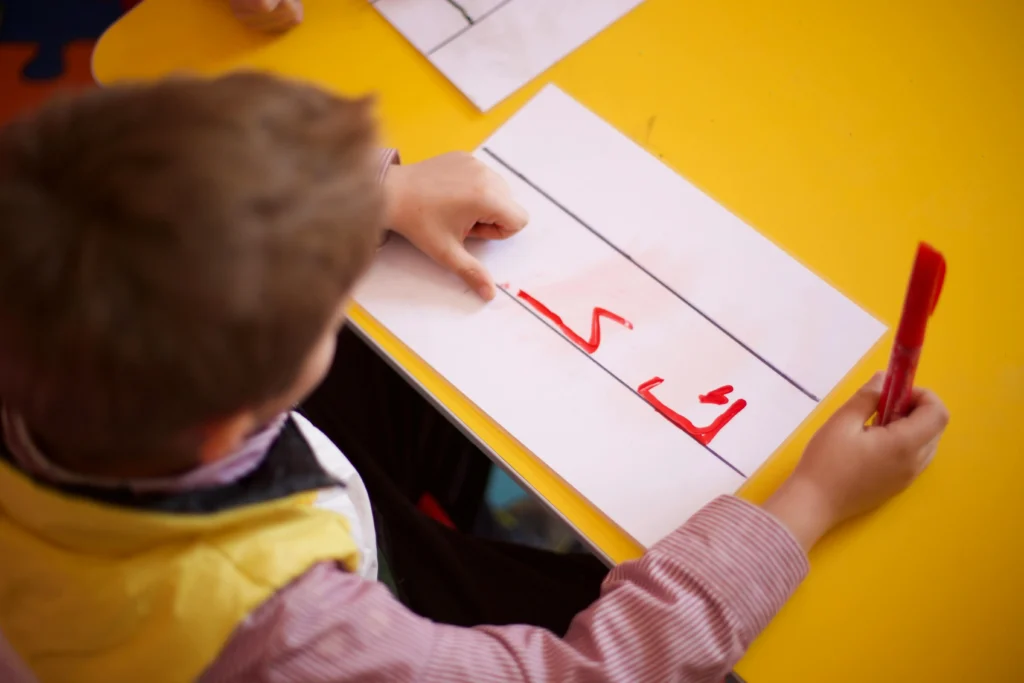
Step 5: Practice Tracing and Writing from Right to Left
Once your child recognizes a few letters, add large tracing movements. Begin with a finger in sand, flour, or the air, then move to crayons or pencils. Say the sound while tracing so the hand movement, shape, and sound are learned together.
Use one printable at a time from the Arabic alphabet worksheets for kids collection. When the child is ready for more handwriting detail, continue with Arabic writing for kids.
Step 6: Introduce Connected Forms Gradually
Do not wait until every isolated letter is perfect, but do not introduce every connected form at once either. After a child knows a letter, show it inside one easy word. Highlight the letter in a different color and ask the child to find the part that still looks familiar.
Start with letters that connect predictably. Later, point out the six letters that stop the connection. Reading real words early prevents a common problem: children know the alphabet chart but cannot recognize the same letters in a book.
Step 7: Add Short Vowels and Blend Simple Words
When your child recognizes several letters and sounds, introduce one short vowel at a time. Begin with simple syllables, then blend two- or three-letter words that use familiar vocabulary. Fully vowelled beginner text helps children know what sound to produce.
Continue from letters to words with these Arabic reading practice tips for kids.
Fun Arabic Alphabet Activities for Kids
The best activity is not the one with the most materials. It is the one that makes your child look closely, listen, respond, and try again. Rotate a few simple activities instead of preparing a new craft every day.
| Activity | How to use it |
|---|---|
|
Letter hunt |
Hide three letter cards around the room. Say a letter name or sound and ask your child to find it. |
|
Dot detective |
Give the child a base shape and ask them to add the dots for the letter you name. |
|
Sound basket |
Collect objects or pictures whose Arabic names begin with one target sound. |
|
Sensory writing |
Trace a letter in sand, rice, play dough, or shaving foam while saying the sound. |
|
Letter matching |
Match the isolated letter to the same letter inside a simple word. |
|
Alphabet song pause |
Stop the song before a familiar letter and let the child supply it. |
|
Flashcard memory |
Turn over pairs and match a letter with its picture word or connected form. |
|
Digital practice |
Use a short app activity for listening, tracing, or recognition, then repeat the same letter offline. |
For more variations, see 10 Interactive Arabic Games for Kids and How to Use Arabic Flashcards Effectively.
A Simple 10-Minute Arabic Alphabet Routine
Short, regular practice is easier to repeat than a long lesson that ends in frustration. Ten minutes is not a rule; it is a manageable starting point. Stop earlier when a toddler loses interest, and extend naturally when an older child is absorbed in the activity.
| Time | Activity |
|---|---|
|
2 minutes |
Review two known letters with cards or a chart. |
|
2 minutes |
Listen to the names and sounds; repeat without forcing perfect pronunciation. |
|
2 minutes |
Trace a letter in sand, rice, play dough, or shaving foam while saying the sound. |
|
2 minutes |
Play one matching, sorting, or letter-hunt game. |
|
2 minutes |
Find the letter in a word, book, sign, or app activity and finish with praise for effort. |
For multilingual children, the American Speech-Language-Hearing Association recommends daily opportunities to talk, sing, play, and read in the languages a family uses, while valuing practice over perfection.
Common Mistakes When Teaching Arabic Letters
Teaching only the alphabet sequence. A child should also recognize letters in random order and inside words.
Teaching only letter names. Reading requires a connection between the printed shape and its sound
Showing only isolated forms. Add connected examples gradually so real Arabic text does not look completely new.
- Correcting every sound immediately. Model the sound again and protect the child’s willingness to speak.
- Introducing too many letters or rules at once. Two or three clear targets are enough for one short session.
- Using worksheets as the whole lesson. Paper practice is useful, but children also need listening, movement, play, and meaningful words.
- Comparing siblings or setting a fixed deadline. Recognition, pronunciation, fine-motor control, and attention develop at different rates.
When to seek extra support If a child has persistent difficulty hearing, producing, or distinguishing speech sounds across the languages they use, discuss it with a qualified speech-language professional. Learning more than one language does not itself cause a language disorder. |
How AlifBee Kids Teaches the Arabic Alphabet
AlifBee Kids combines listening, visual recognition, tracing, and game-based practice in a guided learning path. A child can hear a letter, see it clearly, respond to a recognition task, trace it, and return to it later through review. This is more useful than asking the child to memorize a poster without interaction.
Parents can also download printable alphabet worksheets from the Parents Area. Use the app for audio, animation, feedback, and structured practice, then use the worksheet for a short offline follow-up. The two formats support each other rather than competing for the child’s attention.
Keep the goal small: one new letter, one sound, or one successful match. Progress across the full Arabic alphabet comes from many ordinary sessions, not one perfect lesson.
Final Word
Teaching Arabic letters to kids becomes easier when you separate the journey into small skills: recognize the shape, hear the sound, trace the form, notice how it connects, and read it inside a simple word. Keep sessions short, revisit familiar letters often, and let play carry part of the repetition.
Want to give your child guided audio, tracing, games, and printable alphabet practice in one place? Explore the Arabic alphabet learning path in AlifBee Kids and continue with short offline activities at home.
FAQs
How many letters are in the Arabic alphabet?
The Arabic alphabet has 28 basic letters. Arabic is written from right to left, and most letters connect to neighboring letters. Several letters also help represent long vowels.
What is the best age to teach the Arabic alphabet?
Children can enjoy Arabic sounds, songs, books, and letter play from the toddler years. Formal tracing and blending should match the child’s attention, language exposure, and fine-motor readiness rather than a fixed birthday.
Should children learn Arabic letters in alphabetical order?
Alphabetical order is useful for sequence and songs, but it does not have to control every lesson. Parents and teachers can also group visually similar letters and compare their dots. A mixed approach is often practical.
Should I teach letter names or sounds first?
Teach both in a simple sequence: name the letter, show its shape, and model its common sound. Letter names help adults and children talk about the symbol, while sounds are essential for reading.
When should children learn the different letter forms?
Show a connected example after the child can recognize the isolated letter, then add initial, medial, and final forms gradually. Do not wait until all 28 isolated letters are perfect.
When should I introduce harakāt?
Introduce short vowels after the child recognizes several letters and can connect them with sounds. Start with one vowel and simple syllables. Beginner reading material should keep useful vowel marks visible.
How can I teach the Arabic alphabet if I do not speak Arabic well?
Use accurate audio, learn a few targets alongside your child, and keep practice short. A structured app, teacher, or proficient speaker can model difficult sounds. Your encouragement and consistency still matter.
Are Arabic alphabet worksheets enough?
Worksheets help with tracing, writing direction, and visual recognition, but they should be paired with listening, speaking, games, songs, and real words. A child needs to connect the written symbol with sound and meaning.