At a Glance: Arabic cartoons can build listening skills, vocabulary, pronunciation, and confidence when combined with conversation and play. Choose Modern Standard Arabic shows such as Adam Wa Mishmish or dialect-based options such as Bakkar, Mansour, and Alam Simsim. Watch short episodes and review a few new words together afterward.
Arabic cartoons and TV shows play a bigger role in language learning than many of us realize.
As the African proverb says, “It takes a village to raise a child.” That village has changed over time. Decades ago, families lived close together, and whole neighborhoods shared in raising children. Later, the village became just family and close friends.
Today, with busier schedules and faster lives, the “village” often looks different. Cartoons and TV shows may not be a perfect replacement for community, but they can still provide fun, valuable support—especially when parents choose programs that nurture language learning.
That’s why we’ve gathered a list of the top Arabic cartoons and TV shows that can help your child pick up the language naturally, while enjoying stories and characters they’ll love.
Can Arabic Cartoons Really Help Children Learn Arabic?
Yes, but the way a child watches matters. A well-chosen cartoon can help a child hear the rhythm of Arabic, notice repeated words, and connect language with actions and emotions. Songs and predictable dialogue are especially useful for beginners.
Research on parent-child co-viewing suggests that an adult can add the social cues children usually receive in face-to-face learning, such as pointing, asking questions, and directing attention. The American Academy of Pediatrics’ parent guidance also encourages families to watch and discuss media together when possible.
Still, cartoons should support real interaction, not replace it. A child who hears a word on screen and then uses it while eating, drawing, or playing is much more likely to understand what it means.
How We Chose These Arabic Cartoons and Kids Shows
This is not a ranking of animation quality. We looked at how useful each option can be for a child learning Arabic, using five practical criteria:
- Speech that is clear enough for children to follow.
- Useful repetition, songs, or everyday vocabulary.
- A reasonable match between the content and the suggested age group.
- A mix of Modern Standard Arabic and spoken dialects.
- Positive stories, educational themes, or family-friendly lessons.
Note to Parents!
The age ranges below are practical guidance, not official ratings. Preview an episode before sharing it with your child.
Quick Comparison: Which Arabic Cartoon Is Best for Your Child?
| Cartoon or show | Arabic variety | Best for | Why it can help |
|---|---|---|---|
|
Bakkar |
Egyptian Arabic |
Ages 5+ |
Everyday dialogue, Egyptian culture, and a calmer pace. |
|
Mansour |
Emirati / Gulf Arabic |
Ages 6+ |
Adventure stories and natural conversational speech. |
|
Adam Wa Mishmish |
Modern Standard Arabic |
Ages 2–5 |
Short songs about letters, numbers, colors, and daily words. |
|
Alam Simsim |
Egyptian Arabic |
Ages 3–7 |
Repetition, songs, counting, and familiar everyday topics. |
|
Arabic with Zaky |
Clear instructional Arabic |
Ages 3–7 |
Direct teaching of the alphabet, numbers, colors, and words. |
|
Omar and Hana |
Arabic version; varies |
Ages 2–6 |
Songs, family situations, and Islamic values. |
|
Fawaz and Noora |
Formal-leaning Arabic |
Ages 4+ |
Short episodes focused on one moral or habit. |
|
Finding Nemo |
Egyptian or MSA dub |
Ages 5+ |
A familiar story that makes new dialogue easier to follow. |
|
The Lion King |
Egyptian or MSA dub |
Ages 6+ |
Memorable songs, emotion, and repeated family viewing. |
Best Educational TV Shows for Toddlers
Some of these picks can also be considered good educational TV shows for toddlers, like Adam wa Mishmish and Omar and Hana. These two channels offer short episodes with simple content offered in an enjoyable and easy-to-repeat song.
Best Educational Arabic Cartoons for Kids
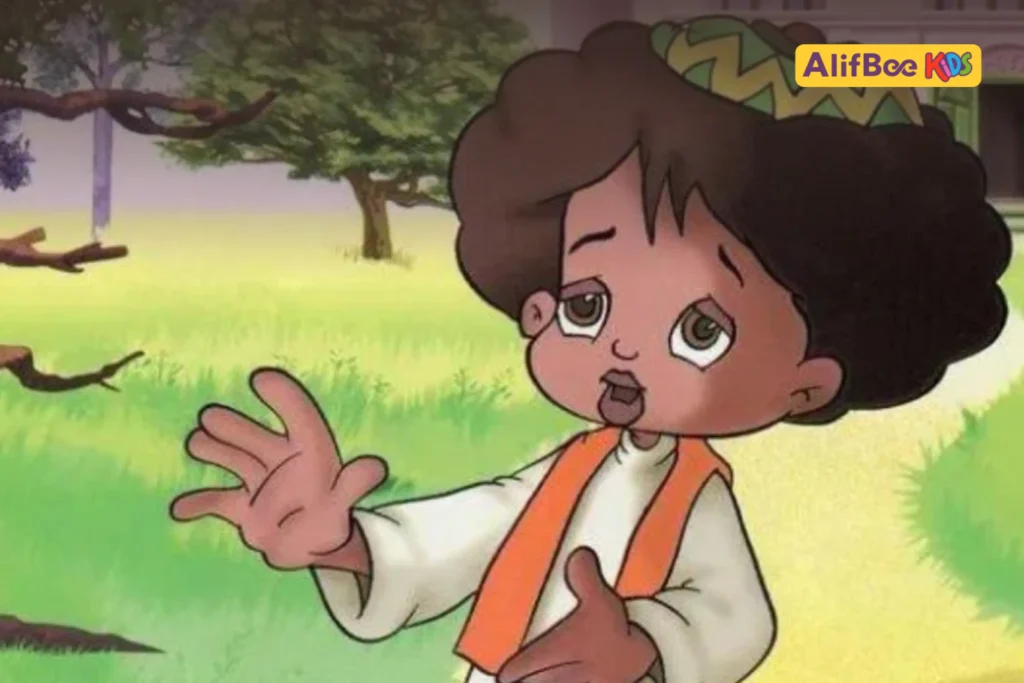
1. Bakkar
Bakkar is a well-known Egyptian cartoon about a young Nubian boy, his goat Rashida, and the people around him. Its slower pace can be helpful for children who find newer, fast-cut animation overwhelming.
The main learning value is its Egyptian Arabic. Children hear greetings, family language, everyday actions, and culturally familiar situations in a natural context. It is a better fit for children who already understand a little Arabic or who hear Egyptian Arabic at home. Parents can pause after a short scene and repeat one expression rather than trying to explain the whole episode.
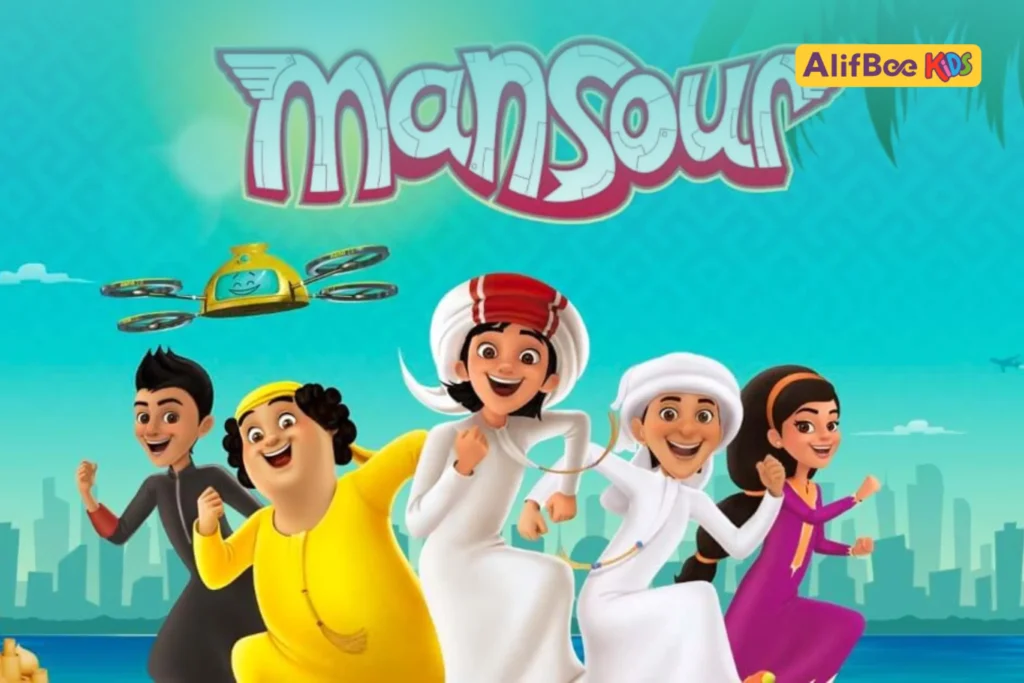
2. Mansour
Mansour follows an energetic Emirati boy and his friends through adventures, mistakes, and everyday challenges. The show uses Gulf and Emirati speech, so it is a useful choice for families who want dialect exposure rather than only school-style Arabic.
The dialogue is faster and the stories are less repetitive than preschool programs. For that reason, Mansour usually works better for children aged six and above, or for younger children who already understand conversational Arabic. The action helps children follow the story even when they miss a few words.
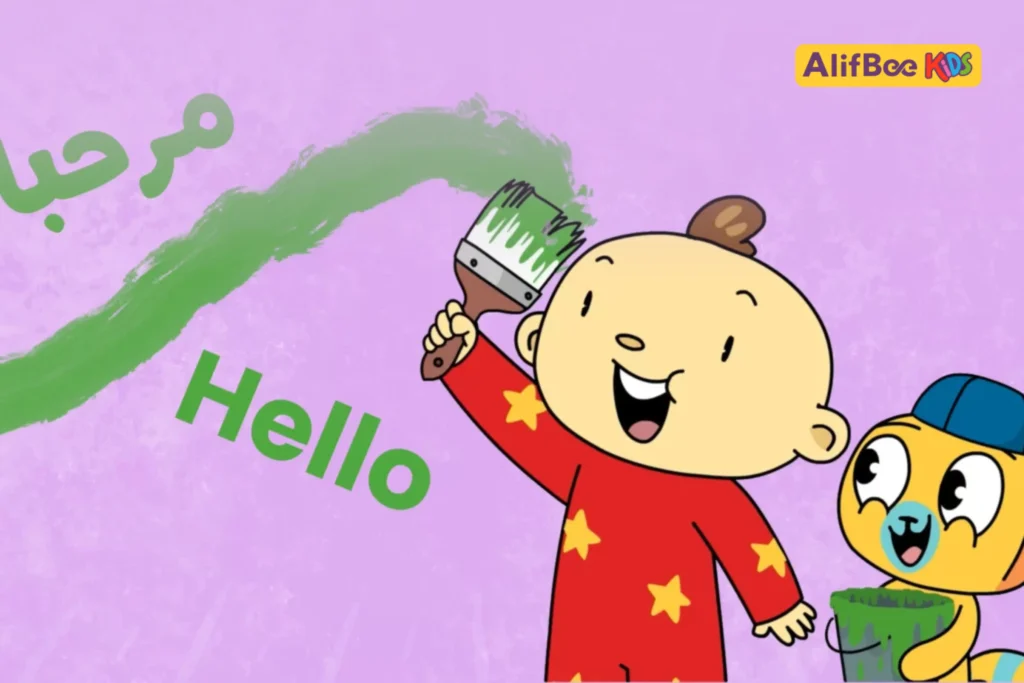
3. Adam Wa Mishmish
Adam Wa Mishmish is a Jordanian-produced educational series built around short songs in Modern Standard Arabic. The official Adam Wa Mishmish site describes content that teaches children through music, stories, and visual vocabulary.
It is one of the easiest options for preschool beginners and toddlers because each song usually focuses on one clear topic, such as colors, animals, numbers, seasons, or the alphabet. After watching, repeat the song without the screen or use it with an activity from this guide to the Arabic alphabet for kids.
Popular and Entertaining Arabic Kids Shows
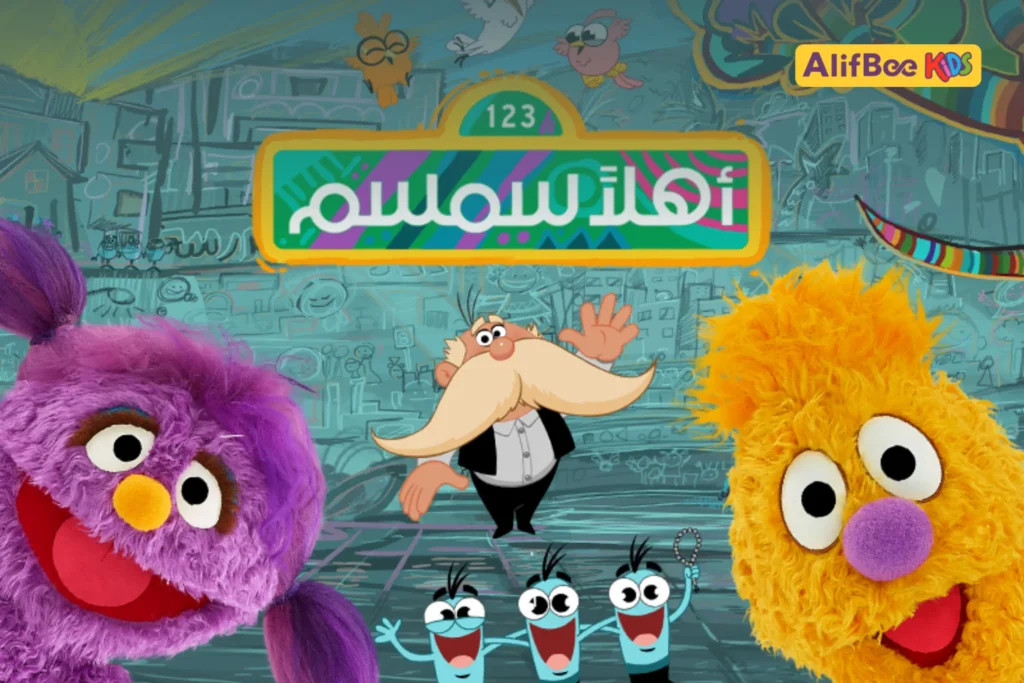
4. Alam Simsim
Alam Simsim, which means “Simsim’s World,” is the Egyptian Sesame Street production. It combines familiar characters, short sketches, songs, counting, and simple social lessons. Repetition makes it approachable for preschool and early-primary children.
One important language note: Alam Simsim uses Egyptian Arabic, not Modern Standard Arabic. That is not a disadvantage. It simply means parents should choose it when Egyptian listening practice matches the family’s goal. A counting episode can also be followed with hands-on practice from the AlifBee Kids guide to Arabic numbers for kids.
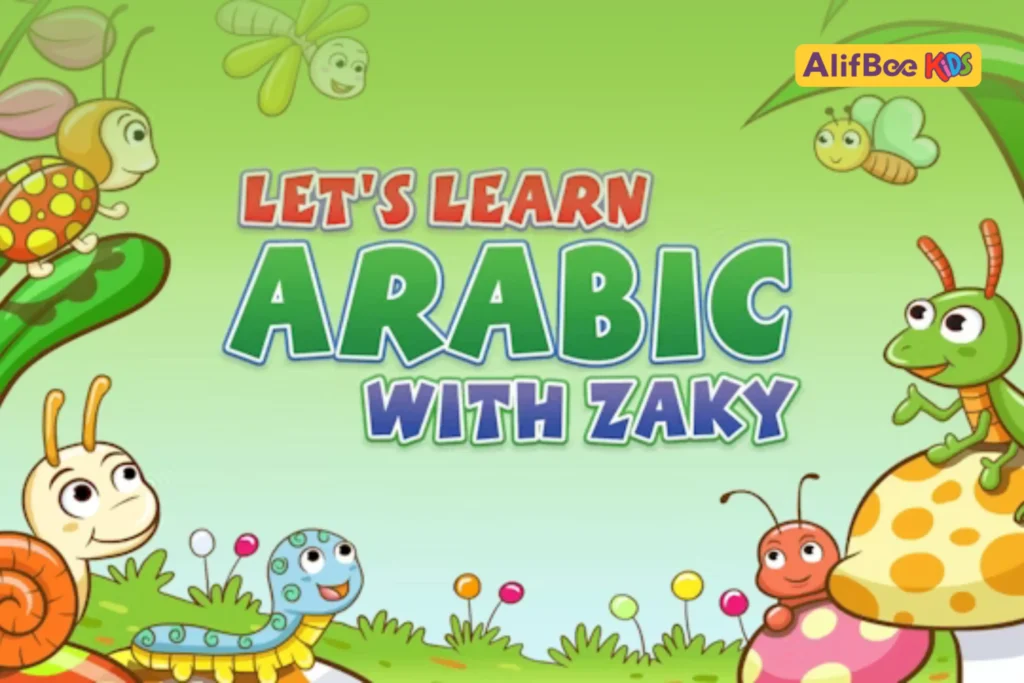
5. Let’s Learn Arabic with Zaky
Let’s Learn Arabic with Zaky is more lesson-like than most cartoons on this list. In the official One4Kids program, Zaky teaches the Arabic alphabet, numbers, colors, and basic words through animation and songs.
That direct style can be useful when a child needs clear review rather than a long story. The full film may be too long for one sitting, so use a short section that matches the topic your child is learning. A five-minute color or number segment can be more effective than finishing the whole video.
Islamic and Moral Arabic Cartoons for Families
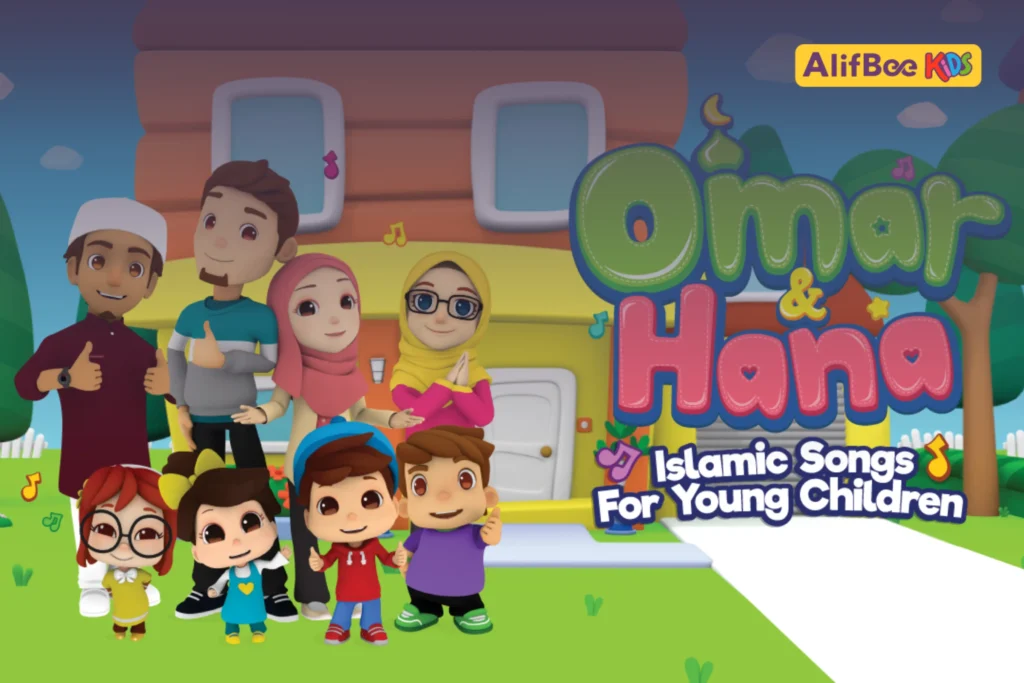
6. Omar and Hana
Omar and Hana is a Malaysian preschool series that has been produced in several languages, including Arabic. The official Arabic channel follows two siblings as they learn about family life, good habits, and Islamic values.
The songs and short stories suit younger children, especially those who already enjoy the characters in another language. If your child is hesitant, watch a familiar episode in English first, then try the Arabic version. Check the specific playlist and audio because the style of Arabic may vary across releases.
7. Fawaz and Noora
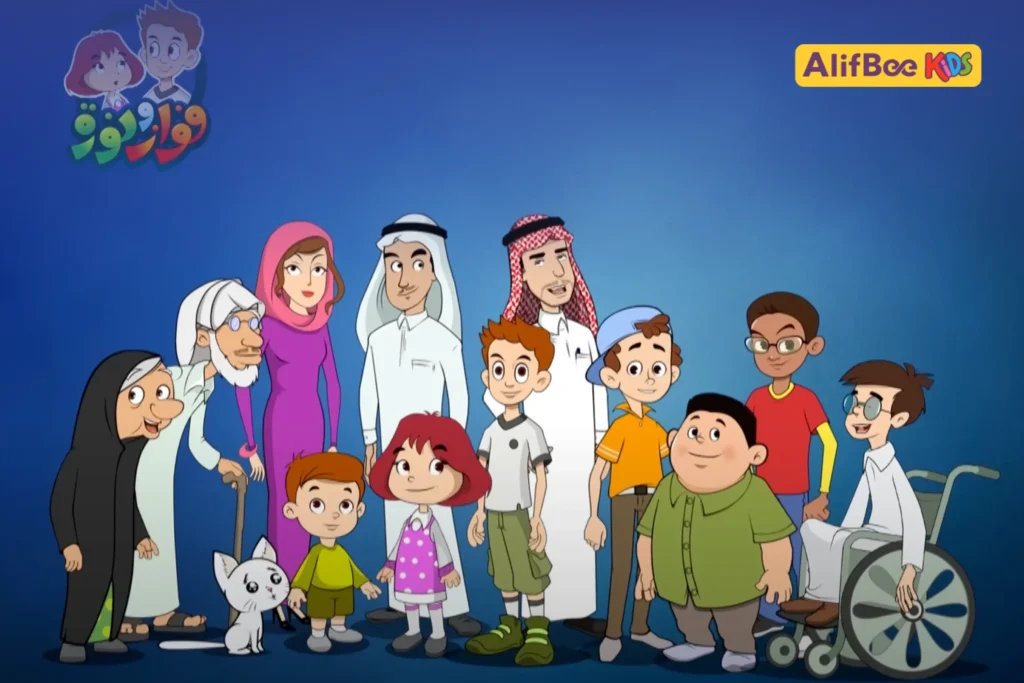
Fawaz and Noora uses short, straightforward stories to teach a single value or behavior, such as patience, honesty, or helping others. The episodes are brief, and the Arabic is generally clear and formal-leaning, which makes the series useful for children who have moved beyond isolated vocabulary.
Try asking one simple question after the episode: “What happened?” or “What did the character learn?” Your child can answer in English at first. The goal is to connect Arabic listening with meaning, not to test them.
Arabic Dubbed Movies for Kids
A familiar movie can be easier than a completely new Arabic show. Your child already knows the characters and main events, so they can use the story to work out the meaning of new words. This reduces frustration, especially for beginners.
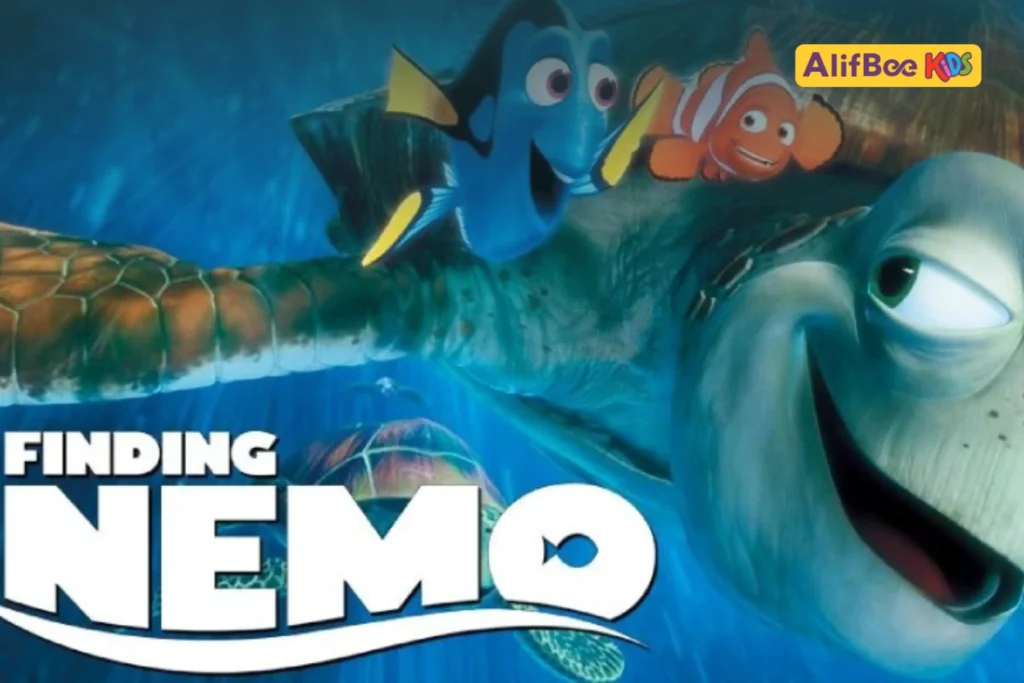
8. Finding Nemo
Finding Nemo works well because the story is easy to follow visually and many children already know it. The dialogue includes family language, directions, emotions, and repeated names. The Egyptian-dubbed version is especially well known, although an MSA version may also be available depending on the platform.
Start with a favorite scene rather than the full movie. Rewatching ten minutes in Arabic can produce more useful listening than sitting through a long film after the child has lost interest.
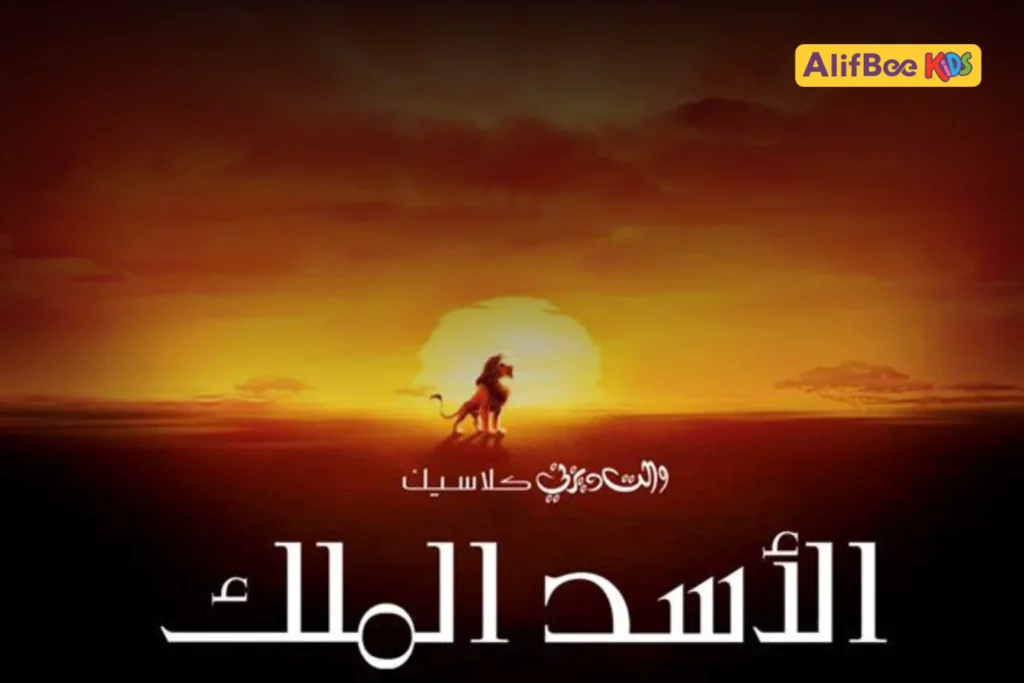
9. The Lion King in Arabic
The Lion King is another familiar choice with memorable songs and a strong emotional story. Children can often understand the mood of a scene before they understand every line. This gives them a reason to keep listening.
As with Finding Nemo, the Arabic version depends on the release and region. Some families prefer the classic Egyptian dub, while others want MSA. Preview the audio track, then choose one or two songs or scenes to repeat over several days.
Should Your Child Watch MSA Cartoons or Arabic Dialect Cartoons?
The answer depends on what you want Arabic to do in your child’s life.
- Choose Modern Standard Arabic when the main goal is reading, school Arabic, formal vocabulary, or understanding content across the Arab world.
- Choose a dialect when the main goal is speaking with parents, grandparents, relatives, or a local community.
- Use both when your child needs literacy and family conversation. Simply name the variety: “This show is Egyptian Arabic,” or “This song uses MSA.”
Children can learn that Arabic has different forms, just as they notice differences between formal and everyday language in English. Consistent exposure and real conversation matter more than keeping every minute of media in one variety.
Should Children Use Subtitles with Arabic Cartoons?
Subtitles are useful in some situations, but they are not automatically better.
- For preschoolers and children who cannot read yet, focus on Arabic audio, clear visuals, and your interaction. Subtitles may add little.
- For children who can read Arabic, Arabic captions can help connect sounds with written words.
- For older beginners, English subtitles can help on the first viewing. Try Arabic captions or no subtitles on the second viewing.
- Do not expect captions and dubbing to match exactly. Translators often adjust lines to fit timing, rhythm, and mouth movement.
The best option is the one that keeps the child listening to Arabic rather than reading English for the entire episode.
How to Turn Arabic Cartoons into Real Language Practice
- Keep the first session short. Five to fifteen minutes is enough for a beginner. Stop while your child is still interested.
- Watch together when you can. Point to an object, laugh at the same moment, or ask what the character is doing. Do not pause every sentence.
- Choose only three words. Repeat words that are easy to use later, such as a color, an action, or a family word.
- Repeat the song or scene. Children often learn through repetition long before they are ready to explain a word. The AlifBee Kids list of Arabic songs for kids gives you more short listening material to rotate through the week.
- Move the language away from the screen. Draw a character, act out one scene, match picture cards, or retell the story. You can continue with Arabic stories for kids or simple Arabic games for kids so the same vocabulary appears in a new context.
Final Thoughts
Do not try all nine options at once. Choose one show that matches your child’s age and the kind of Arabic you want them to hear. Watch one short episode twice this week. Pick three words. Use them once at breakfast, in the car, or during play.
That small routine is enough to turn a cartoon from background entertainment into a useful part of Arabic learning.
For more structured practice after the episode, AlifBee Kids combines cartoons, songs, stories, vocabulary, and interactive activities in one learning path.
FAQs
Can a child learn Arabic only by watching cartoons?
Cartoons can improve listening and vocabulary, but most children also need real conversation, chances to answer, reading practice, and repeated use of words in daily life.
Which Arabic cartoons use Modern Standard Arabic?
Adam Wa Mishmish is a strong MSA choice for young beginners. Let’s Learn Arabic with Zaky teaches clear basic Arabic, and Fawaz and Noora generally uses formal-leaning language. Dubbed films may be available in MSA, Egyptian Arabic, or both, so check the exact version.
What are the best Arabic cartoons for toddlers?
Adam Wa Mishmish, Alam Simsim, Omar and Hana, and short sections from Let’s Learn Arabic with Zaky are the most toddler-friendly choices on this list. Preview the pace and content, then keep viewing sessions short.
Will hearing different Arabic dialects confuse my child?
Not necessarily. Children can learn that people speak Arabic in different ways. It helps to keep one variety consistent for everyday speaking and to tell the child when a cartoon uses Egyptian, Gulf, or Modern Standard Arabic.
Where can families watch Arabic cartoons safely?
Start with official YouTube channels, the producer’s website, or licensed streaming services. Availability changes, and user-uploaded copies may be incomplete, poor quality, or unauthorized. Parents should preview any online content before sharing it.