


Body Parts in Arabic for Kids

Body Parts in Arabic for Kids
Part of the Series
Arabic for Kids Guide

Have you ever noticed how kids love pointing to their noses or tapping their feet while learning new words? That is what makes learning body parts in Arabic such a great place to begin. These are simple words children can see, touch, and use right away.

Learning body parts in Arabic helps kids build simple, useful vocabulary from the very first day. It makes lessons more active and fun. A child can point to their head, touch their hand, or smile and say the word at the same time. This makes learning feel easy.

In this guide, we will look at the main body parts in Arabic that kids can learn easily. You will also see how these Arabic words can be taught through play, movement, and everyday practice.

Why Start with Body Parts?

Body-related words are easy to teach because they are visual. A child does not need a long explanation. You can point, move, smile, and repeat. That is enough to get started.

This type of learning works well for kids because play, movement, and repetition support language development. Research in Child development and education also shows that play, interaction, and naming what children see and do are effective ways to build their Arabic vocabulary.

body parts in Arabic

Common Body Parts in Arabic

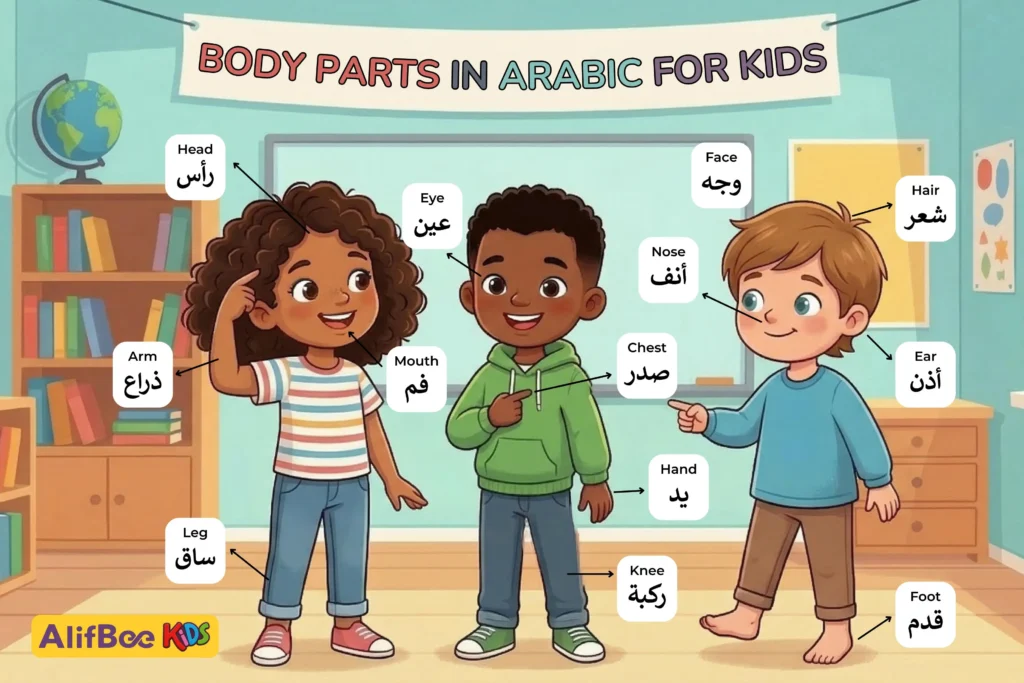
Below are some of the most useful body parts words in Arabic for kids to learn first.

Head and Face

English

Pronunciation

Arabic Phrase

head

raʾs

رأس

face

wajh

وجه

hair

shaʿr

شعر

eye

ʿayn

عين

ear

udhun

أذن

nose

anf

أنف

mouth

fam

فم

tooth

sinn

سن

tongue

lisān

لسان

These are some of the first Arabic words children enjoy learning. They can point to each part as they say it. You can also turn this into a mirror game: say the word, and ask the child to touch it on their face.

Upper Body

English

Pronunciation

Arabic Phrase

neck

ʿunuq

عنق

shoulder

katif

كتف

arm

dhirāʿ

ذراع

hand

yad

يد

finger

iṣbaʿ

إصبع

chest

ṣadr

صدر

stomach

baṭn

بطن

back

ẓahr

ظهر

heart

qalb

قلب

These words are useful in many child-friendly activities. You can say, “Touch your hand,” “Raise your arm,” or “Point to your stomach.” These short actions help the word stay in a child’s memory.

Lower Body

English

Pronunciation

Arabic Phrase

leg

sāq

ساق

knee

rukba

ركبة

foot

qadam

قدم

toe

iṣbaʿ al-qadam

إصبع القدم

This group is perfect for movement-based games. Ask children to stomp their feet, bend their knees, or tap their toes. When the body moves, language becomes easier to remember.

Simple Arabic Phrases About Body Parts

parts of the body in Arabic

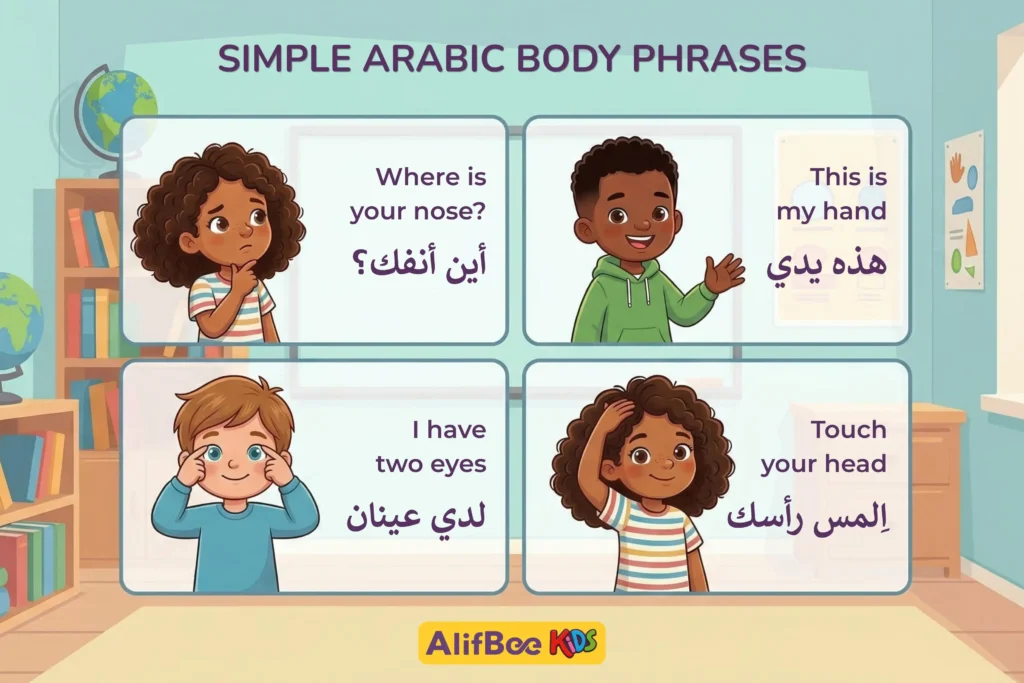
Once a child knows a few Arabic words, you can move on to short phrases in Arabic. Keep them simple and repeat them often.

English

Pronunciation

Arabic Phrase

Where is your nose?

ayna anfuka?

أين أنفك؟

This is my hand

hādhihi yadī

هذه يدي

I have two eyes

ladayya ʿaynān

لدي عينان

Touch your head

Ilmis raʾsaka

اِلمس رأسك

These short phrases can help children connect vocabulary to real-life use. They also make the lesson more engaging.

Easy Ways to Teach Body Parts in Arabic

Use Pointing First

Start with the simplest method: say the word and point.

Say raʾs and touch the head.
Say yad and lift the hand.
Say qadam and tap the foot.

This works well because children do not need to translate in their minds. They connect the sound directly to the object.

Keep It Short

Young learners do better with short lessons. Five to ten words in one sitting is enough. Repeat them the next day, then add a few more.

Short lessons are easier than long ones. They keep the child interested and give more space for repetition.

Add Songs and Movement

When lessons include music, rhythm, and movement, children are more likely to remember the words. Play-based learning supports language development by giving children repeated exposure to words in both active and social contexts.

  • Clap your hands when saying yad (hand).
  • Nod your head for raʾs (head).
  • March in place when saying sāq (leg).

Even a tiny action can make a big difference.

Use Real-Life Moments

The best practice does not always happen at a desk. It can happen while getting dressed, brushing teeth, or washing hands.

You can say:

  • “This is your hand.”
  • “Wash your face.”
  • “Where is your nose?”

Real-life moments make the words meaningful. When words are useful, children remember them more easily.

Fun Practice Ideas for Kids

Simon Says in Arabic

This game is perfect for learning body parts in Arabic.

Say:

  • “Touch your head.”
  • “Touch your nose.”
  • “Raise your hand.”

Children listen, move, and laugh, which is a strong combination for learning.

Draw and Label

Ask the child to draw a person and label a few body parts together. Start with the easiest ones, like:

  • رأس (raʾs) – head
  • عين (ʿayn) – eye
  • يد (yad) – hand
  • قدم (qadam) – foot

Do not rush. Even four words are enough for a good lesson.

Mirror Game

Stand in front of a mirror. Say a word, and the child points to it in the mirror.

This works especially well with:

  • face
  • hair
  • eyes
  • nose
  • mouth

It is simple, but children love it.

Quick Review Cards

Make small flashcards with one word on each card. Show the Arabic word, pronounce it, and ask your child to point to the body part. You can also reverse the game: point first, then ask the child to say the Arabic word.

A Helpful Tip for Parents

Do not worry about perfect pronunciation on day one. The goal is comfort and familiarity. Let your child hear the word many times. Clear repetition matters more than pressure.

It also helps to use the same words again and again. That is one reason body parts in Arabic are so useful for beginners; they come up in daily life all the time.

Conclusion

Your child can learn body parts in Arabic easily, in a fun and practical way. We mentioned some keywords for kids to learn in this article. Children can see these words, refer to them, and use them in simple phrases easily. A child can develop genuine confidence with a small number of tables, games, and a little practice each day.

Ready to make Arabic learning fun every day? Start your child’s free 14-day trial with AlifBee and turn these body parts words into play, practice, and progress.

Picture of Yahia Hawajry
Yahia Hawajry
Yahia is an Arabic & English Content Writer and Copywriter. He has over 6 years of experience in several fields, including Arabic teaching and learning, Tech, Finance, and Sports.
If you found this article helpful, please share it with your friends to spread the knowledge!
Facebook
LinkedIn
Telegram
X
Other Posts