The five pillars of Islam are the most important practices that guide Muslims in their daily lives: faith in one God, daily prayer, helping others, self-control, and visiting a holy place.
These pillars help Muslims grow spiritually and become kind, responsible people who care about their faith and community.
As you start teaching your kids the Islamic culture and Islamic practices like Salah and Fasting, it is essential to explain to them the five pillars of Islam.
In this article, we help you with simple defintions and key benefits to explain to your children or students.
What Are the Five Pillars of Islam?
The 5 pillars of Islam are the five most important habits that every Muslim follows. Just like pillars hold up a building and keep it strong, these practices create a strong foundation for a Muslim’s faith and daily life.
They help young Muslims understand what Allah wants from them and how to be good people.
The five pillars of Islam are:
- Shahada (Faith): Believing in one God.
- Salah (Prayer): Prayer five times a day.
- Zakat (Charity): Helping those in need.
- Sawm (Fasting): Fasting during Ramadan.
- Hajj (Pilgrimage): Visiting Mecca.
Each pillar teaches young learners an essential aspect of being a Muslim. Let’s now explore what each of them means and why Muslims around the world practice them.
1. Shahada – Believing in One God
What Does Shahada Mean?
The first pillar of Islam is Shahada, which simply means believing in one God, Allah. The Shahada, said by Muslims, states that Allah is the only God and that the Prophet Muhammad (PBUH) is the last messenger of Allah.
A messenger is an individual chosen by God to deliver his message to people and explain how they can lead a good life. This declaration of faith is the most important aspect of Islam.
Why Is Shahada Important?
- It is the first and most important pillar, which all Muslims must believe in.
- It teaches faith and trust in Allah alone.
- It reminds Muslims of whom they worship and why their faith matters.
- It creates a strong foundation for all the other pillars.
- Every Muslim begins their journey with this declaration of faith.
2. Salah – Daily Prayer
What Is Salah?
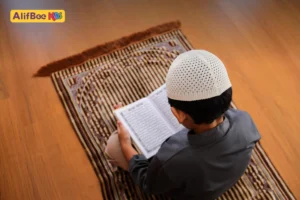
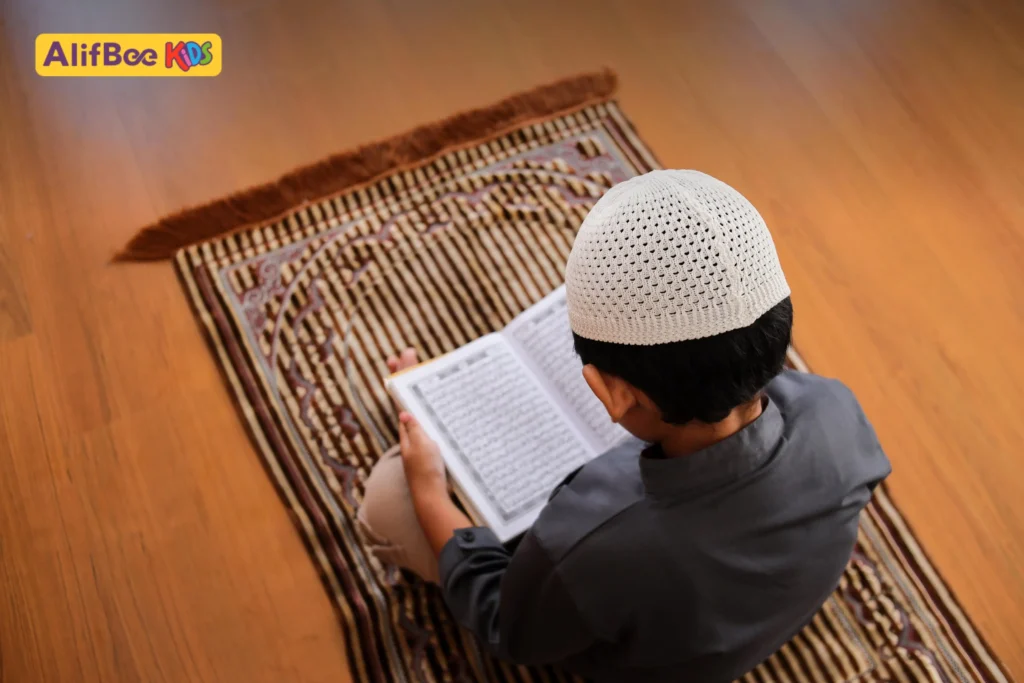
Salah refers to prayer, and the Muslims pray five times a day. Prayer is a special way of communicating with God and demonstrating devotion to Allah.
Muslims can pray anywhere they want, whether at home, at school, or in the mosque (a place where Muslims gather to pray).
During salah, they face Mecca and perform specific movements while reciting verses from the Quran. (Read more about Learning Quran for kids)
Why Do Muslims Pray?
- To remember Allah throughout their daily lives.
- To feel peaceful and closer to Allah.
- To remain thankful for all of Allah’s blessings.
- To ask for guidance and help.
- To develop discipline and maintain regular good habits.
Prayer helps young muslims feel connected to their faith and understand the importance of communicating with God every day.
3. Zakat – Helping Others
What Is Zakat?
Zakat is the act of giving a portion of your money to those in need. Zakat, or charity, is generally calculated at 2.5% of your total savings and assets, including gold, silver, and business inventory that have been in your possession for a full lunar year. Zakat is given to those who are truly in need.
Muslims who qualify to give Zakat must give it to Muslims who are poor enough to qualify to receive it, ensuring a fair distribution of wealth within Muslim societies.
Moreover, Zakat teaches children that everything we have is a gift from Allah and that we should share our blessings with others.
Why Is Zakat Important?
- It teaches kindness and generosity.
- It helps poor families get food, clothes, and shelter.
- It encourages sharing and caring for others.
- It reminds Muslims to be grateful for what they have.
- It builds empathy and understanding for people in need.
Even young Muslims can practice charity by sharing their toys, helping others, or participating in community activities that support those with fewer resources.
4. Sawm – Fasting During Ramadan
What Is Fasting?
Fasting is the act of not eating or drinking between sunrise and sunset in the holy month of Ramadan.
The Islamic calendar has a special month, Ramadan, during which Muslims devote more time to their religion, praying and reading the Quran.
Children are not required to fast until they are old and mature enough. Most begin by fasting for a few hours to learn patience.
Why Do Muslims Fast?
- To learn patience and self-control.
- To understand what hunger feels like and to remember those who don’t have enough food.
- To grow closer to God through spiritual practices.
- To develop strong character and devotion.
- To appreciate the blessings of food and water.
The month of Ramadan is a time when Muslim families come together, share meals at sunset, and take part in acts of kindness and prayer.
5. Hajj – Visiting Mecca
What Is Hajj?
Hajj is a special journey, a pilgrimage to the sacred city of Mecca, the holiest city in Islam. Muslims try to visit Mecca at least once in their lifetime, if they are able.
Every year, millions of Muslims gather for Hajj to pray and interact. They go to the Kaaba, a sacred structure toward which Muslims face when they pray.
Why Is Hajj Important?
- It shows unity among Muslims from all countries.
- It brings Muslims together in one place to worship Allah.
- It strengthens faith and promotes spiritual growth.
- It reminds Muslims that everyone is equal before God.
- It’s a journey that creates lifelong memories and meaning.
Even though children are too young to go on Hajj, learning about this pillar helps them understand the significance of this amazing journey.
Why Are the Five Pillars Important for Kids?
The five pillars of Islam encourage good habits among young Muslim children. Children who hear about these pillars can learn how to build a strong foundation in their religion.
Each pillar teaches a lesson, where Shahada is a lesson of faith, Salah is a lesson of discipline, Zakat is a lesson of generosity, Sawm is a lesson of patience, and Hajj is a lesson of unity.
These are important practices that educate children to become responsible, caring adults who practice their Islamic faith while being mindful of helping others.
Simple Table with Explanation of All Pillars
Pillar
What It Teaches
Simple Meaning
Shahada
Faith
Believing in one God (Allah) and that Muhammad is His messenger
Salah
Prayer & Discipline
Praying five times a day to remember and communicate with Allah.
Zakat
Charity & Kindness
Giving money to help poor people and share blessings.
Sawm
Patience & Self-Control
Fasting during Ramadan to learn patience and gratitude.
Hajj
Unity & Devotion
Making a pilgrimage to Mecca to worship alongside Muslims worldwide.
Conclusion
All in all, each of the five pillars of Islam offers something of value to every Muslim, including discipline, generosity, patience, and unity.
As a parent, the best way to instill Islamic values and character in your children is by helping them learn the five pillars of Islam. However, your kids’ learning does not start with the five pillars. Before learning about them, it is helpful to become familiar with the Arabic language, the language of the Qur’an.
Want your children to speak Arabic fluently, but can’t find a suitable, flexible solution?
Download AlifBee Kids to help your kids learn Arabic, Math, Drawing, Short Quranic verses, and more from the comfort of your home, with fun and engaging exercises!