

Arabic Verbs for Kids: 20 Easy Action Words Children Can Learn

Arabic Verbs for Kids
Part of the Series
Arabic for Kids Guide

Teaching kids Arabic verbs should be one of the first steps you consider in their Arabic language journey. These verbs help kids form simple Arabic sentences.

Many daily actions can serve as simple examples to teach basic Arabic verbs, such as eating, playing, jumping, writing, and reading. 

In this guide, we’ll share 20 of the most common and easy Arabic verbs for kids. Each verb includes pronunciation and a simple sentence kids can use right away.

What Is a Verb? (Explained for Kids)

In Arabic, action words are called verbs, just like in English. A verb tells us what someone or something does.

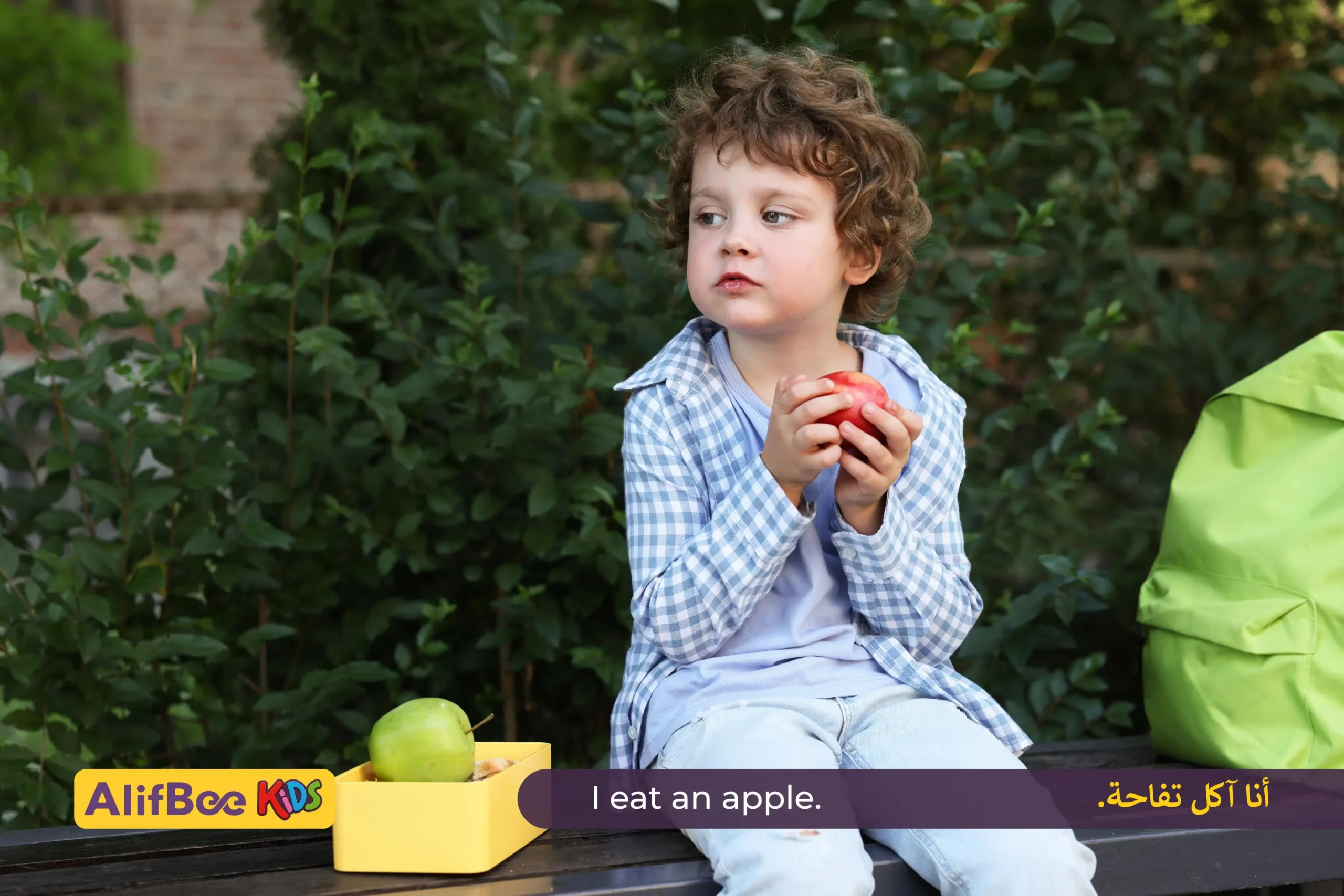
Think about what you do when you eat an apple. In English, you say “I eat.”

In Arabic, you say:

I eat.

Ana ākul

أنا آكل

“Ākul” (eat) is the verb. It’s that simple! Once kids understand this idea, they can start connecting Arabic words to real actions.

20 Easy Arabic Verbs for Kids

Here are 20 Arabic action words that children use every day. Practice one or two a day, and soon your children will start making their own sentences!

1
Arabic for kids 1

English

Pronunciation

Arabic

to eat

Akala

أكل

I eat an apple.

Ana ākul tuffāḥa

أنا آكلُ تفاحة.

2
Arabic for kids 2

English

Pronunciation

Arabic

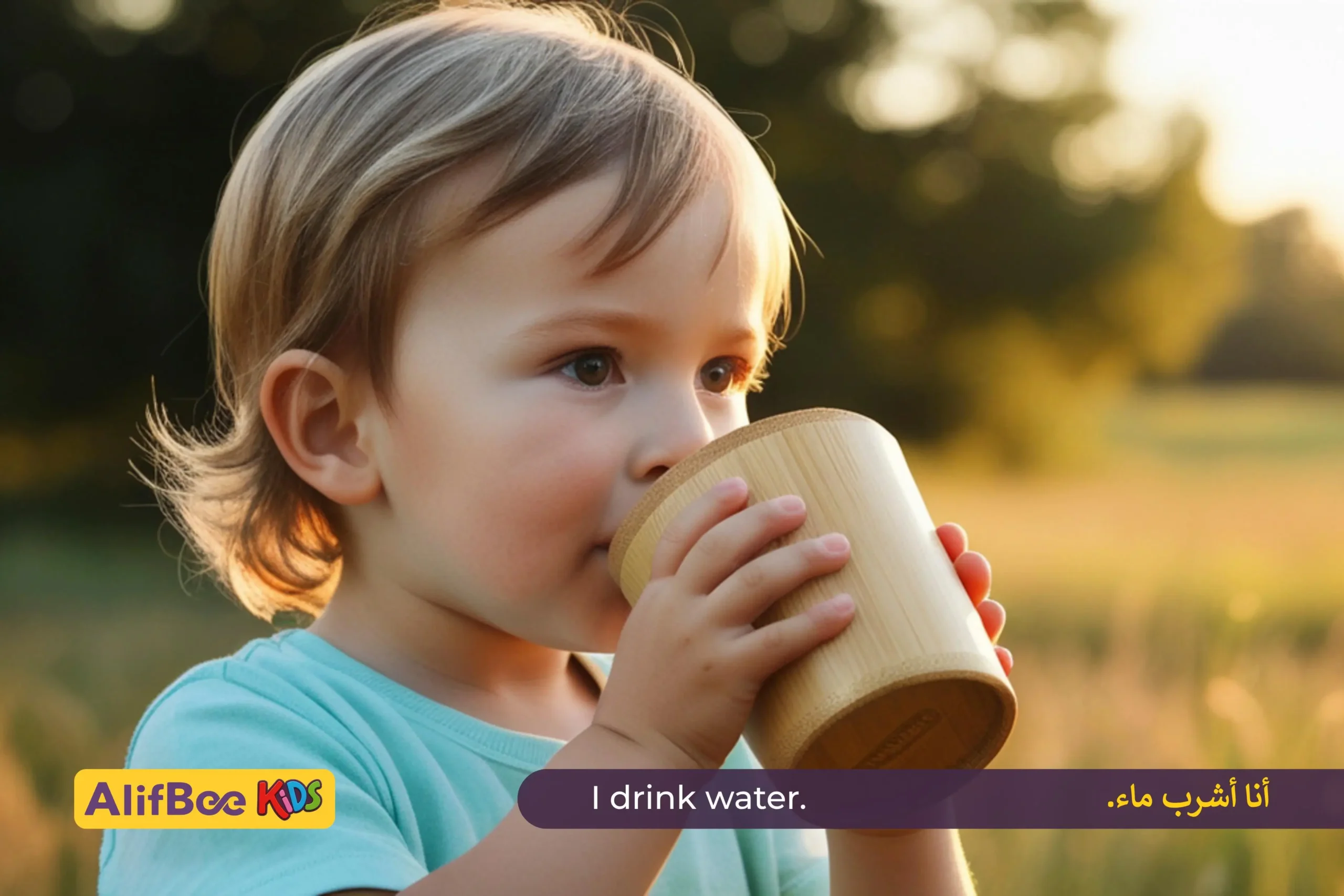
to drink

Shariba

شرب

I drink water.

Ana ashrab al-mā’

أنا أشربُ الماء.

3
Arabic for kids 3

English

Pronunciation

Arabic

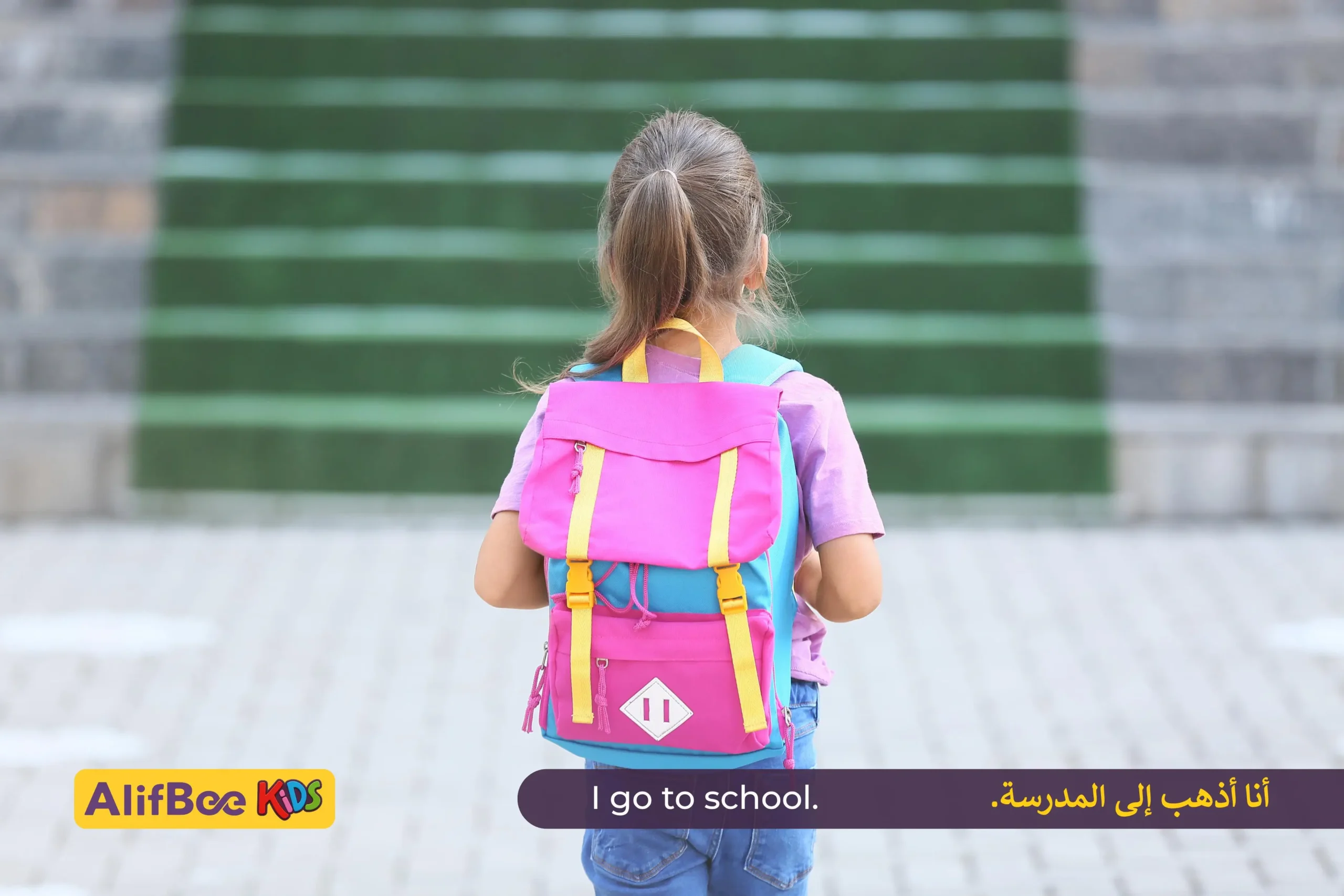
to go

Dhahaba

ذهب

I go to school.

’Anā ʾadhhabu ilā al-madrasa

أنا أذهبُ إلى المدرسة.

4

English

Pronunciation

Arabic

I wear

labisa

لَبِسَ

I wear my clothes.

ʾAnā albasu thiyābī

أَنَا أَلْبَسُ ثِيَابِي.

5
Arabic for kids 5

English

Pronunciation

Arabic

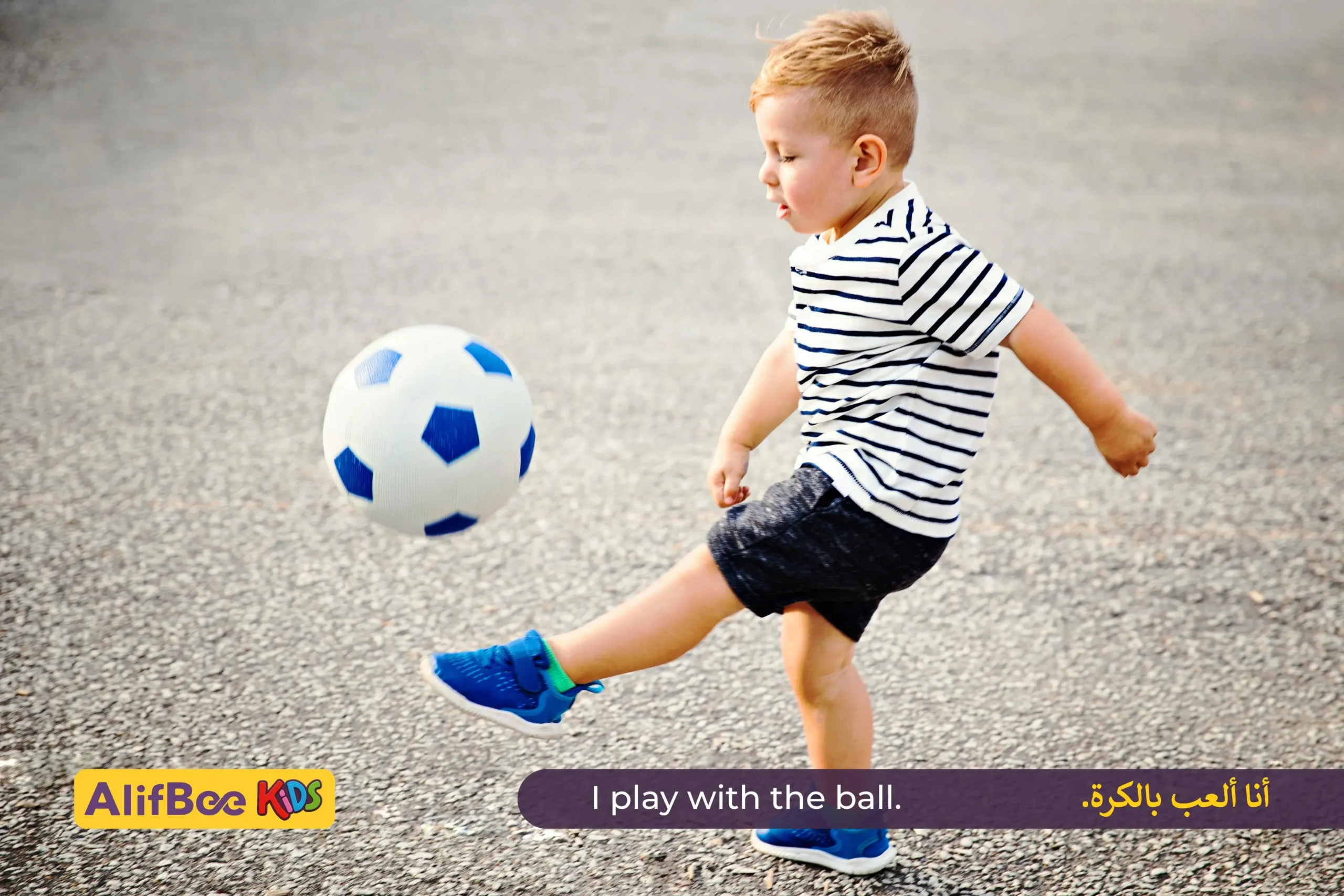
to play

La‘iba

لعب

I play with the ball.

Ana al‘abu bil-kura

أنا ألعبُ بالكرة.

6
action words in Arabic 1

English

Pronunciation

Arabic

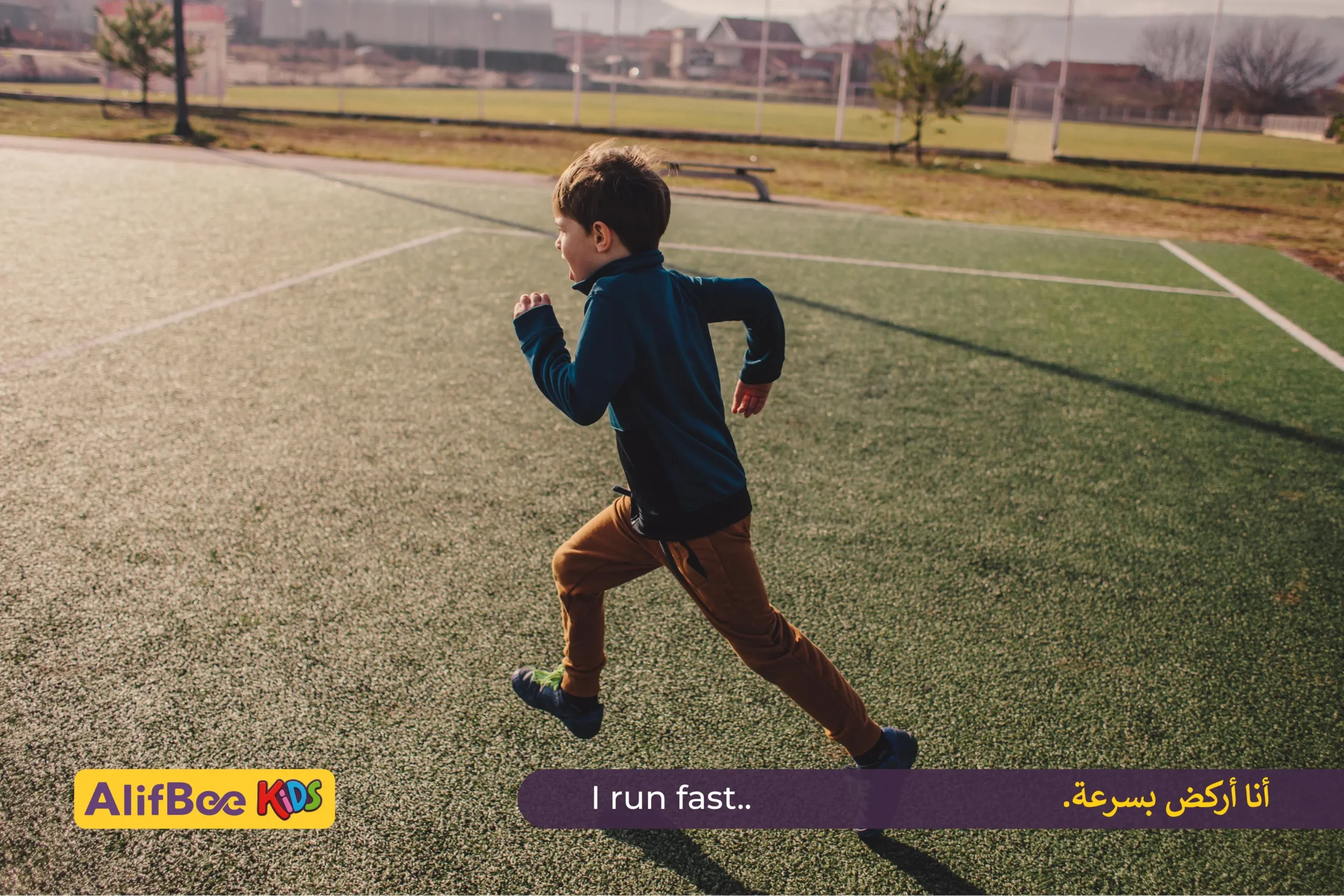
to run

Rakaḍa

ركض

I run in the playground

’Anā arkudu fī al-malʿab

أَنَا أَرْكُضُ فِي الْملْعب.

7
action words in Arabic 2

English

Pronunciation

Arabic

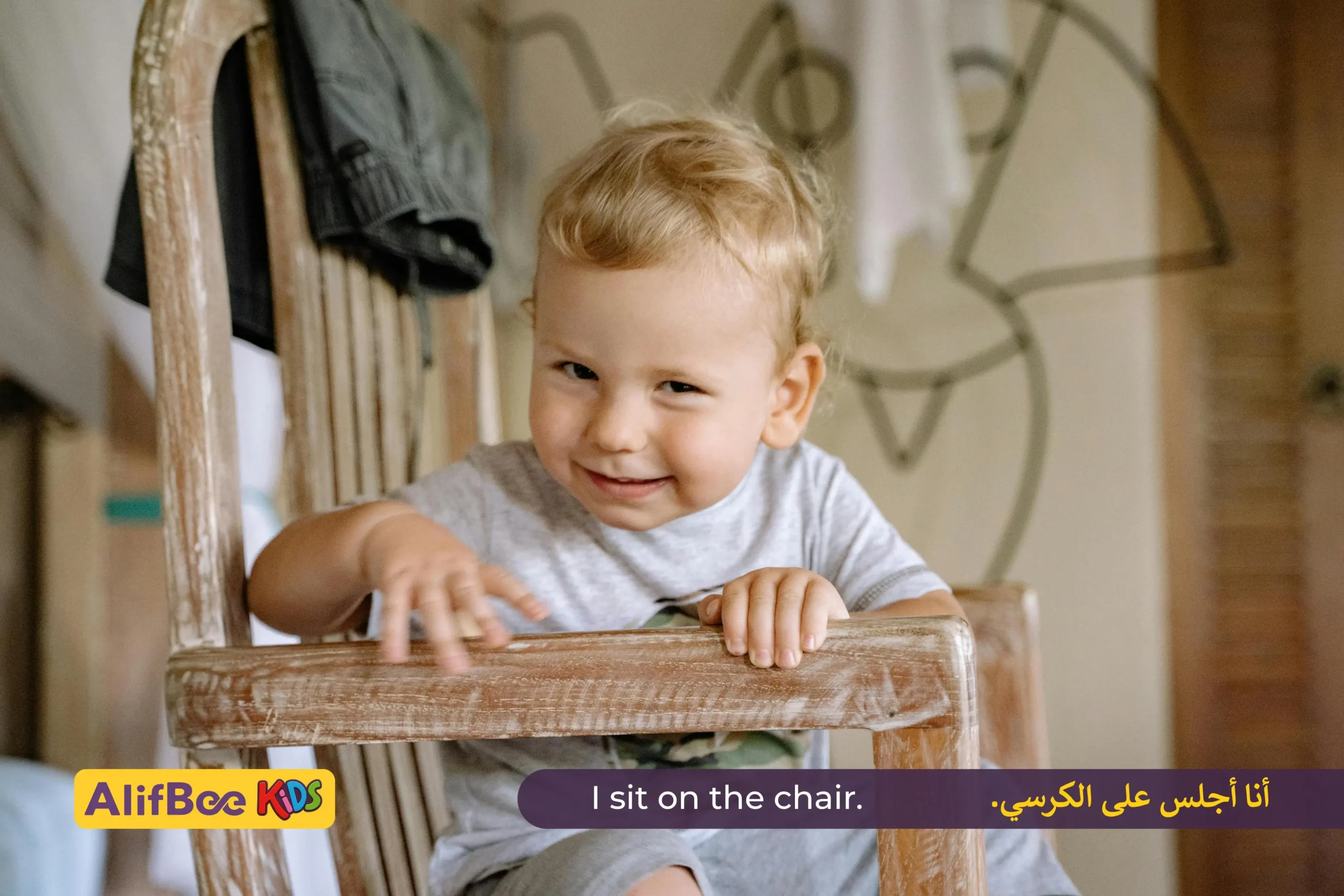
to sit

Jalasa

جلس

I sit on the chair

’Anā ajlisu ʿalā al-kursiyyi

أَنَا أَجْلسُ عَلَى الْكرْسِيّ.

8

English

Pronunciation

Arabic

to stand

Waqafa

وقف

I stand at the door

’Anā aqifu ʿinda al-bāb

أَنَا أَقِفُ عنْدَ البابِ.

9

English

Pronunciation

Arabic

to sleep

Nāma

نام

I sleep on the bed

’Anā anāmu ʿalā as-sarīri

أَنَا أَنامُ عَلَى السَّريرِ.

10
action words in Arabic 5

English

Pronunciation

Arabic

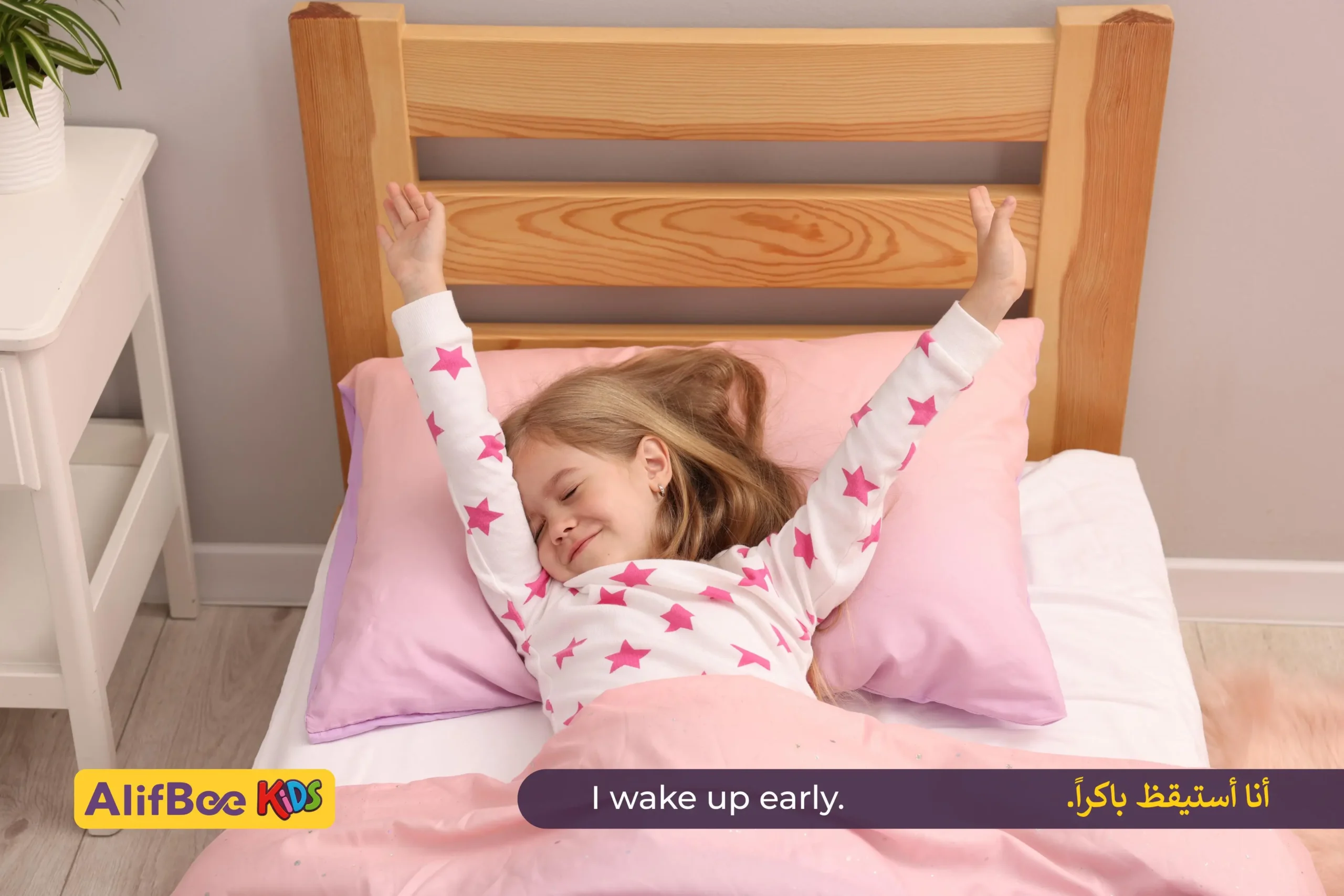
to wake up

Istayqaẓa

استيقظ

I wake up early.

Ana astayqiẓu bākiran

أنا استيقظُ باكراً.

11
learning Arabic 1

English

Pronunciation

Arabic

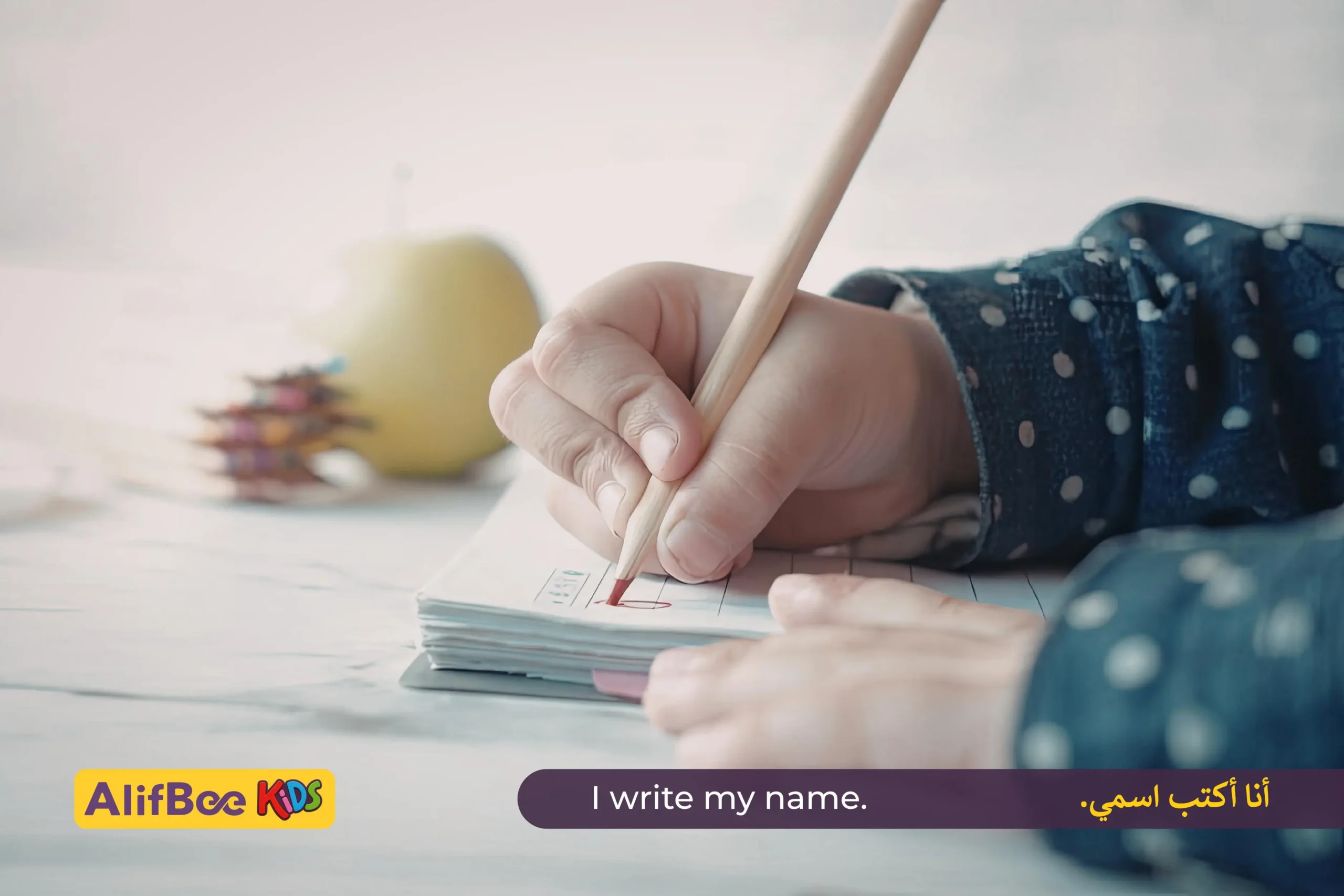
to write

Kataba

كتب

I write my name.

Ana aktubu ismī

أنا أكتبُ اسمي.

12
learning Arabic 2

English

Pronunciation

Arabic

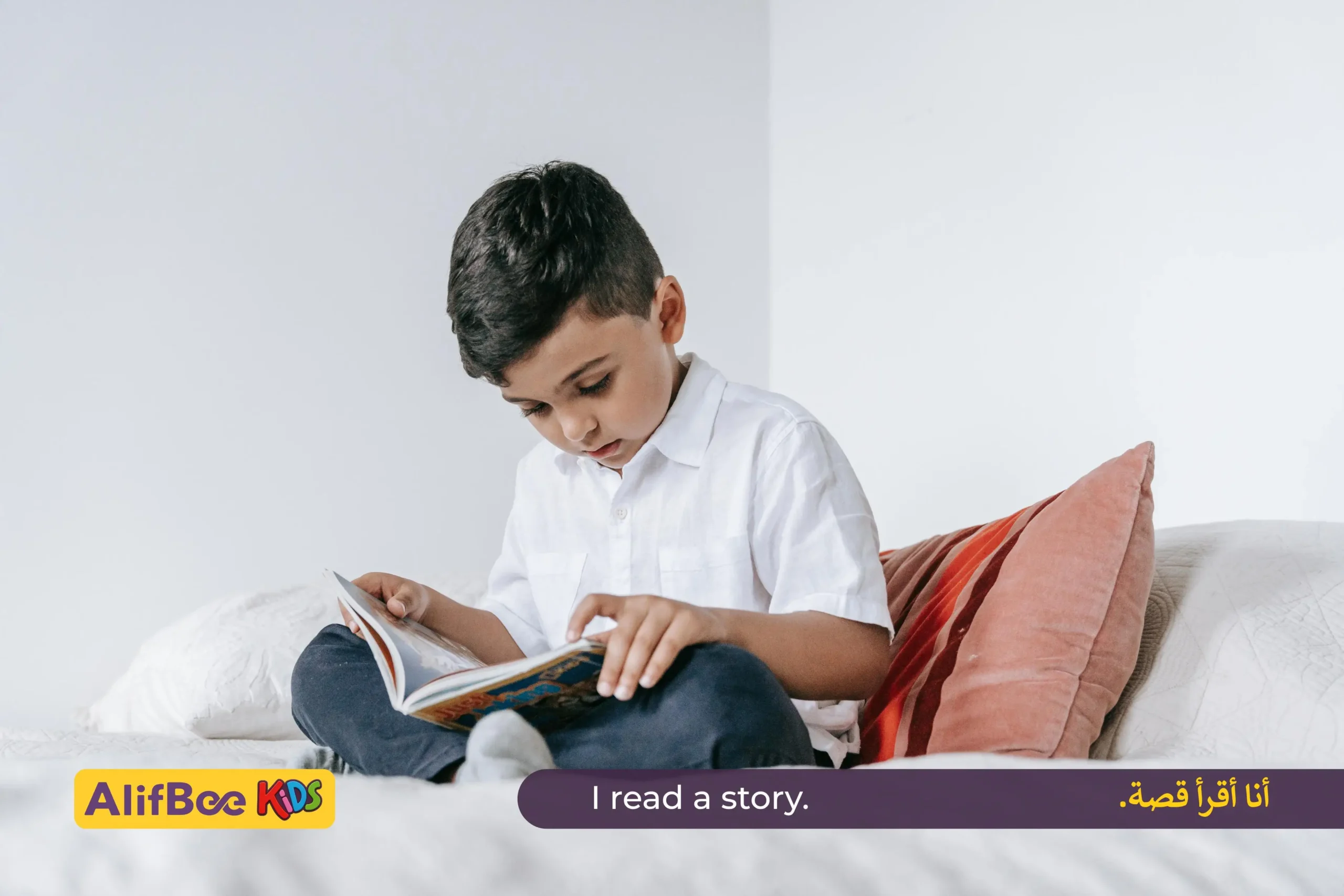
to read

Qara’a

قرأ

I read a story.

Ana aqra’u qiṣṣa

أنا أقرأُ قصة.

13
learning Arabic 3

English

Pronunciation

Arabic

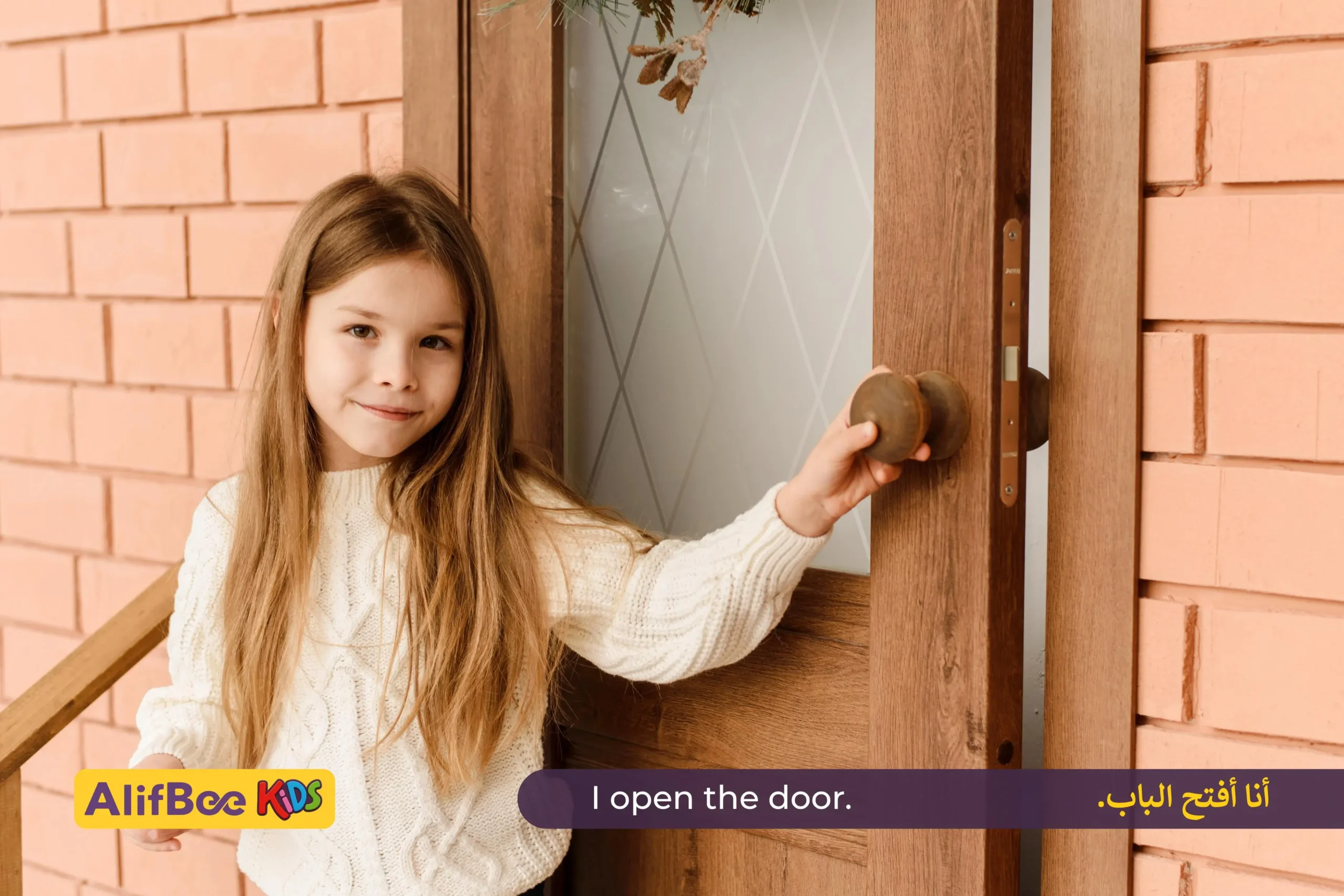
to open

Fataḥa

فتح

I open the door.

Ana aftaḥu al-bāb

أنا أفتحُ الباب.

14
action words in Arabic 4

English

Pronunciation

Arabic

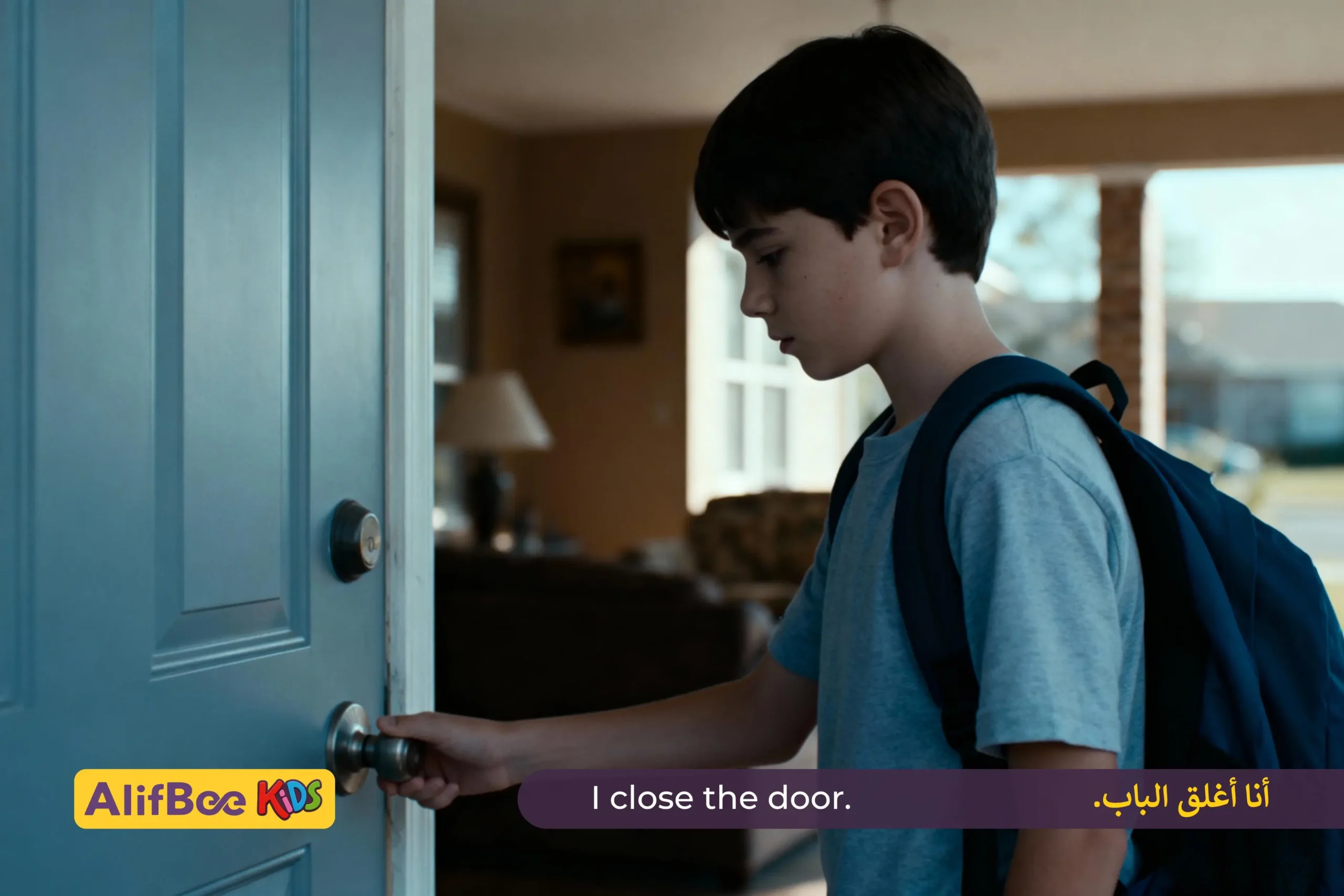
to close

Aghlaqa

أغلق

I close the door.

Ana ughliqu al-bāb

أنا أغلقُ الباب.

15
learning Arabic 5

English

Pronunciation

Arabic

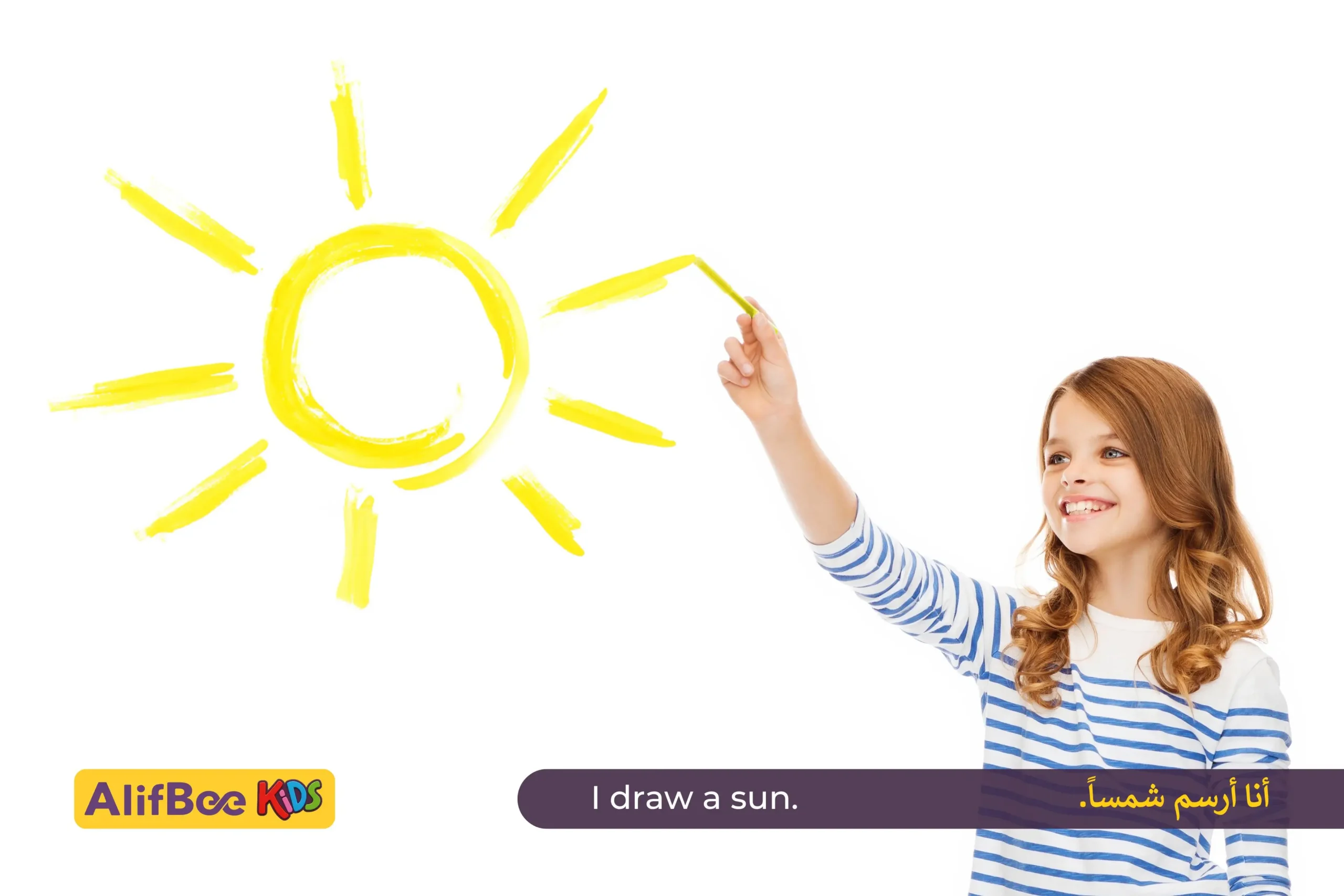
to draw

Rasama

رسم

I draw a sun.

Ana arsumu shamsan

أنا أرسمُ شمساً.

16
An Arabic verb 1

English

Pronunciation

Arabic

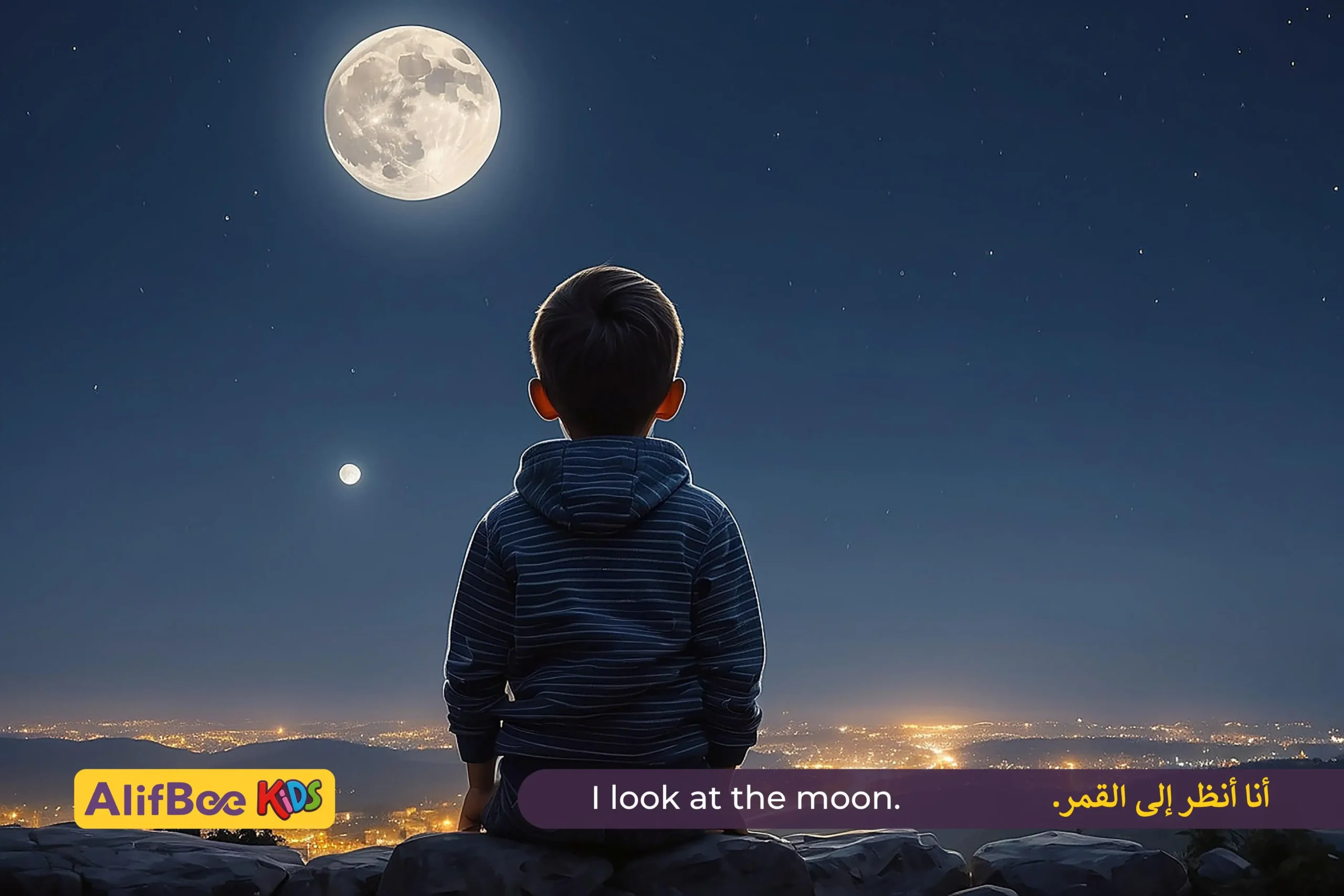
to look

Naẓara

نظر

I look at the moon.

Ana anẓuru ilā al-qamar

أنا أنظرُ إلى القمر.

17
An Arabic verb 2

English

Pronunciation

Arabic

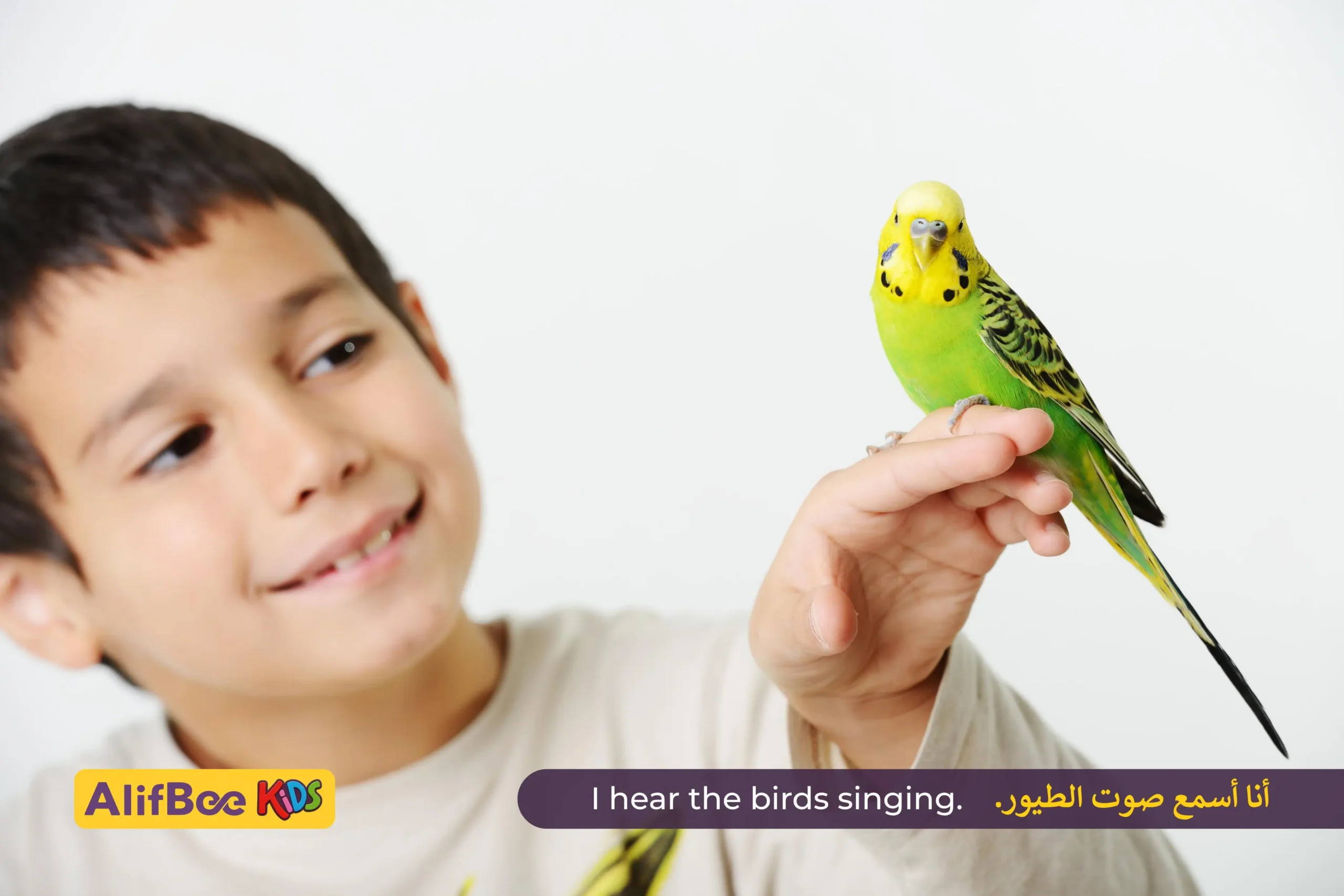
to hear

Sami‘a

سمع

I hear the birds singing.

Ana asma‘u ṣawta aṭ-ṭuyūr

أنا أسمعُ صوت الطيور.

18
An Arabic verb 3

English

Pronunciation

Arabic

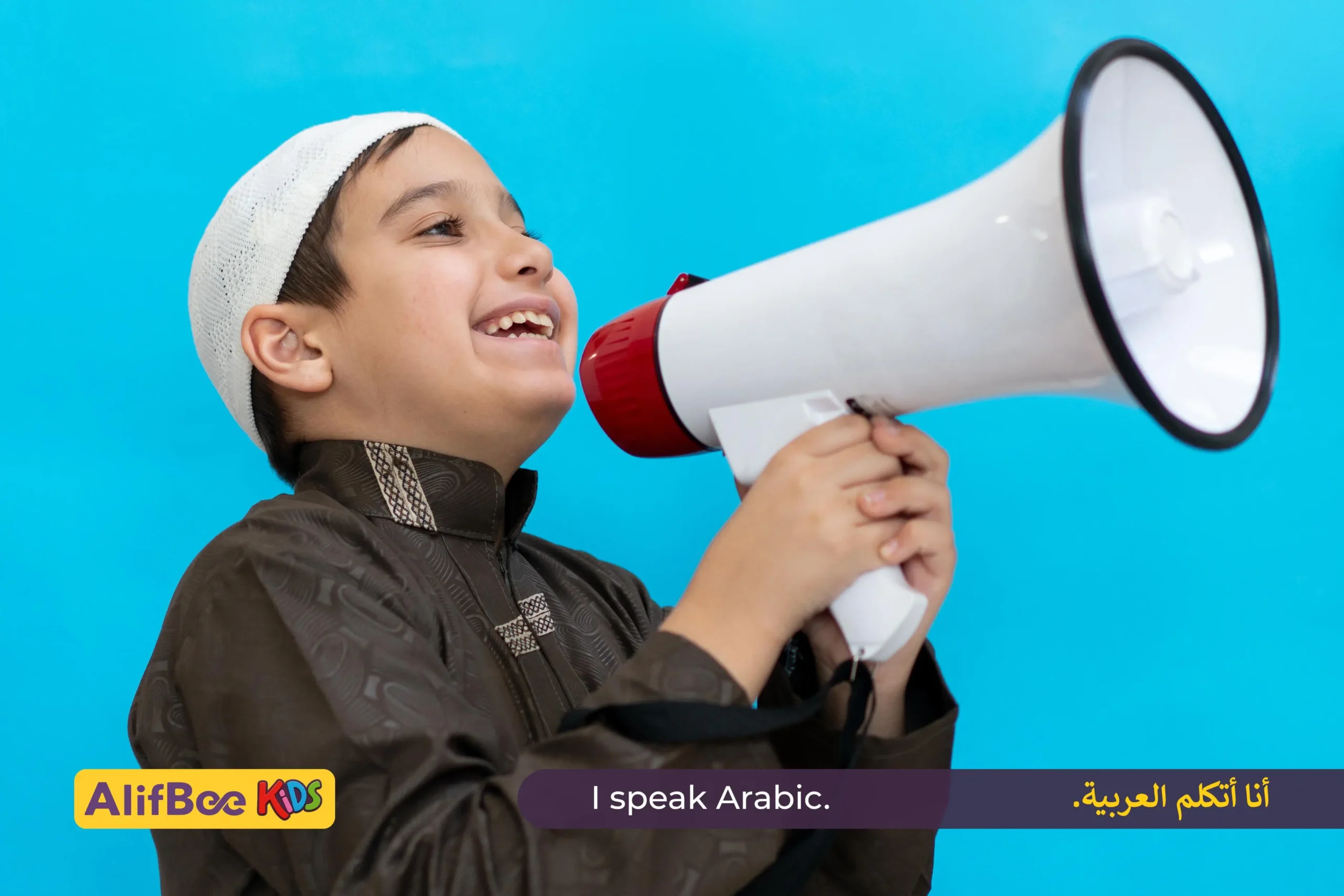
to speak

Takallama

تكلم

I speak Arabic.

Ana atakallamu al-‘arabiyya

أنا أتكلمُ العربية.

19
An Arabic verb 4

English

Pronunciation

Arabic

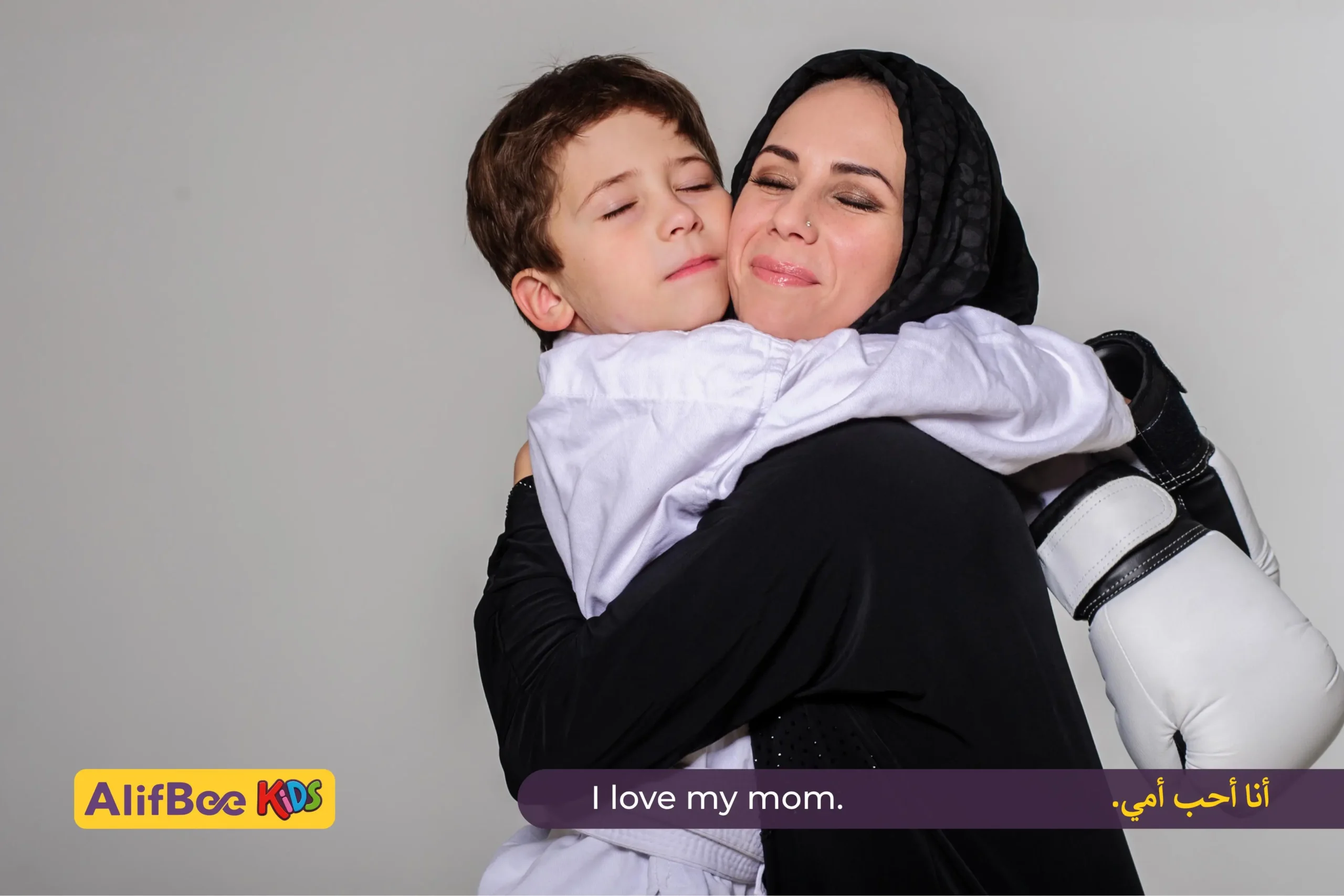
to love / to like

Aḥabba

أحب

I love my mom.

Ana uḥibbu ummī

أنا أُحبُ أمي.

20

English

Pronunciation

Arabic

to wash

ghasala

غَسَلَ

I wash my hands

ʾAnā aghsilu yadayya

أَنَا أَغْسِلُ يَدَيَّ.

Fun Ways Kids Can Practice Arabic Verbs

The best way for kids to learn is by having fun. Here are some playful ways to practice these new words and make them stick.

The "Simon Says" Action Game (قال المعلم)

This is a classic! Instead of “Simon says,” try “Mama says” or “Baba says.” Call out an Arabic verb, and let your child act it out.

  • You say: “ركض!” (Rakaḍa!)
  • They do: Run in place!
  • You say: “نام!” (Nama!)
  • They do: Pretend to sleep!

This game helps children connect words with actions, which makes learning more effective.

Describe Your Daily Routine

The best time to teach verbs is during daily activities. Use these verbs during your daily routine, so children hear them in real situations.

  • At breakfast: “We eat ( نأكل na’kul) breakfast.”
  • Before bed: “It’s time to sleep (ننام – nanām).”
  • On the way to the park: “We play (نلعب – nal‘ab) outside.”

Sing and Dance

Grab some paper and crayons. On one side, you can write the Arabic verb (like لعب). On the other side, draw a simple picture of someone doing that action (like a child playing with a ball). Show your child the picture and ask them to guess the Arabic word. This is a great screen-free activity that also boosts creativity.

Fun Ways Kids Can Practice Arabic Verbs

Look for Arabic children’s songs on YouTube or streaming platforms. Songs are full of verbs! Singing along to actions like “clap your hands” or “stomp your feet” in Arabic is a joyful way to learn.

Why Verbs Help Kids Learn Arabic Faster

Verbs are the engine of a sentence. They bring nouns together and create meaning.

When a child learns a verb, they can quickly start building many sentences.

  • If they learn the verb “play” (لعب — la‘iba), they can say:

“I play.” (أنا ألعب – Ana al‘abu)
“I play with the car.” (أنا ألعب بالسيارة – Ana al‘abu bis-sayyāra)

  • If they learn the verb “read” (قرأ — qara’a), they can say:
    “I read.” (أنا أقرأ – Ana aqra’u)
    “I read a book.” (أنا أقرأ كتاباً – Ana aqra’u kitāban)

This helps children move from single words to expressing their thoughts and needs. It’s a huge confidence boost that makes them want to learn even more.

Conclusion

Learning Arabic verbs is an exciting adventure for kids. These 20 action verbs are just the beginning! By helping your child connect words like eat, play, run, and love to their daily life, you are giving them the tools to build sentences, express themselves, and communicate with confidence. Remember to keep it fun with games, songs, and lots of praise. The goal is to make Arabic a joyful part of their everyday life.

Want your child to learn Arabic in a fun and interactive way?

The AlifBee Kids app helps children learn Arabic vocabulary, verbs, and sentences through games, stories, and engaging activities designed especially for young learners. Start their fun language journey today!

Picture of Dania Ghraoui
Dania Ghraoui
Dania is a teacher, translator, and content writer with a passion for making Arabic accessible and enjoyable for learners around the world. As the Blog Manager at AlifBee, she writes educational blogs that blend language tips, cultural insights, and practical learning strategies to support every Arabic learner’s journey.
If you found this article helpful, please share it with your friends to spread the knowledge!
Facebook
LinkedIn
Telegram
X
Other Posts