At a Glance: These 10 short hadiths teach kindness, manners, generosity, calmness, prayer, neighborly care, and love of the Quran. Each entry includes Arabic with tashkeel, pronunciation, a simple English meaning, a trusted source, and a child-friendly lesson.
Teaching short hadith for kids is one of the most beautiful ways to instill Islamic morals and values in their hearts. It helps raise them with love for Prophet Muhammad (peace and blessings be upon him) and encourages them to follow his example in their daily behavior.
A child needs a role model, and there is no greater role model than the Prophet (peace be upon him).
In this article, we present 10 Prophetic hadiths for children, with simple explanations suitable for their age, along with effective and enjoyable methods for teaching them. You can also read the AlifBee Kids guide to the story of Prophet Muhammad for kids.
What Is a Hadith? A Simple Explanation for Kids
A hadith is a report about something Prophet Muhammad said, did, or approved. Muslims study hadith to understand how he practiced and explained Islam. For a child, the easiest starting point is a short hadith with one visible lesson, such as sharing, greeting others, or speaking kindly.
The goal is not to rush through a long list. A child should understand the meaning and see how it fits into everyday behavior. One hadith practiced at home is more useful than several lines repeated without understanding.
Why Should Kids Learn the Noble Hadiths?
Teaching children the Prophetic hadiths is a fundamental step in building a strong Islamic character. Hadiths offer a complete way of life that guides children toward good character and manners and gives them a clear understanding of proper behavior:
- Hadiths are a source of values: They teach children honesty, trustworthiness, mercy, cooperation, respect for others, love of goodness, and many other Islamic values they need to grow in a healthy environment.
- They help children understand their religion: Hadiths are short and clear, making them easier for children to memorize and understand compared to longer texts.
- They increase a child’s love for the Prophet (peace be upon him): When children hear about the Prophet’s kindness and mercy toward children and people, their hearts become attached to him, and they feel close to him.
- They develop memory and understanding skills: Memorizing hadiths strengthens a child’s memory and improves their ability to learn and comprehend.
10 Hadith for Kids with Explanation
Below is a collection of ten noble hadiths from the Prophet (peace be upon him), along with simple explanations that can be shared with children:
English
Pronunciation
Arabic Phrase
“Removing harm from the road is charity.”
Imāṭatu al-adha ‘an al-ṭarīq sadaqah
"إماطة الأذى عن الطريق صدقة".
Source: Al-Adab Al-Mufrad in Al-Bukhari
Simple lesson: A good deed does not have to be large. Making a shared space safer is a form of care for other people.
Try it today: Ask your child to move a toy out of a walkway or tell an adult about something unsafe. Children should not touch sharp, dirty, or dangerous objects.
English
Pronunciation
Arabic Phrase
“He is not one of us who does not show mercy to our young and respect to our elders.”
Laysa minnā man lam yarḥam ṣaghīranā wa yūqir kabīranā
"لَيْسَ مِنَّا مَنْ لَمْ يَرْحَمْ صَغِيرَنَا وَيُوَقِّرْ كَبِيرَنَا"
Simple lesson: Mercy can mean being gentle with a younger child. Respect can mean listening, making room, and speaking politely to an older person.
Try it today: Let your child choose one act of mercy today, such as helping a younger sibling or greeting an older relative warmly.
English
Pronunciation
Arabic Phrase
“O young boy, say the name of Allah, eat with your right hand, and eat from what is in front of you.”
Yā ghulām, sammī Allāh, wa kul bīymīnik, wa kul mimma yalīk
"يا غلام، سمِّ الله، وكُلْ بيمينك، وكُلْ مما يليك"
Source: Sahih al-Bukhari 5376
Simple lesson: The Prophet taught a child calmly and clearly. The hadith gives three simple table manners: say bismillah, use the right hand, and eat from the nearest part of a shared dish.
Try it today: Practice only one step at first. A gentle reminder at the meal is better than turning dinner into a test.
English
Pronunciation
Arabic Phrase
“Give charity even if it is half a date.”
Taṣaddaqū walaw bi-tamrah
"تَصَدَّقوا ولو بِتَمْرة".
Source: Sahih Al-Jami’
Simple lesson: A gift does not need to be expensive before it counts. The hadith teaches children not to dismiss a small act of generosity.
Try it today: Invite your child to share a snack, place a small amount in a charity box, or choose a useful item to donate. With younger children, keep the explanation focused on generosity rather than fear.
English
Pronunciation
Arabic Phrase
“Do not get angry.”
Lā taghḍab
"لا تَغْضَبْ".
Source: Sahih al-Bukhari 6116
Simple lesson: This does not mean a child will never feel angry. It means anger should not control what they say or do.
Try it today: Practice a simple pause: stop, take a slow breath, name the feeling, and choose safer words.
English
Pronunciation
Arabic Phrase
“Exchange gifts and you will love one another.”
Tahādū tuḥābū
"تهادوا تحابوا"
Source: Al-Adab al-Mufrad 594
Simple lesson: A thoughtful gift can strengthen affection. It does not have to be bought or costly.
Try it today: Help your child make a drawing, write a small note, or share something they already have.
English
Pronunciation
Arabic Phrase
“Spread peace among yourselves.”
Afshū al-salām baynakum
"أفشوا السلام بينكم"
Simple lesson: The Islamic greeting is more than a habit. It helps people feel noticed, safe, and welcome.
Try it today: Practice saying as-salāmu ʿalaykum when entering the home and replying wa ʿalaykum al-salām when someone greets you.
English
Pronunciation
Arabic Phrase
“Prayers performed on time.”
al-ṣalāh ‘alā waqtihā
"الصلاة على وقتها"
Source: Sahih al-Bukhari 527 (short excerpt from the Prophet’s answer)
When Prophet Muhammad was asked about the most beloved deeds to Allah, his answer was “Prayers performed on time”
Simple lesson: Prayer deserves a regular place in the day. Young children learn this gradually by watching, joining, and following a calm routine.
Try it today: Choose one prayer that your child can prepare for with you. You can take them to the Masjid with you after hearing Adhan to emphasize the quick response to the call for prayer.
For a wider introduction to prayer, charity, fasting, and the other core practices, read The 5 Pillars of Islam for Kids.
English
Pronunciation
Arabic Phrase
“Whoever believes in Allah and the Last Day should not harm his neighbor.”
Man kāna yuʾminu billāhi wal-yawm al-ākhir falā yuʾdhi jārah
"مَن كانَ يُؤمِنُ باللهِ واليومِ الآخِرِ فلا يُؤذِ جارَه".
Source: Sahih al-Bukhari 6018
Simple lesson: Faith should appear in the way people treat those living nearby. Children can learn not to disturb, damage, mock, or inconvenience others.
Try it today: Think of one neighborly action: keep noise low, return a ball, hold a door, or take a small treat to a nearby family.
English
Pronunciation
Arabic Phrase
“The best among you are those who learn the Qur’an and teach it.”
Khayrukum man ta‘allama al-Qur’āna wa ‘allamahu
"خَيْرُكُم مَنْ تَعَلَّمَ القُرْآنَ وَعَلَّمَه".
Source: Sahih al-Bukhari 5027
Simple lesson: Learning the Quran is valuable, and sharing what we know is valuable too. Teaching can begin with one letter, one sound, or one short surah.
Try it today: Let your child teach back one thing they learned. For a step-by-step plan, see the AlifBee Kids guide to Quran learning.
Related guide: A Parent’s Guide to Quran Teaching for Children.
3 Tips to Teach Hadith to Kids
It is not enough for a child to memorize a hadith; they should understand its meaning and apply it. Here are effective educational methods for teaching hadith:
- Learning through stories: Connect the hadith to a real-life story or a story from the Prophet’s biography. Children remember stories easily.
- Using educational games and interactive apps: For example, matching cards between the hadith and its meaning.
- Daily repetition: Repeat the hadith in a simple way every day to help it stay in the child’s memory.
Stories can make the lesson easier to picture. Explore Islamic stories for kids for age-friendly examples. When a lesson involves rules or boundaries, the guide on how to explain halal and haram to kids can help parents keep the language clear and calm.
Teaching Hadith to Kids with AlifBee Kids
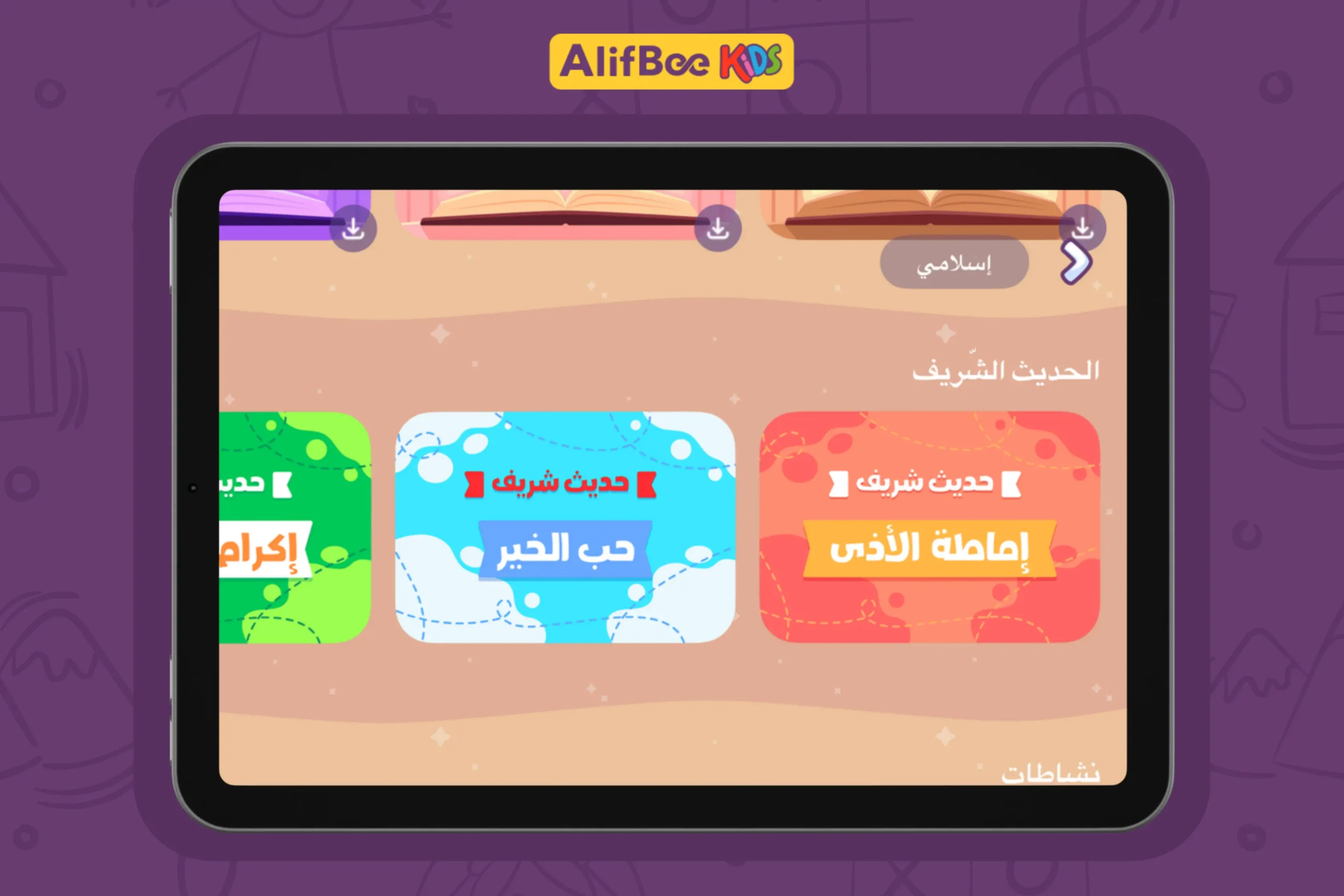
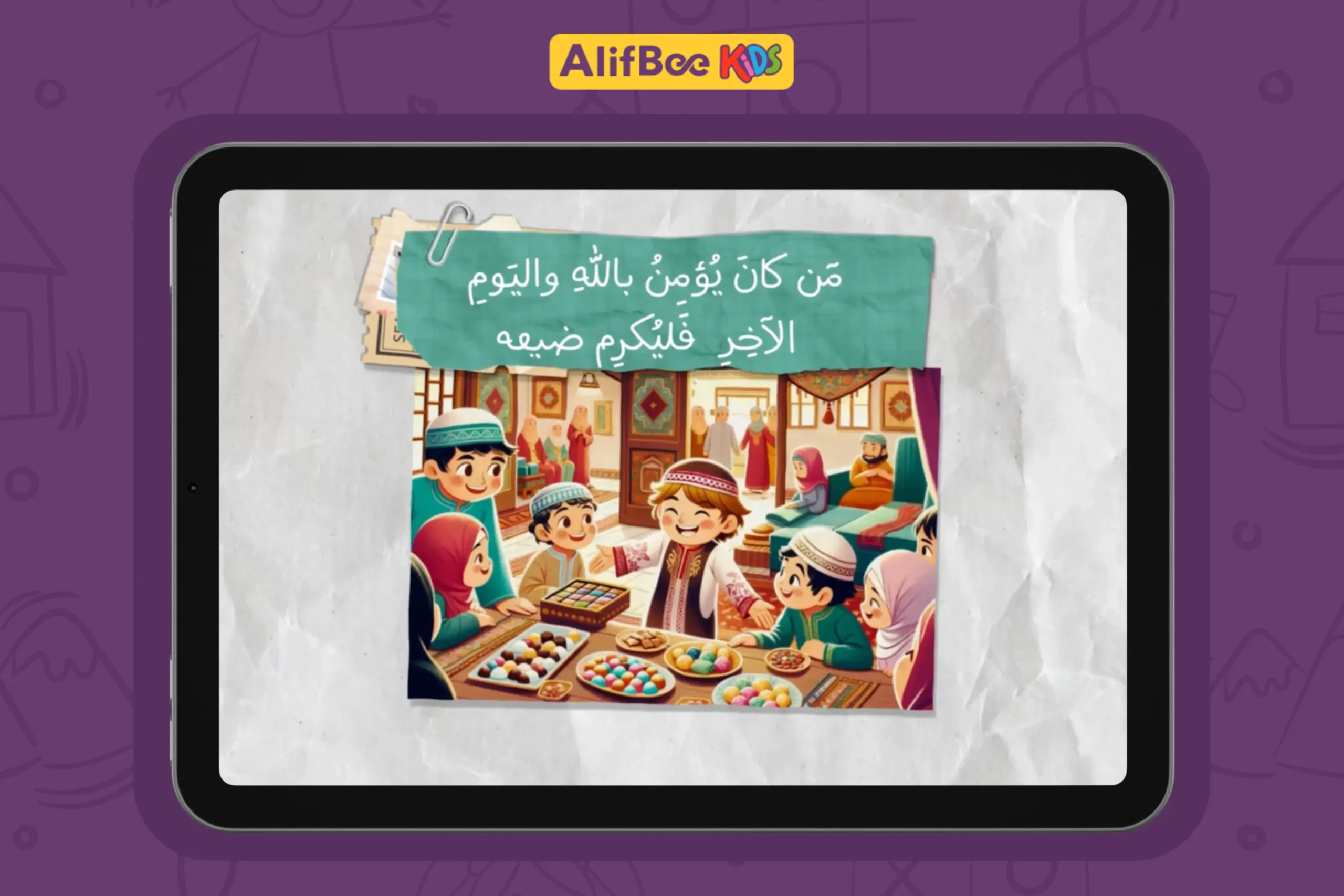
The AlifBee Kids app aims to provide interactive and educational content that suits a child’s mind and introduces them to their religion in a loving way. It offers simplified hadith-learning videos with attractive illustrations suitable for children and reinforces positive behavioral values.
Each hadith presented is connected to daily behavior that helps children make positive changes and supports families in religious upbringing.
Through content that helps parents teach their children in an effective and enjoyable way, Prophetic hadiths become part of a child’s daily life and contribute to raising a generation that loves goodness and holds firmly to noble Islamic values.

Final Word
Short hadiths become meaningful when children see them in ordinary life, like a greeting at the door or a kind act toward a neighbor. These small actions can turn a memorized line into a habit. Start with one hadith, explain it simply to your child, and return to it naturally throughout the week.
AlifBee Kids can support the Arabic side of this learning through child-friendly language activities, stories, and values-based content. Use the app as one part of a wider routine that includes conversation, reading, worship, and family practice.