Prophet Muhammad (PBUH) was the messenger of Allah and the final Prophet sent to invite people to Islam. He is a role model of kindness, honesty, patience, and mercy. The best way for children to learn about the story of Prophet Muhammad is through short, simple stories that show how he treated people, children, and animals with care.
Parents are usually eager to teach their kids the life story of Prophet Muhammad (PBUH) and seek a clear, structured method that teaches his life, biography, and Sunnah, and that influences the children’s character development.
At AlifBee Kids, we believe children learn best through simple, meaningful stories that connect faith to everyday life and have a real impact on their character development. That’s why we have prepared this guide to help you teach your kids, or students if you are a teacher, the story of Prophet Muhammad (PBUH) through clear, memorable stories and practical teaching ideas.
Who Was Prophet Muhammad (PBUH)?
Prophet Muhammad (PBUH) was the final Prophet and Messenger sent by Allah. In the Qur’an, Allah (SWT) describes him as “a mercy for the worlds,” “an excellent example,” and a person of great moral character.
When and Where Was Prophet Muhammad Born?
He was born in Makkah around 570 CE. His father, Abdullah, passed away before he was born, and his mother, Aminah, passed away when he was still a young child. After that, his grandfather, Abdul Muttalib, cared for him, and later his uncle, Abu Talib, raised him.
Why People Called Him Al-Amin (The Trustworthy)?
Even before Prophet Muhammad received revelation, people in Makkah respected him for his honesty and trustworthiness. He became known as Al-Amin, which means “the trustworthy.”
For children, this early part of his life teaches a simple yet powerful lesson: Prophet Muhammad (PBUH) was known for his good character before he became a leader, teacher, and Messenger.
Why Do We Love Prophet Muhammad (PBUH)?
Prophet Muhammad (PBUH) brought Allah’s message and showed people how to live with faith, kindness, honesty, and patience.
When teaching this topic, parents can connect belief and behavior. Keep the explanation to kids simple.
Focus on teaching them that loving the Prophet (PBUH) means trying to follow his example in daily life by:
- telling the truth
- speaking kindly
- helping others
- being patient
- forgiving when possible
If you are helping a child understand the bigger picture of Islamic belief, it also helps to connect the Prophet’s example to foundational topics such as the 5 Pillars of Islam explained for kids, so children see how belief and practice fit together.
Why Is the Story of Prophet Muhammad Important for Kids?
The story of Prophet Muhammad (PBUH) helps children learn about faith, kindness, honesty, patience, mercy, and good character.
Teaching kids about the life of Prophet Muhammad (PBUH) from an early age can help them:
- Learn who their Prophet is in a simple and meaningful way.
- Grow to love him and feel connected to his message.
- Understand important values such as honesty, kindness, patience, mercy, and courage.
- See him as a role model for everyday behavior.
- Build strong character and learn how to face challenges with faith and confidence.
Every child learns differently, so the teaching method should match the child’s age and understanding. Parents and teachers can choose the story, lesson, and activity that best fit the child’s level and the value they want to teach.
What Should Children Know First?
When you teach young children about Prophet Muhammad (PBUH), start with a few simple truths about his life, message, and character:
- His family and how he was raised.
- His wife, Khadijah (RA), and his children.
- How he received revelation from Allah.
- His honesty, kindness, patience, mercy, and excellent character.
- Some age-appropriate stories from his life.
- How he obeyed Allah and taught people to worship Him.
- His care for children, the poor, animals, and people in need.
- How he taught Muslims to treat others with mercy and good manners.
- Why he is a role model for Muslims.
For younger children, begin with simple stories and clear values. As they grow older, you can gradually introduce more details from the life of Prophet Muhammad (PBUH), his Sunnah, and the lessons Muslims learn from him.
Now, let’s move to influential stories you can focus on.
Simple Stories about Prophet Muhammad to Teach Children
Here is a summary of stories you can start with when teaching kids about Prophet Muhammad (PBUH), with the appropriate age and notes on what to focus on.
| Story | Main lesson | Best age | Teaching prompt |
|---|---|---|---|
|
Prophet Muhammad (PBUH) as Al-Amin |
Honesty and trustworthiness are part of good character. |
4–10 |
“Why do you think people trusted him even before he became a Prophet?” |
|
His childhood and early loss |
Hard times can shape patience, strength, and compassion. |
6–10 |
“How can we be kind to someone who feels sad or lonely?” |
|
Prophet Muhammad (PBUH) as a mercy to the worlds |
Islam teaches mercy, gentleness, and care for others. |
5–10 |
“What is one kind thing you can do today?” |
|
His kindness to children, the poor, and animals |
A good Muslim treats people and animals with care. |
4–10 |
“How can we show mercy to someone younger, weaker, or in need?” |
|
Following the Prophet’s example |
Children can copy small daily manners such as truthfulness, patience, and kindness. |
5–10 |
“Which good habit of the Prophet (PBUH) can we practice this week?” |
Beautiful Stories You Can Use to Teach His Character
Children do not always need long lessons to understand good character. Sometimes, one simple story can stay with them for years. When you choose stories from the life of Prophet Muhammad (PBUH), start with moments that feel clear, warm, and easy for children to connect to: truthfulness, mercy, patience, gentleness, and care for others.
Here are four beautiful stories you can use.
1. Why people called him Al-Amin
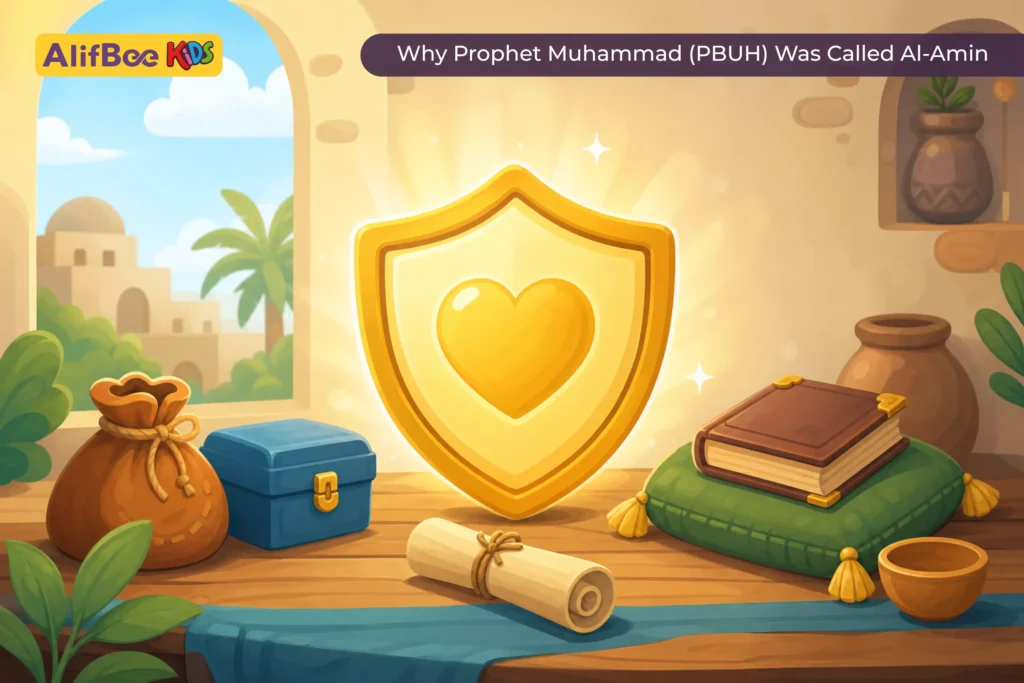
Before Prophet Muhammad (PBUH) received revelation, the people of Makkah already knew him for his honesty. They trusted his words, his promises, and even the things they left in his care. That is why he became known as Al-Amin, which means “the trustworthy.”
For children, this story gives trust a simple shape. They can understand that a truthful person is someone others feel safe with.
Lesson for children: Tell the truth, keep your promises, and be someone others can trust.
Question to ask: “What can you do today to be trustworthy?”
2. His kindness to animals
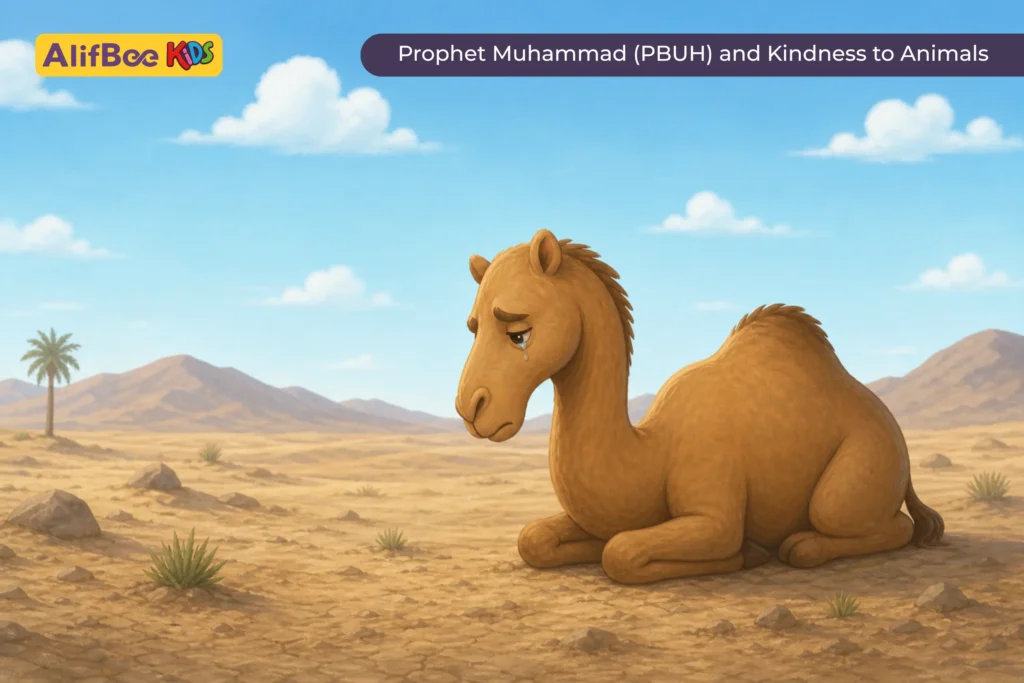
One day, Prophet Muhammad (PBUH) entered a garden and saw a camel in distress. The camel let out a sad sound, and tears welled in its eyes. The Prophet (PBUH) gently wiped its head, then spoke to its owner and reminded him to fear Allah in the way he treated the animal. The report says the camel had been kept hungry and loaded heavily.
This story works well for young children because mercy becomes something they can see. It is not an abstract idea. It means feeding an animal, petting it gently, not hurting it, and noticing when it needs care.
Lesson for children: Be gentle with animals because they are part of Allah’s creation.
Question to ask: “How can we show kindness to animals?”
3. His mercy after Ta’if
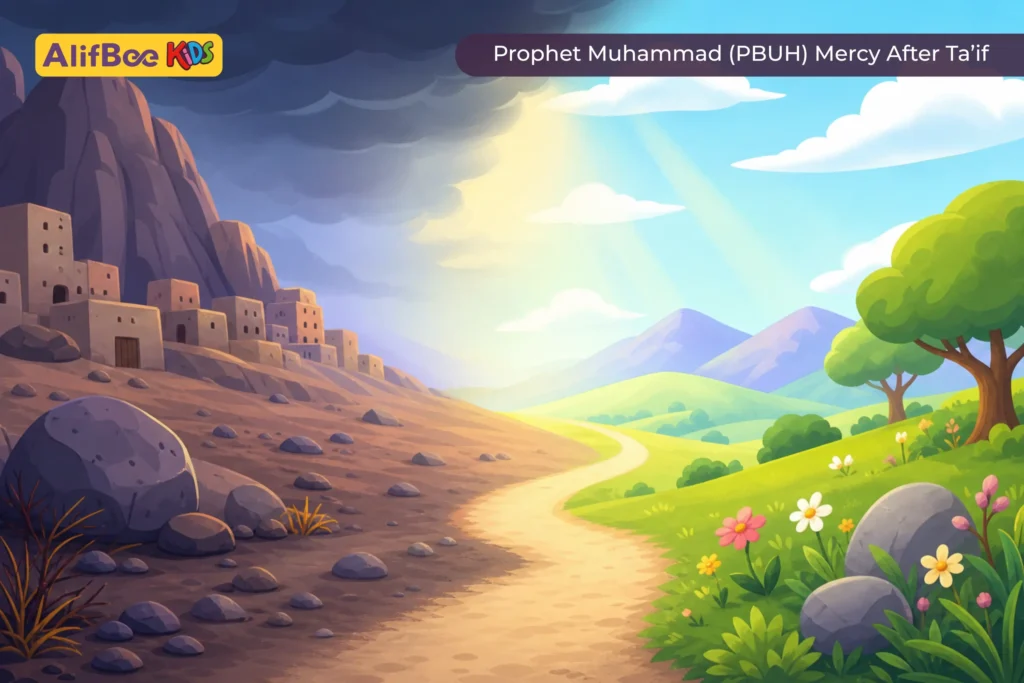
Ta’if was one of the hardest moments in the life of Prophet Muhammad (PBUH). He went there hoping people would listen to his message, but they rejected him and treated him harshly. Later, when the Angel of the Mountains offered to punish them, the Prophet (PBUH) did not choose revenge. Instead, he hoped that Allah would bring from their descendants people who would worship Him.
This story is better for older children because it opens a deeper conversation. Children know what it feels like to be hurt, ignored, or treated unfairly. This story teaches them that mercy does not mean weakness. It can mean having the strength to choose patience, hope, and forgiveness when anger feels easier.
Lesson for children: Real strength can mean choosing mercy when you have been hurt.
Question to ask: “What can we do when someone treats us unfairly?”
4. His gentleness with children
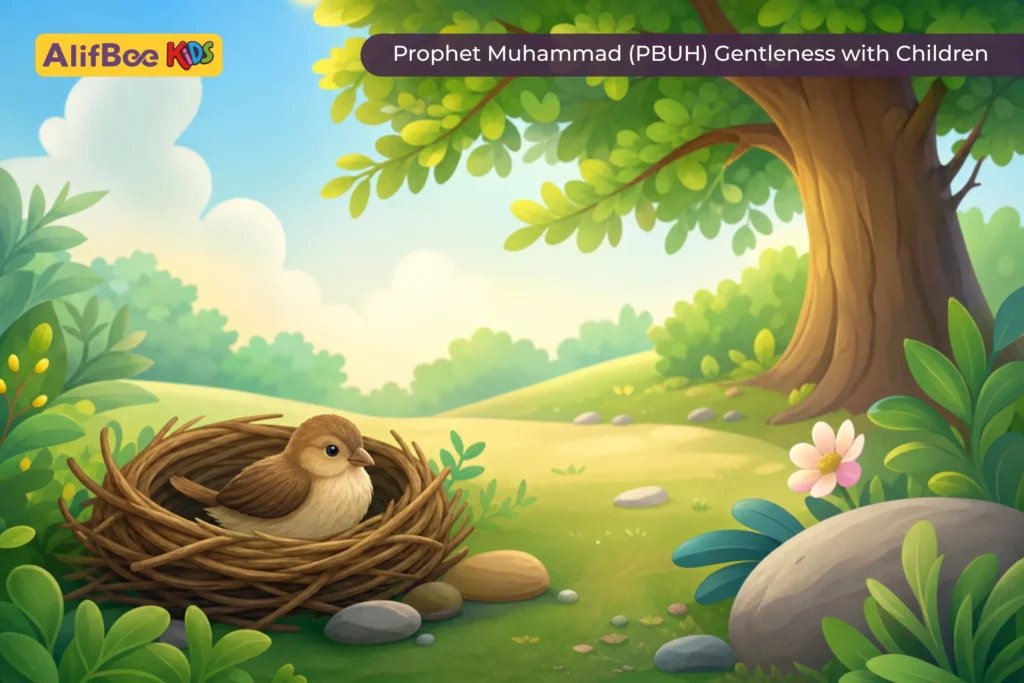
Prophet Muhammad (PBUH) noticed children’s feelings, even in small moments. In a narration in Sahih al-Bukhari, he spoke kindly to a young boy called Abu Umair, who had a small bird called al-Nughair. The Prophet (PBUH) would gently ask him about the bird, showing warmth, attention, and care for the child’s world.
This story is especially helpful for parents and teachers. It shows children that their feelings matter. It also reminds adults that kindness is not only found in big actions. Sometimes it is found in a gentle question, a kind voice, or a moment of attention.
Lesson for children: Be gentle with others, especially when they feel sad.
Question to ask: “How can we comfort someone who feels upset?”
How to Teach Kids About Prophet Muhammad (PBUH) by Age
Children understand the story of Prophet Muhammad (PBUH) differently as they grow. The best approach is to start with simple values for younger children, then gradually add more details about the Prophet’s life, Seerah, and Sunnah as they get older.
Ages 4–6: Keep it simple and loving
At this age, children do not need detailed history or long timelines. They need to know that Prophet Muhammad (PBUH) was kind, honest, and loving, and that he was chosen by Allah to teach people how to worship Him and treat others well.
Focus on:
- Kindness
- Telling the truth
- Helping others
- Loving Allah
- Good manners
Best teaching methods:
- Tell one short story at a time.
- Use simple words.
- Repeat the main lesson.
- Ask one easy question after the story.
- Connect the lesson to daily life.
Example question:
“What kind of thing did Prophet Muhammad (PBUH) do in this story?”
What to avoid:
- Long timelines
- Too many names and events
- Difficult historical details
- Dramatic details that young children may not understand
Ages 7–9: Add simple stories and clear lessons
At this age, children can understand more details, but they still need stories that feel clear and practical. You can introduce short stories from the life of Prophet Muhammad (PBUH) and help children notice the lesson behind each story.
Focus on:
- His honesty and trustworthiness
- His mercy toward people and animals
- His patience during difficulties
- His love for prayer and worship
- His care for children, family, neighbors, and the poor
Best teaching methods:
- Tell a short story, then explain the lesson.
- Ask children what they would do in a similar situation.
- Use simple activities, drawings, or role-play.
- Connect each story to a real-life habit, such as saying the truth, helping at home, or being gentle with others.
Example question:
“What can we learn from this story and use in our own life?”
What to avoid:
- Turning the lesson into a long lecture
- Using complicated Seerah details too early
- Focusing only on dates instead of values
- Presenting too many stories at once
Ages 10+: Introduce deeper Seerah lessons
Older children can begin to understand the life of the Prophet Muhammad (PBUH) more deeply. You can teach more about his mission, the challenges he faced, his patience, his leadership, and how his Sunnah guides Muslims in worship and daily behavior.
Focus on:
- The beginning of the Revelation
- His role as the final Prophet and Messenger
- His patience and courage
- His mercy and justice
- His relationship with family, companions, and community
- How Muslims follow his Sunnah in worship and manners
Best teaching methods:
- Read longer stories from reliable Seerah sources.
- Discuss the reason behind each event.
- Compare choices and consequences.
- Ask reflective questions.
- Encourage children to apply one Sunnah or value in daily life.
Example question:
“What does this story teach us about patience, faith, or good character?”
What to avoid:
- Sharing stories without checking their authenticity
- Making the topic only about memorizing dates
- Ignoring the emotional and moral lessons behind the Seerah
How to teach Prophet Muhammad’s Story well
These are helpful ideas that make it easier.
- Keep it age-appropriate. For very young children, focus on simple traits such as honesty, kindness, and love for Allah. Save longer historical detail for older ages.
- Teach through one story at a time. A single well-told story often stays with a child longer than a full timeline.
- Add one reflection question. After each story, ask something simple, such as, “What would kindness look like here?” or “What can we copy from the Prophet (peace be upon him) today?”
- Use daily-life examples. If a child shares, tells the truth, or shows patience, connect that behavior to the Prophet’s example.
Simple Activities to Teach Kids Prophet Muhammad’s Life Story
These activities can make the lesson more practical and memorable:
- Story circle: read one short story and ask each child to name one quality they noticed.
- Kindness chart: write one Prophetic quality on a chart each week, such as honesty, mercy, or patience.
- Role-play: let children act out simple situations about telling the truth, helping a friend, or caring for an animal.
- Sunnah moments jar: each time a child practices a good habit, add a note to the jar and read them together at the end of the week.
- Class or home question wall: let children post questions they have about the Prophet (PBUH), then answer one at a time in simple language.
Final Word
The best way to teach children about Prophet Muhammad (PBUH) is to make the lesson clear, warm, and practical. Help them know who he was, why Muslims love him, and what they can copy from his example today.
Learn with AlifBee Kids
Want a more engaging next step for young learners? Explore the AlifBee Kids app for child-friendly Arabic and Islamic learning activities that help children learn with warmth, repetition, and joy.
FAQs
1. How do I explain Prophet Muhammad (PBUH) to a child?
Explain that Prophet Muhammad (PBUH) was the final Prophet sent by Allah to teach people Islam, kindness, honesty, mercy, and good manners. Keep the explanation simple and use short stories from his life.
2. Why is the Prophet Muhammad story important for kids?
The story of Prophet Muhammad (PBUH) helps children learn faith, good character, kindness, patience, honesty, and mercy. It also gives them a beautiful role model to follow in daily life.
3. What should children learn first about Prophet Muhammad (PBUH)?
Children should first learn that Prophet Muhammad (PBUH) was the Messenger of Allah, known for honesty, trustworthiness, mercy, and excellent character. They can then learn simple stories about his family, kindness, worship, and care for others.
4. What are the best Prophet Muhammad stories for young children?
Good stories for young children include why people called him Al-Amin, his kindness to animals, his gentleness with children, and simple examples of his mercy and honesty. Choose stories that teach one clear value at a time.
5. At what age should kids start learning about Prophet Muhammad (PBUH)?
Children can start learning simple stories about Prophet Muhammad (PBUH) from an early age, around 4–6 years old. At this age, focus on love, kindness, truthfulness, and good manners rather than long historical details.