Ramadan Activities for Kids: Fun & Meaningful Ideas
Ramadan is just around the corner! For those who don’t know, it is the best time of the year for families to teach their children about kindness, patience, and generosity through fun and engaging activities.
For most kids, learning Arabic is a gradual process. Children usually recognize letters within a few months, begin reading simple words within the first year, and develop a basic understanding of the language before speaking. However, their progress depends on age, practice frequency, and teaching method.
In this blog post, we will discuss in detail some fun and engaging Ramadan activities that can help your kids build faith and nourish them with the beauty of cultural norms.
What is Ramadan?
Ramadan is the ninth month of the Islamic calendar and holds great importance for Muslims around the world. During this month, Muslim adults fast, focus on prayer, practice kindness and generosity, and strengthen their connections with others.
Although young children do not fast, they still participate and learn. Children are encouraged to help prepare iftar meals, decorate their homes, and take part in good deeds. The emphasis on generosity, compassion, and gratitude makes Ramadan a positive cultural and educational experience for all children.
Charity is one way families practice generosity, often through a Sadaqah jar. Children learn that Ramadan is about patience, discipline, and showing love and care for others.
When Is Ramadan Celebrated?
Ramadan takes place in the ninth month of the Islamic calendar. Because this calendar is lunar, Ramadan’s dates vary each year. The lunar calendar is approximately 11 days shorter than the solar calendar.
Ramadan begins when the crescent moon is sighted in the sky. The exact timing depends on the year; in 2026, Ramadan is expected to begin around February 17 and end around March 18. This shifting schedule offers a great opportunity to introduce children to the lunar calendar and teach them how different cultures measure time.
Building on this idea of practical learning, Ramadan can also be used to introduce simple science concepts. Children can follow the phases of the moon and even create moon-observation glasses as part of a hands-on learning activity.
Why Is Ramadan Important for Children to Learn About?
Teaching children about Ramadan helps them understand other cultures and develop empathy. Ramadan offers a meaningful opportunity to teach children important values such as generosity, gratitude, and respect. These lessons extend beyond the holy month and influence how children interact with others in everyday life.
Ramadan-related events also allow Muslim children to practice their religion openly, while increased awareness among others helps foster cultural understanding. In everyday life, learning about and celebrating different occasions can nurture compassion and mutual respect.
This month teaches real-life skills such as self-control, patience, and consideration for others. When children help prepare meals for iftar or donate through a Sadaqah jar, they practice kindness in simple, hands-on ways.
Fun Ramadan Activities for Kids
These Ramadan activities for kids are designed for children of various ages. They allow families to celebrate this special Islamic event while teaching key cultural values. These activities include creative crafts and cooking projects, with each activity offering opportunities for learning and bonding.
Activity | Age Group |
Ramadan Lantern Crafts | 5-12 years |
Ramadan Color By Number Pages | 3-7 years |
Moon Sighting Binoculars and Ramadan Calendar Activities | 8-15 years |
Decorated Ramadan Sugar Cookies | 4-10 years |
Ramadan Cooking Activities | 10-15 years |
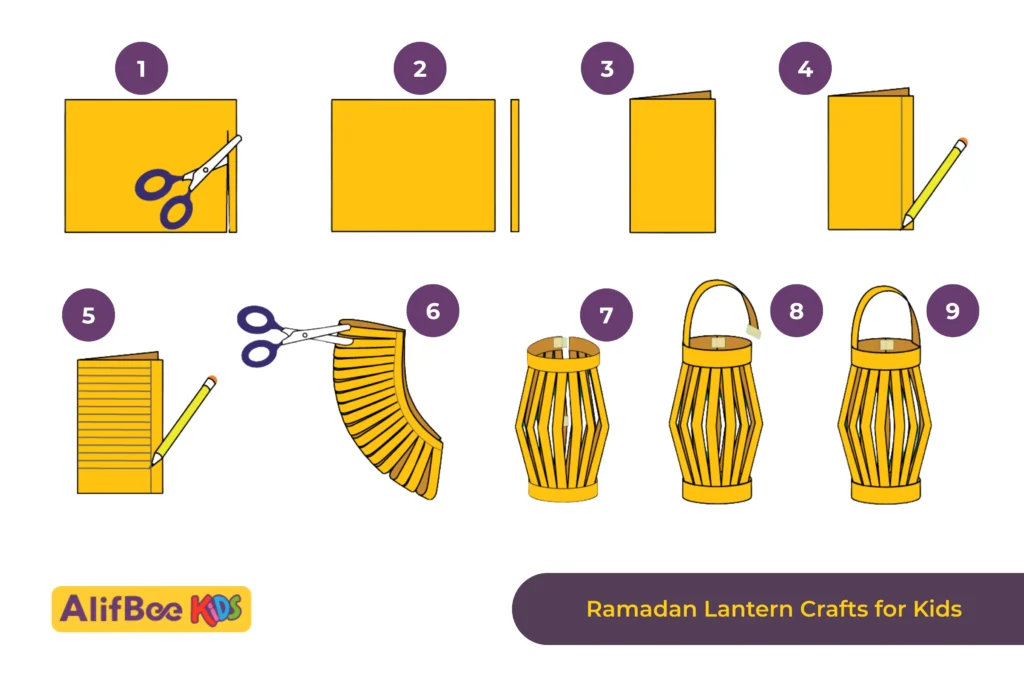
Ramadan Lantern Crafts for Kids
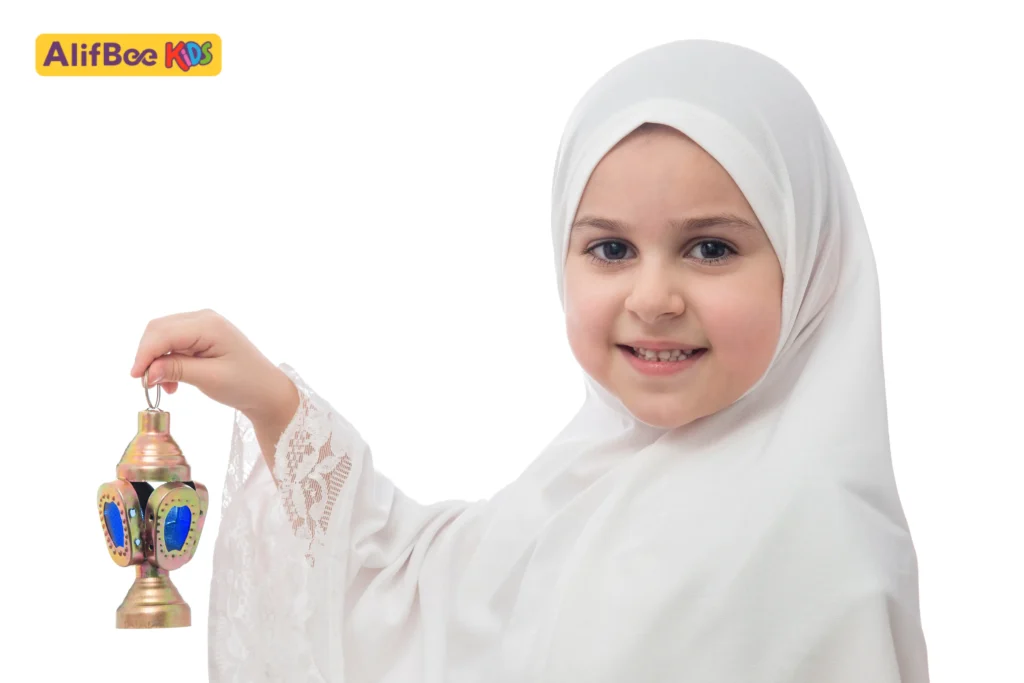
Making Ramadan lanterns is one of the most beloved activities for children. Lanterns represent the light and joy of the holy month. It helps children express creativity while learning about Ramadan.
Simple Paper Lantern Steps:
- Gather colored paper, scissors, glue, markers, and decorative items.
- Cut paper lengthwise, leaving 1 inch uncut at the top.
- Cut vertical strips from the bottom to the border, about 1 inch apart.
- Roll into a cylinder shape and secure with glue.
- Add a paper strip as a handle.
- Decorate with stars, moons, or colorful patterns.
Ramadan Color By Number Pages for Kids
Color-by-number worksheets and Ramadan-themed color-by-number activities are especially enjoyable for young children learning about the holy month. These worksheets blend number learning with creativity in a fun and engaging way.
You can help children see this activity as an enjoyable Ramadan game while also strengthening fine motor skills. As children match numbers with colors, they create beautiful pictures, which supports hand coordination, focus, and early numeracy skills.
Moon Sighting Binoculars and Ramadan Calendar Activities
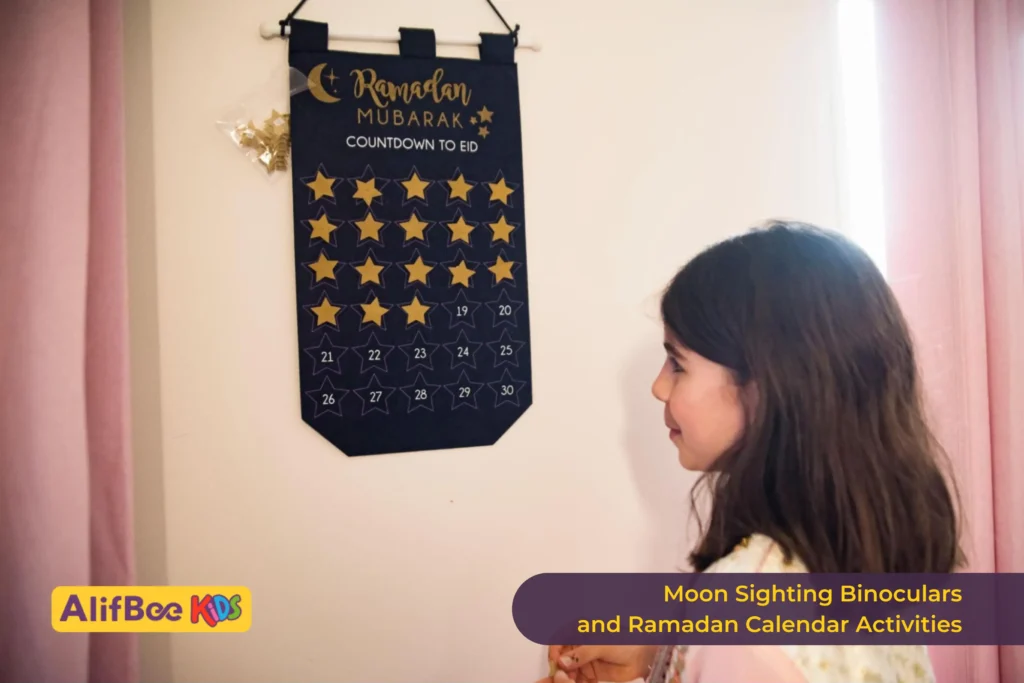
Activities centered on the moon and Ramadan help children learn about both science and culture, including how the lunar calendar measures time. Ask your child to decorate two tissue paper rolls taped together to create simple moon-sighting binoculars.
Children can use the binoculars to look for the crescent moon at sunset, connecting the activity to Ramadan traditions. You can also print a Ramadan calendar and invite children to count the days of the holy month by adding stars or stickers, making the passage of time visual and engaging.
Decorated Ramadan Sugar Cookies
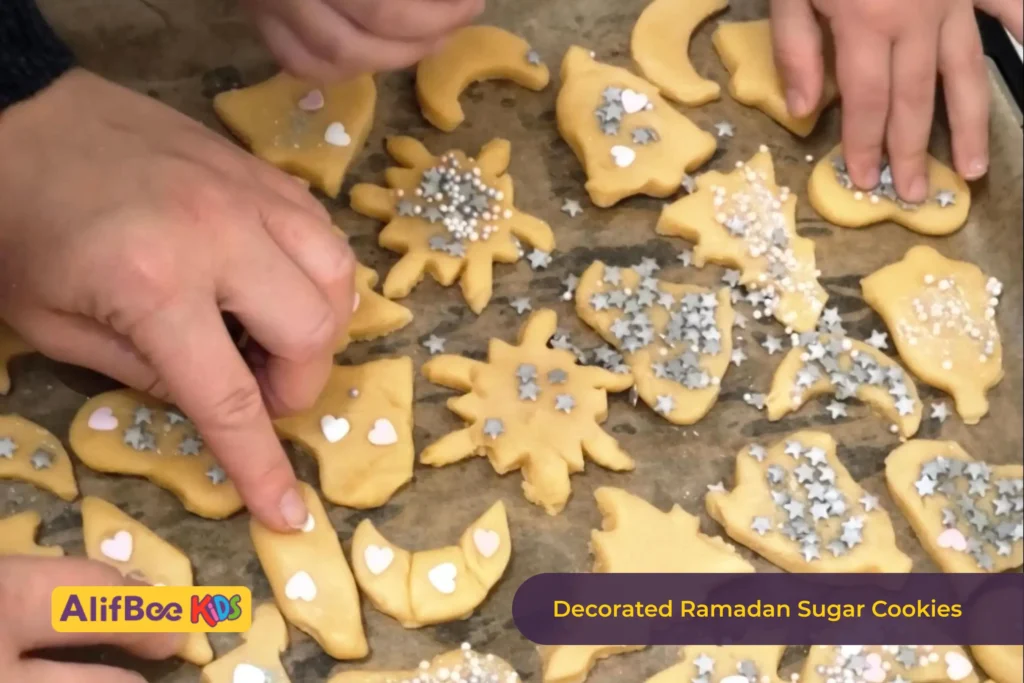
One fun activity for children, especially those ages 4–10, is helping decorate cookies for Ramadan celebrations. Cut sugar cookies into crescent moons, stars, or lantern shapes, then set up a decorating station with frosting, sprinkles, and edible glitter.
Children love designing cookies, and the activity naturally sparks conversations about Ramadan symbols. Younger children can decorate using sprinkles, while older kids can create more detailed designs. Packaged cookies also make thoughtful gifts, helping reinforce the value of generosity.
Simple Ramadan Cooking Activities for Kids
Let children help prepare food, which encourages family bonding and introduces Ramadan evening traditions in a positive way. Kids who help with meals connect with family customs.
Easy recipes kids can help with:
- Stuffed Dates: Kids can stuff Medjool dates with cream cheese, nuts, or chocolate
- Fruit Salad: Children wash fruit, tear mint leaves, or arrange colorful patterns
- Setting the Table: Kids set the iftar table with decorations they’ve made.
When kids help prepare meals, they learn that food brings people together. Cooking activities create natural chances to discuss gratitude, sharing, and family blessings.
How to Explain Ramadan to Young Children
Talk about Ramadan with young children using simple words and familiar examples. Young children learn best through concrete ideas.
Explain that Ramadan is a special time when Muslims spend more time together, help others, and think about what they are grateful for. Connect everyday acts, like sharing a toy, to Ramadan values.
If children ask why people don’t eat during the day, say it helps adults and older kids practice patience and understand hunger, so they can be kinder to those in need.
Keep the explanation positive and joyful. Mention decorating the house, making special meals, and celebrating with family. Explain that Ramadan ends with Eid al-Fitr, a festival with gifts and family gatherings.
Final Word
Ramadan is a valuable opportunity for families to teach children about kindness, patience, generosity, and culture. Activities such as making lanterns, baking cookies, and creating moon-sighting binoculars help children learn and build lasting memories. The most important lessons come from spending time together, having discussions, and practicing values.
Remember, children learn and participate in different ways depending on their age. Young children can color or decorate, while older children can help cook and discuss generosity.
Regardless of the year or your family’s traditions, these experiences help create meaningful, joyful celebrations that further shape their future. Want your children to learn Arabic through fun, interactive activities? Download AlifBee Kids today and see your children never get bored!