Arabic Flashcards & Arabic Language Learning
Flashcards are an important learning tool, especially in Arabic language learning. They are small cards that have pictures, words or letters depending on what they are teaching. Repetition helps new Arabic words get stored into long-term memory, and it encourages children to pull the words from this long-term memory (otherwise known as active recall), rather than passively reviewing language.
Basic Arabic words build the foundation of the language, but not only that, flashcards provide a fun teaching method through games and movement. Kids thrive when language learning is playful and engaging, and there are so many activities that can be created from this, often free, tool. Whether in the classroom or at home, for both teachers and parents, flashcards provide opportunities for students to build their language skills, whilst learning in a dynamic way. Win win!
Benefits of Flashcards for Kids
Where to begin! Well, we mentioned active recall being a very effective method for memory retention, this is one of the main advantages of using flashcards. So say if a child looks at a flashcard with an Arabic word on it, to actively repeat this word whilst looking at it, the child is far more likely to retain that certain word. You may think this is a simple strategy when it comes to learning Arabic, and you are not wrong – it is meant to be simple! That way it doesn’t overwhelm the brain when learning something new, language and other skills alike.
Let’s continue with this idea of the benefits of keeping it simple. Small, manageable learning chunks each with one clear idea are all that flashcards can present, but this is ideal for kids and building Arabic one step at a time. So, when you think about the near limitless ideas for engaging games, challenges, quizzes, and projects that can incorporate movement, we start to see how flashcards are truly an asset to any Arabic learning environment.
How to Create Effective Flashcards
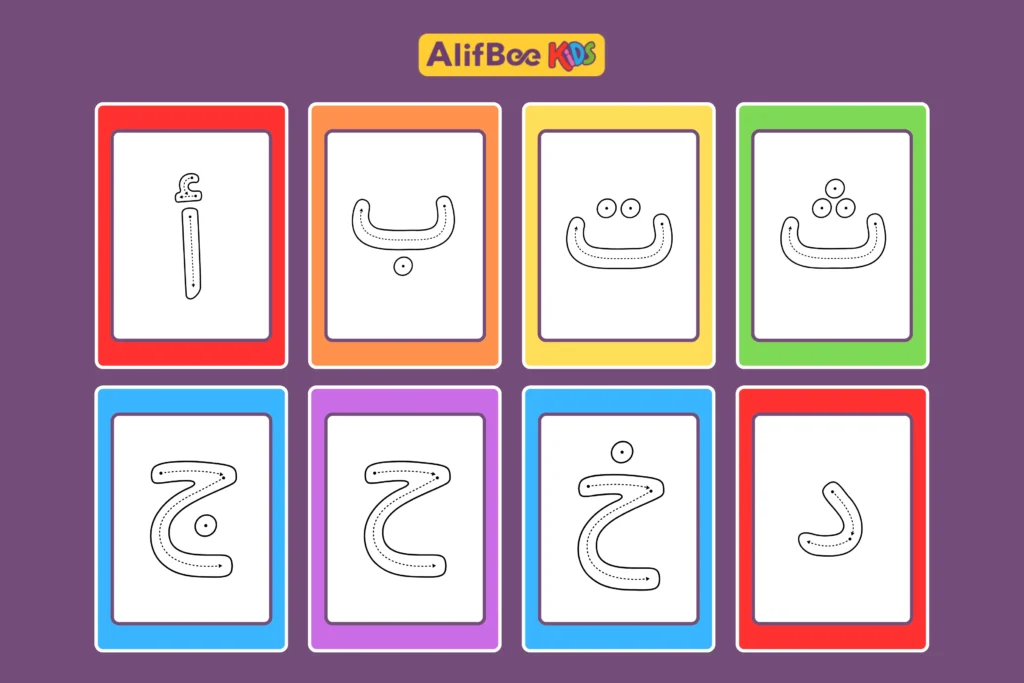
Of course, you can find plenty of printable flashcards, but why not have a go designing them yourself as well! Here are some tips to help you find or make the most suitable Arabic flashcards for kids:
1. Keep the Design Clear
Again, simplicity is best. Stick to one Arabic word or letter and one picture for each card. When it comes to the fonts, choose one that you think is child-friendly, like a bolder Arabic script.
2. Choose the Right Image
Cartoons or simple real life images work best for your pictures. Doesn’t need to be a work of art, think easy to remember!
3. Think about Colour Coding
You could border or group flashcards together using certain colours. Not only is it easier for children to remember these different categories, but also easier to keep them organised!
4. Add Pronunciation Support
This can help if you’re a parent or a beginner teacher. Or you could always add a QR code to a site that can play audio or video.
5. Interactivity
Get creative! You can add a question, ‘Do you like apples?’ or a small game, ‘Can you find this object in the room?’.
6. Level Appropriateness
Whether you are teaching Arabic to one child or a group of children, you can have flashcards designed specifically with their level in mind. Young learners will need larger images, and then you can build the vocabulary as children progress.
7. Practicality
You will want to laminate your cards to up the durability, and also round the corners for safety reasons. Also, small hands, small flashcards! Think about what sizing would work best.
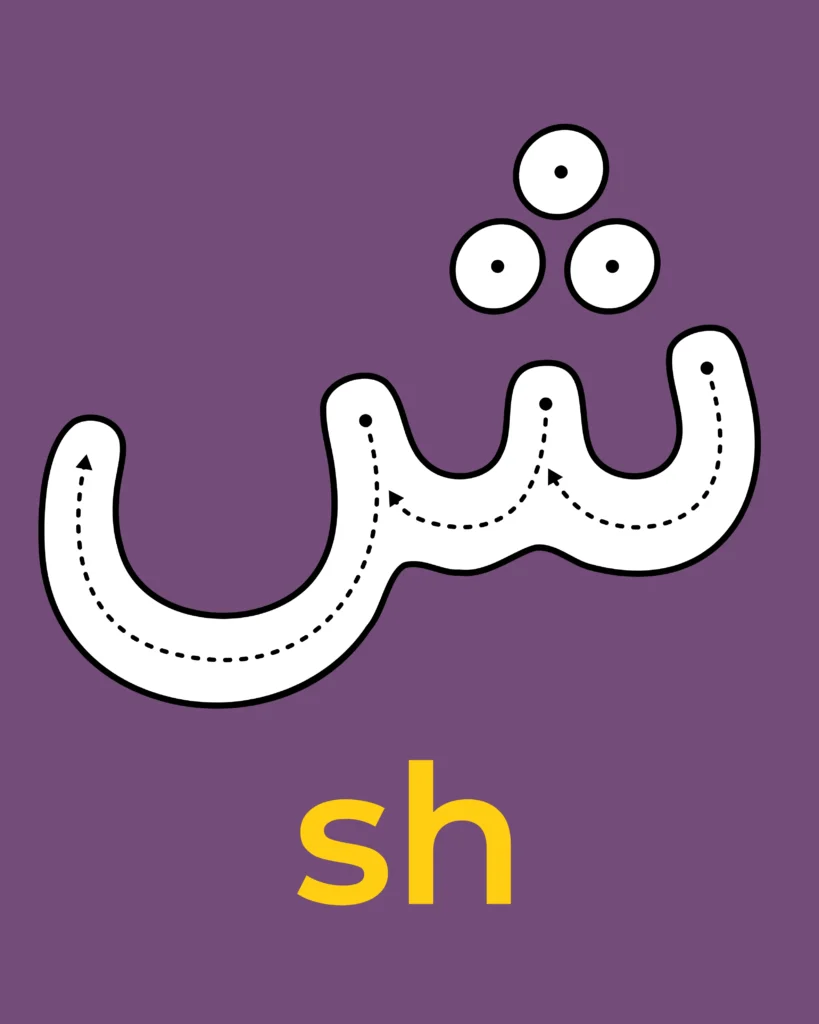
Here is an example flashcard to help children learn the Arabic alphabet. This is for the letter ش, pronounced ‘sh’ in English:
Choosing the Right Vocabulary Words
Best to start small, perhaps choose a category with 5-10 flashcards, like food or Arabic alphabet flash cards. You can slowly introduce new flashcards, while repeating the ones looked at in previous study sessions. When it comes to what kind of vocabulary to choose, daily language can be a great start: family, toys, colours – this helps children connect the Arabic words to real-life, tangible objects.
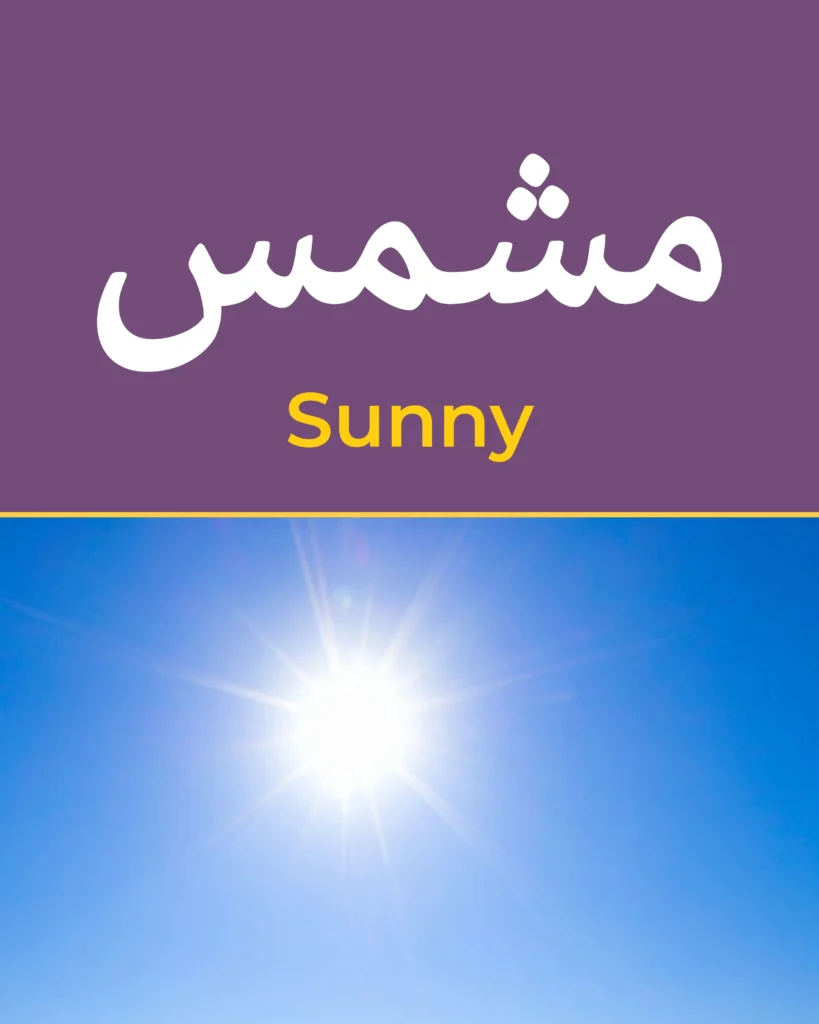
When it comes to weather for example, here’s an example flashcard for ‘sunny’:
Design Tips for Engaging Flashcards
If you are going to take the plunge and put together some flashcards of your own, here are just a few things to keep in mind:
- Stick to bright, child-friendly colours (primary colours are a great start).
Another tip: High contrast colours are really effective – for instance white flashcard, black font and a primary colour for the picture.
- Clear, simple images which directly relate to the word.
- Large fonts work well, make sure it is easy to read.
- Make sure you are consistent in design (for example, picture on one side, word on the other).
- One idea/word per flashcard.
Make It Fun
Don’t hesitate to add incentives like stickers or sweets to celebrate correct answers and keep motivation high! Also, why not encourage the youngsters to use the words in sentence structures they know after they have learnt them, for example:
- apples → تفاح
- I like apples → أنا أحب التفاح
You could even include your young students when making the flashcards from scratch. The designing, drawing and decorating could all be a very hands-on and enjoyable activity, adding to the fun of learning the Arabic language.
Fun Flashcard Games and Activities for Kids
Here are just a few games to get you started!
Game
Explanation
Speed flashcard
Show the flashcard quickly and let young learners guess the word.
Matching game
Match the picture to the Arabic words.
Category game
Children can put the flashcards into their categories (animals, letters, weather)
Listening game
Say a word out loud, and kids find the correct card.
Pair game
Flashcards are laid down and children flip two over to find the pairs (word and picture).
More advanced learners:
Story building
The group can pick a few flashcards and make a story.
Quiz
Children can test each other’s Arabic knowledge.
Writing game
Show a card and the children write down the letter or the word.
Interactive Flashcard Games for Learning Arabic
Let’s take a closer look at a couple of the flashcard games:
Flashcard Race
Learning becomes an energetic haven here! Place the cards all around the room and on the floor and call out an Arabic work, letter or sound. The kids can run, hop or crawl to get the correct card. The movement truly gets children’s attention, and keeps them on their feet – quite literally!
Memory Game
The child or children have to flip over the cards two at a time to find the pairs. However, why not make it more challenging by adding cards, mixing themes or allowing for pronunciation practice once the pair has been found.
Integrating Flashcards into Daily Routines
Flashcards can become an integral part of the day. There’s no reason why they can’t be part of playtime, perhaps unlocking different toys or blocks to play with when they identify a word. Perhaps even during meals you can use flashcards to match with what you’re eating, say the word before you take a bite! This can be especially useful whilst travelling or waiting, you could always pack some in a bag to help with making the time go easier.
Turning seemingly regular moments throughout the day, like going outside, can be turned into mini practice sessions. This makes it feel less like a traditional lesson, and more just a joyful way to help children connect the Arabic language to the world around them.
Conclusion
There are countless ways to use flashcards as a tool for inside the classroom and out, making learning Arabic for children a much more interactive experience, and an effective one for long-term memorization of new vocabulary.
I hope this has inspired you to try some games, or even incorporate some Arabic flashcards into your everyday life. If you want to find out what else you can try at home to encourage Arabic learning at home, look no further!