
Teaching short hadith for kids is one of the most beautiful ways to instill Islamic morals and values in their hearts. It helps raise them with love for Prophet Muhammad (peace and blessings be upon him) and encourages them to follow his example in their daily behavior.
A child needs a clear role model, and there is no greater role model than the Prophet (peace be upon him).
In this article, we present 10 Prophetic hadiths for children, with simple explanations suitable for their age, along with effective and enjoyable methods for teaching them.
Why Should Kids Learn the Noble Hadiths?
Teaching children the Prophetic hadiths is a fundamental step in building a strong Islamic character. Hadiths are not just words to be read; they are a complete way of life that guides children toward good character and manners and gives them a clear understanding of proper behavior:
- Hadiths are a source of values: They teach children honesty, trustworthiness, mercy, cooperation, respect for others, love of goodness, and many other Islamic values they need to grow in a healthy environment.
- They help children understand their religion: Hadiths are short and clear, making them easier for children to memorize and understand compared to longer texts.
- They increase a child’s love for the Prophet (peace be upon him): When children hear about the Prophet’s kindness and mercy toward children and people, their hearts become attached to him, and they feel close to him.
- They develop memory and understanding skills: Memorizing hadiths strengthens a child’s memory and improves their ability to learn and comprehend.
10 Hadith for Kids with Explanation
Below is a collection of ten noble hadiths from the Prophet (peace be upon him), along with simple explanations that can be shared with children:
English
Pronunciation
Arabic Phrase
“Removing harm from the road is charity.”
Imāṭatu al-adha ‘an al-ṭarīq sadaqah
"إماطة الأذى عن الطريق صدقة".
Explanation: Removing anything harmful—like stones or trash—from the road brings great reward from Allah. Such things may harm people or animals. Muslims should make it a habit to remove anything that could cause harm.
English
Pronunciation
Arabic Phrase
“He is not one of us who does not show mercy to our young and respect to our elders.”
Laysa minnā man lam yarḥam ṣaghīranā wa yūqir kabīranā
"ليس منا من لم يرحم صغيرنا ويوقر كبيرنا".
Explanation: Removing anything harmful—like stones or trash—from the road brings great reward from Allah. Such things may harm people or animals. Muslims should make it a habit to remove anything that could cause harm.
English
Pronunciation
Arabic Phrase
“O young boy, say the name of Allah, eat with your right hand, and eat from what is in front of you.”
Yā ghulām, sammī Allāh, wa kul bīymīnik, wa kul mimma yalīk
"يا غلام، سمِّ الله، وكُلْ بيمينك، وكُلْ مما يليك"
Explanation: This hadith teaches children proper Islamic table manners. These manners stay with them for life. They include saying “Bismillah” before eating, using the right hand, and eating from what is directly in front of them—important etiquettes in Islam.
English
Pronunciation
Arabic Phrase
“Give charity even if it is half a date.”
Taṣaddaqū walaw bi-tamrah
"تَصَدَّقوا ولو بِتَمْرة".
Explanation: Charity is something beautiful that the Prophet encouraged. It does not have to be large or expensive. Allah loves it when we give, even if it is something small. What matters most is the sincerity of the heart.
English
Pronunciation
Arabic Phrase
“Do not get angry.”
Lā taghḍab
"لا تَغْضَبْ".
Explanation: Anger spoils matters. Teach your child to calm down and take a deep breath when upset. Staying calm during anger is a quality of a balanced Muslim.
English
Pronunciation
Arabic Phrase
“Exchange gifts and you will love one another.”
Tahādū tuḥābū
"تهادوا تحابوا"
Explanation: Even simple gifts bring hearts closer and make people feel loved and appreciated.
English
Pronunciation
Arabic Phrase
“Spread peace among yourselves.”
Afshū al-salām baynakum
"أفشوا السلام بينكم"
Explanation: This hadith calls us to spread peace among people and greet others kindly. Islam encourages spreading goodness and reassurance.
English
Pronunciation
Arabic Phrase
“The most beloved deeds to Allah are prayers performed on time.”
Aḥabbu al-a‘māl ilā Allāh al-ṣalāh ‘alā waqtihā
"أحب الأعمال إلى الله الصلاة على وقتها"
Explanation: The best deed that Allah loves is praying on time without delay. Prayer is the most important part of our religion and the way we thank and draw closer to Allah.
English
Pronunciation
Arabic Phrase
“Whoever believes in Allah and the Last Day should not harm his neighbor.”
Man kāna yuʾminu billāhi wal-yawm al-ākhir falā yuʾdhi jārah
"مَن كانَ يُؤمِنُ باللهِ واليومِ الآخِرِ فلا يُؤذِ جارَه".
Explanation: A true Muslim must be kind to neighbors and never cause them harm or annoyance. Faith should appear in one’s manners and actions.
English
Pronunciation
Arabic Phrase
“The best among you are those who learn the Qur’an and teach it.”
Khayrukum man ta‘allama al-Qur’āna wa ‘allamahu
"خَيْرُكُم مَنْ تَعَلَّمَ القُرْآنَ وَعَلَّمَه".
Explanation: The best people in the sight of Allah are those who learn the Qur’an and teach it to others. The Qur’an is the word of Allah, and reading, memorizing, and understanding it are among the greatest deeds.
3 Tips to Teach Hadith to Kids
It is not enough for a child to memorize a hadith; they should understand its meaning and apply it. Here are effective educational methods for teaching hadith:
- Learning through stories: Connect the hadith to a real-life story or a story from the Prophet’s biography. Children remember stories easily.
- Using educational games and interactive apps: For example, matching cards between the hadith and its meaning.
- Daily repetition: Repeat the hadith in a simple way every day to help it stay in the child’s memory.
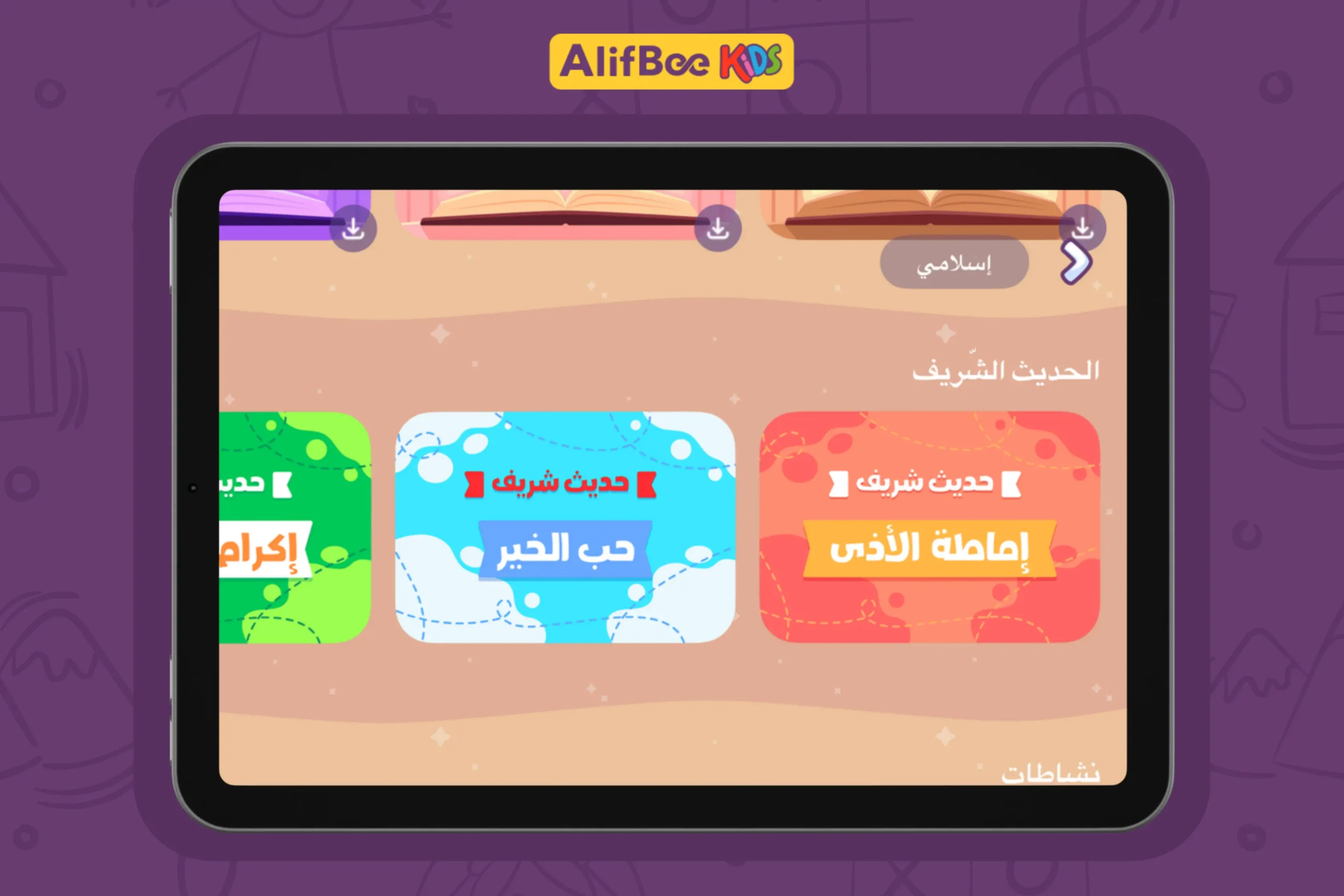
Teaching Hadith to Kids with AlifBee Kids
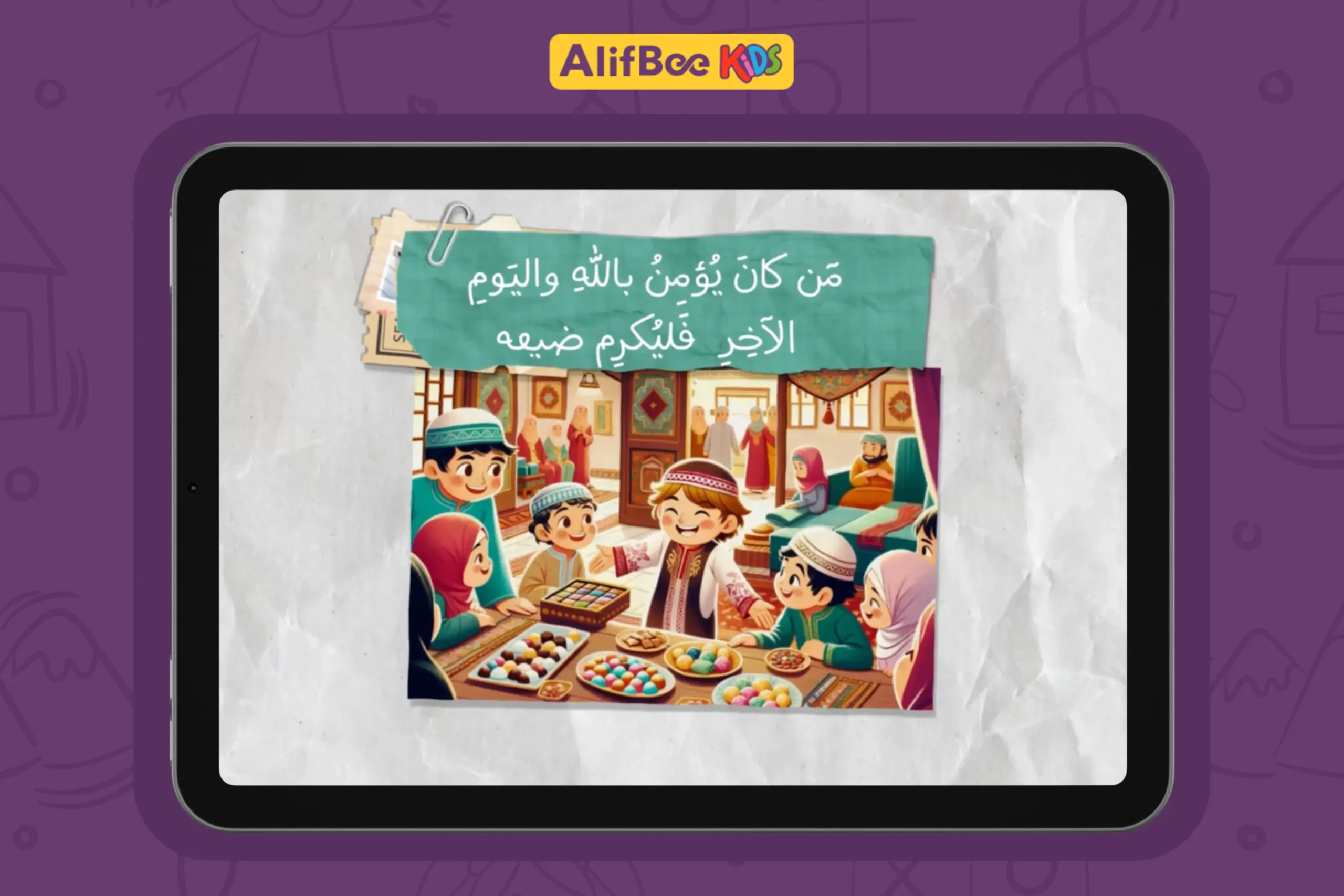
The AlifBee Kids app aims to provide interactive and educational content that suits a child’s mind and introduces them to their religion in a loving way. It offers simplified hadith-learning videos with attractive illustrations suitable for children and reinforces positive behavioral values.
Each hadith presented is connected to daily behavior that helps children make positive changes and supports families in religious upbringing.
Through content that helps parents teach their children in an effective and enjoyable way, Prophetic hadiths become part of a child’s daily life and contribute to raising a generation that loves goodness and holds firmly to noble Islamic values.

Conclusion
Teaching kids the hadith is not merely about memorizing words; it is about building a strong foundation for upright character and firm morals. Each of these ten hadiths carries a great Islamic value that children can learn and apply in their lives. With modern teaching methods, instilling Prophetic values in children has become both easy and beautiful.