A story is more than a few pages of printed words; choosing the right Arabic stories for kids is like introducing them to an intimate, cool young aunt who will speak with wisdom but reach them 10 times easier than a parent ever will!
With the right tips, you can teach your child the Arabic language while delivering the right messages and morals through different tales and stories in Arabic.
Why Arabic Stories Are an Effective Tool for Children
Stories flow. They stick in your mind and keep you following the words and clues to get to the end of the stream. A good short story in Arabic will easily grab your child’s attention and teach him new vocabulary in context. It will grow his vocabulary quantitatively and qualitatively.
With repetition and diversification of the sources he reads, he will grasp the essence and literal meaning of new words and know how to use them correctly in suitable situations.
How Stories Strengthen Vocabulary and Memory
While reading stories sounds like a passive action, it really isn’t. Reading stories is a very labor-intensive mental activity. The child has to focus on the characters, place, and time. He also has to follow the words and make ties between the previous scene and the current one, while predicting the upcoming events. Managing all of this brainwork simultaneously enhances both working and long-term memory.
There is a plethora of Arabic stories for children that use narrative-based repetition, which means repeating the exact words or ideas throughout the story so that the child can effortlessly learn the words in context.
Types of Arabic Stories Suitable for Kids and Young Learners
Arabic stories can be categorized by reader age, linguistic level, and learning goals. Keeping these three factors in mind when choosing the right story for your child will optimize the results.
Do not rush to a story that says it is suitable for 6-year-olds plus just because your child is 6. He may have a vocabulary and reading skills below the required level, which will discourage him from reading the story.
Likewise, do not rush to a story that claims to be suitable for a much younger age than your child’s to accommodate his level, as it may be too dull for him. Try to strike a balance between your child’s actual level and the ideas that may be interesting to him.
Short and Simple Stories for Beginners
These stories mainly rely on repeating simple words from everyday life. Each book usually focuses on one setting, one occasion, and a very few characters to keep young kids following easily without overwhelming them with too many events. By repeating these stories, your child will learn some basic words that will help him read more advanced stories later.
Folktales and Classic Tales
Folktales and traditional stories go beyond repetition and vocabulary enhancement. They help with cultural immersion and with the natural rhythm of language.
These stories count as basic knowledge that will help children communicate with their peers while having some “common ground”.
They also help teach morals and traditions without getting the parent to sit their child down and lecture them for an hour. They deliver the information in a more fun and seamless way.
Modern Illustrated Stories
These stories do not depend solely on repetition and simple words to reach readers. They also rely on visuals to teach children more complex words, using illustrations and context to help them understand. These illustrations work on a child’s photographic memory, helping him remember the story for much longer.
Stories in Arabic Videos with English Translation
AlifBee’s YouTube channel offers many videos and reels with tales and stories in both English and Arabic. Watching bilingual stories on videos will not only entertain your child; it will also help them understand their meaning and become familiar with the Arabic grammar.
Free Arabic Stories for Kids – A Curated Level-Based Collection
The following is a curated, level-based list of stories to make your story-picking mission much easier. Most of them are available for free access on Tamkeen platform. They are also available in AlifBee’s stories series on Kotobee and on the AlifBee Store.
Level 1 – Beginner Stories (Ages 3–6)
The following stories are suitable for first-time readers because they focus on basic Arabic phrases and repeated words.
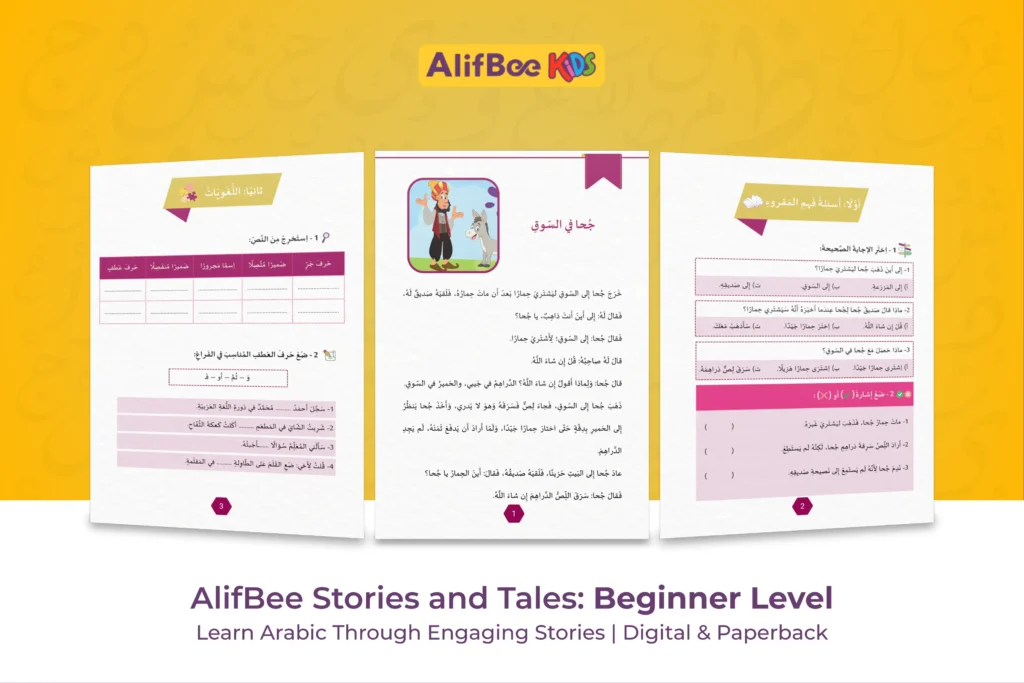
- جحا في السوق (Juha In the Market)
- القرد البخيل (The Stingy Monkey)
- حكاية سمسم وفلفلة (The Story of Sesame and Felfela)
- حكاية الكلب والحمام (The Story of The Dog and The Pigeon)
- القطة الرحيمة (The Merciful Cat)
- الجسد الواحد (One Body)
- الأخوة الصادقة (True Brotherhood)
- قصة العصفور مع أمه (The Story of The Bird and His Mother)
- البطة الذكية (The Smart Duck)
- الخروف الذكي (The Smart Sheep)
Level 2 – Early Learners (Ages 6–8)
At this level, we recommend delving a bit deeper into your child’s linguistic skills and critical thinking. These stories use vocabulary that is a bit more complex and deeper ideas to keep your child engaged and enjoying.
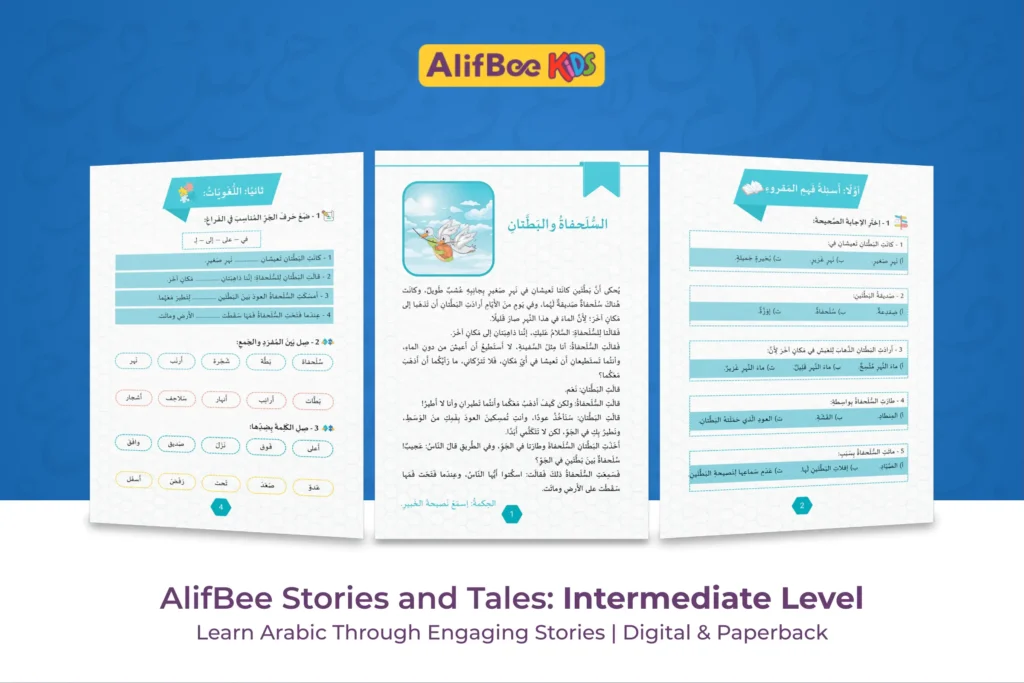
- السلحفاة والبطتان (The Turtle and The Two Ducks)
- الكلب الوفي (The Loyal Dog)
- فستان العيد (Eid Dress)
- عاقبة البخل (The Consequences of Stinginess)
- جرة الذهب (A jar of Gold)
Level 3 – Intermediate Readers (Ages 8–10)
Those books and tales are for children who have already built a solid vocabulary foundation through the first two levels and are ready to take their Arabic learning journey to the next step.
- كما تزرع تحصد (You reap what you sow)
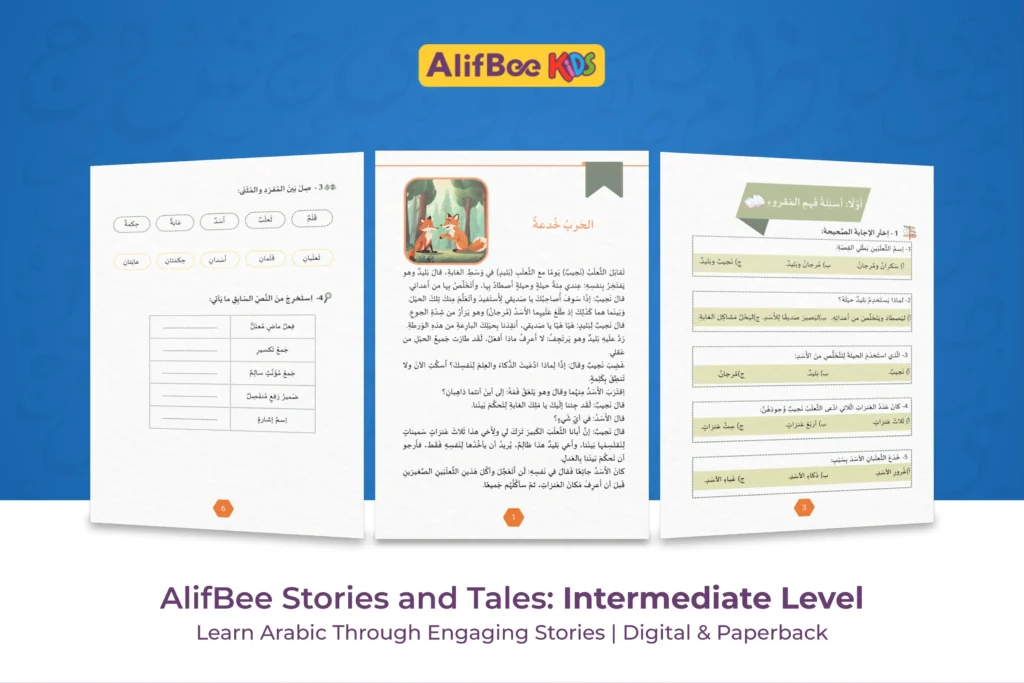
- الحرب خدعة (Wars are Tricky)
- غلطة العمر (A Life Long Lasting Mistake)
- الذكرى الجميلة (The Beautiful Memory)
- قصة أحمد اليتيم (The Story of Ahmed The Orphan)
Level 4 – Advanced Young Learners (Ages 10–12)
This collection of Arabic tales and stories is curated for older kids who want to practice their Arabic reading while reading artistically woven short stories that tease their minds and keep them following the threads.
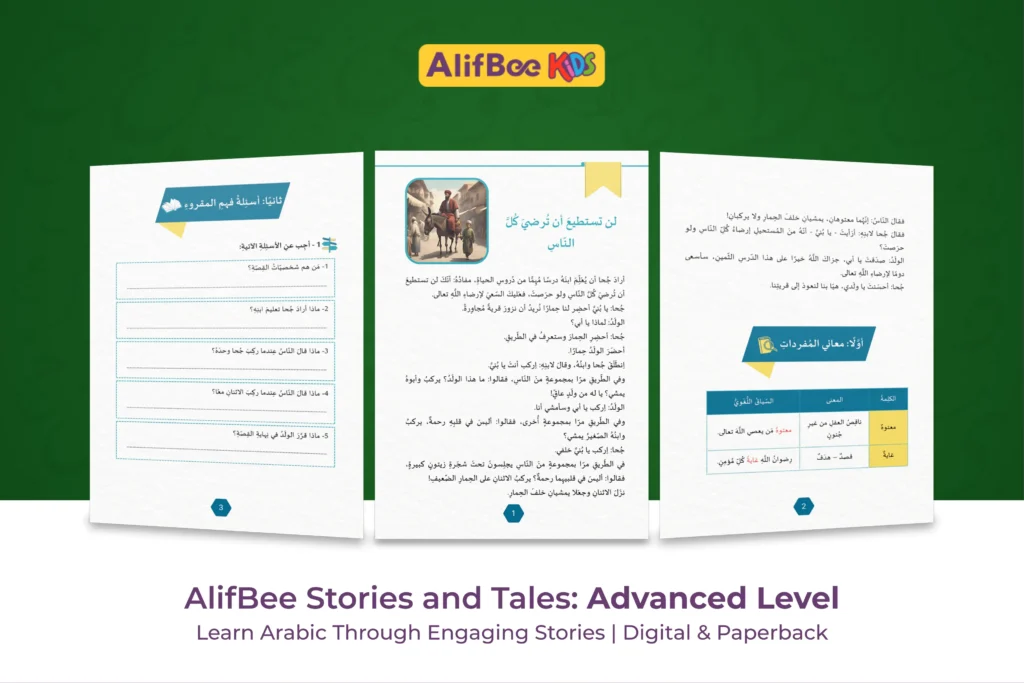
- لن تستطيع أن ترضي كل الناس (You Will Not Be Able To Please Everyone)
- صوت في سحابة (A Sound In a Cloud)
- جزاء المعروف (The Reward of Good Deeds)
- رحمة الله واسعة (Allah’s Mercy is Vast)
- لا تكن بخيلاً (Don’t be Stingy)
- أصحاب السفينة (The Ship Owners)
- حديقة العم حسن (Uncle Hassan’s Garden)
- لا تكن مغروراً(Don’t Be Snobbish)
- الحق لا يضيع (The Truth Doesn’t Get Lost)
Popular Arabic Stories for Kids
Arabic literature is rich in precious fables and tales that teach children important morals and values in a seamless way.
Parents use them as bedtime stories and teachers use them in the classroom either in entertaining puppet shows or teaching lessons.
1- The Tortoise and the Hare (الأرنب والسلحفاة)
This classic fable is suitable for early learners when read while seeing clear illustrations. It delivers an essential message while using simple words.
It also introduces vocabulary related to animals and nature. This story basically says slow and steady wins the race in the most effective ways.
2- The Boy Who Cried Wolf (الراعي الكذاب)
This is a classic story that never loses its value and doesn’t get old. It teaches your child that lying never gets you where you want and that if he insists on lying, he will lose everyone’s trust. The Arabic version translates to “The Lying Shepard” and has a similar plot.
3. Kalīla wa Dimna (كَلِيلَة وَدِمْنَة)
This is a classic collection of animal fables originally from India but deeply rooted in Arab literary tradition. Kids love it because it talks about animals and has clever moral lessons and a simple story structure for young learners.
Themes in the stories include wisdom, problem-solving, and friendship.
4. Juḥā Stories (حكايات جُحَا)
Juḥā is one of the most iconic comic characters in Arab culture. His short tales mix humor with life lessons.
His stories are popular because they have funny twists, simple moral messages, and relatable social situations.
5. Sindbad the Sailor (السِّنْدِباد البَحّار)
From One Thousand and One Nights, Sindbad’s adventures are among the most famous Arabic tales. It is filled with travel, monsters, treasure, magical lands.
The stories cover exploration, bravery, and imagination.
6. The Ant and the Grasshopper (النملة والصرصور) — Arabic version
It is widely included in school curricula across the Arab world for its simple storyline and characters they recognize. It teaches lessons like hard work, planning, and responsibility.
How to Use Stories to Teach Arabic to Kids
To begin with, you have to determine your child’s actual level and pinpoint your goal for this journey. What would you like your child to learn? Would you like him to learn morals or learn everyday vocabulary?
Answering these questions will help you choose the correct books. After that, you need to start introducing those books, one story at a time. You need to keep on reading the first story for a few days before introducing the new one, then keep revising the older stories every once in a while.
This will help add to your child’s vocabulary while retaining the previously learned words memorized.
Start With Listening Before Reading
Listening to audiobooks helps children grasp the correct pronunciation of words and the story’s authentic tone. Therefore, it is always advisable to look for books with audio versions to start with before reading them with your child.
Reinforce Vocabulary Through Repetition
Let your child navigate through the story and enjoy it as much as he wants, but make sure to revise the keywords with him after he finishes to avoid drifting from your main goal. Ask him to read the keywords out loud a few times after he is done reading the story.
Add Story-Based Activities
You can always extend the fun time by creating story-based activities. Ask your child to draw their favorite scene from the story or to retell it. If you have some time before reading the story, you can prepare a sheet of keywords and a few pictures, then ask him to match the keywords with the pictures.
Benefits of Learning Arabic Through Stories
Improved Comprehension Skills
Unlike memorizing a list of words, reading stories with new vocabulary enhances the child’s awareness and knowledge across different fields while strengthening their linguistic competence.
Stronger Listening and Pronunciation
By reading the story out loud, the child will be able to listen to themselves and focus on rhythm, sound patterns, and repeated phrases.
Emotional and Creative Development
Stories enhance the child’s imagination by evoking unreal words or unseen situations, which boosts their emotional intelligence.
Free Tools and Resources to Support Arabic Story Learning
1- AlifBee Kids
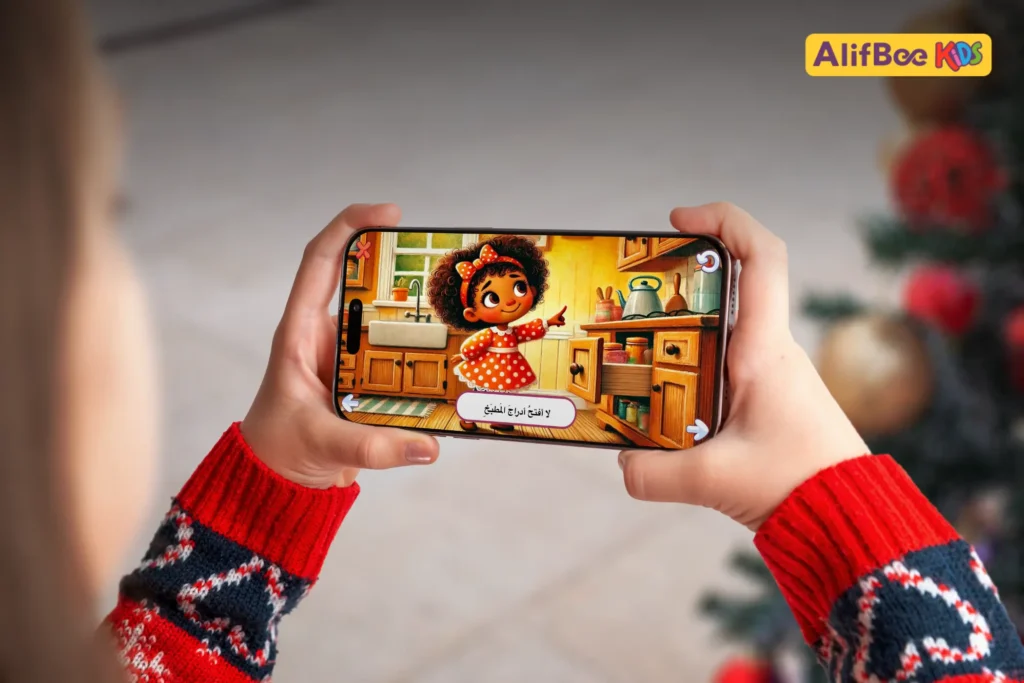
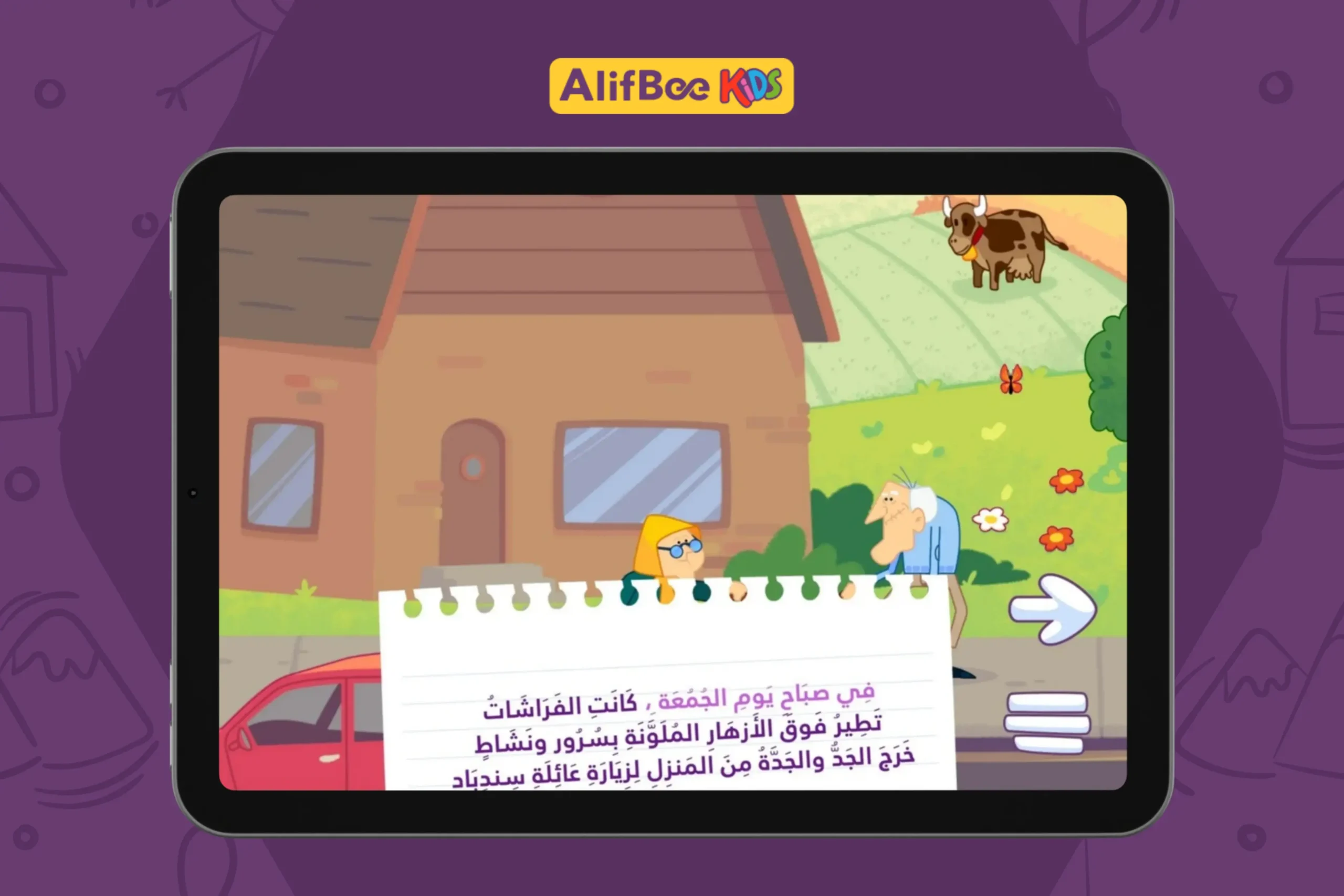
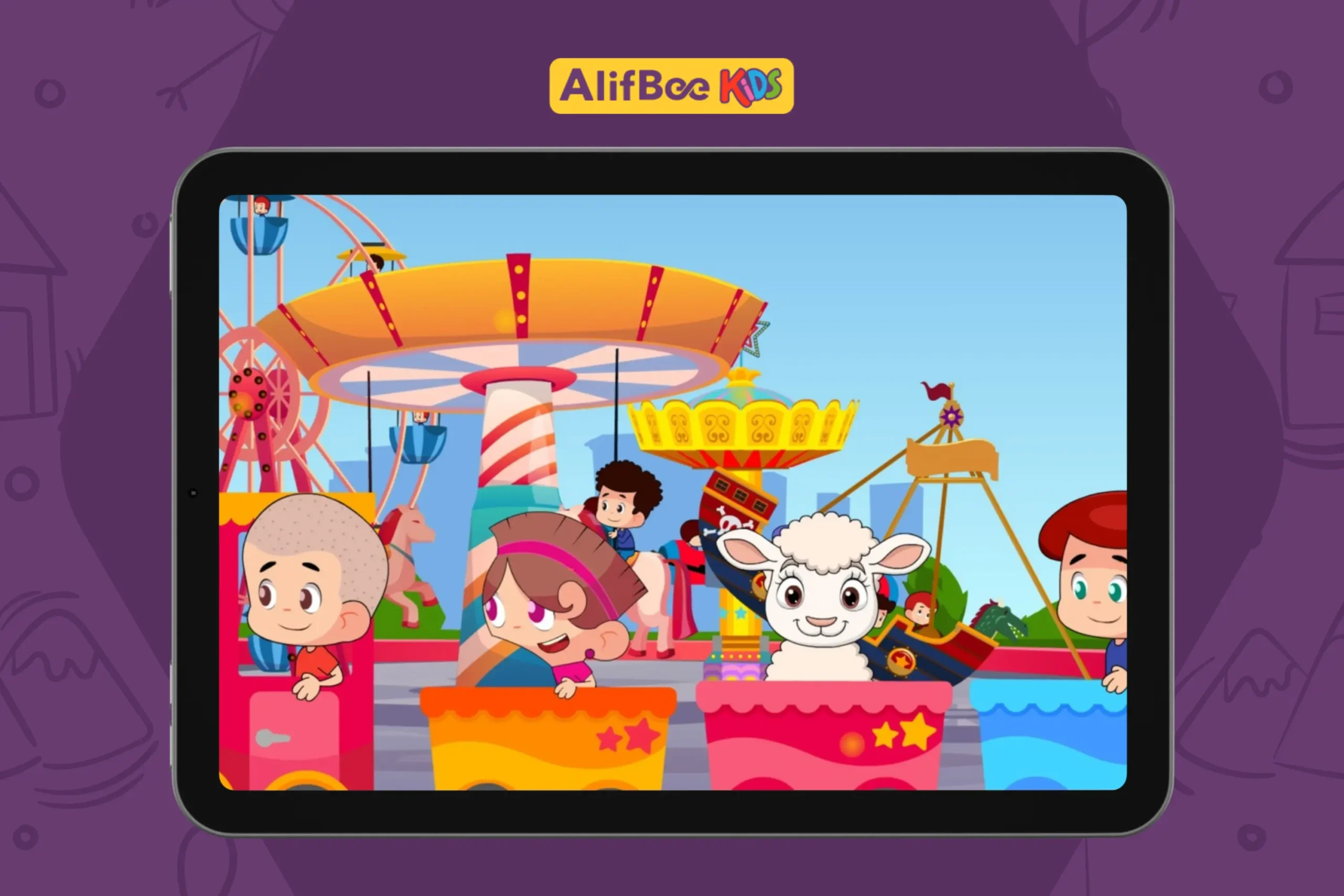
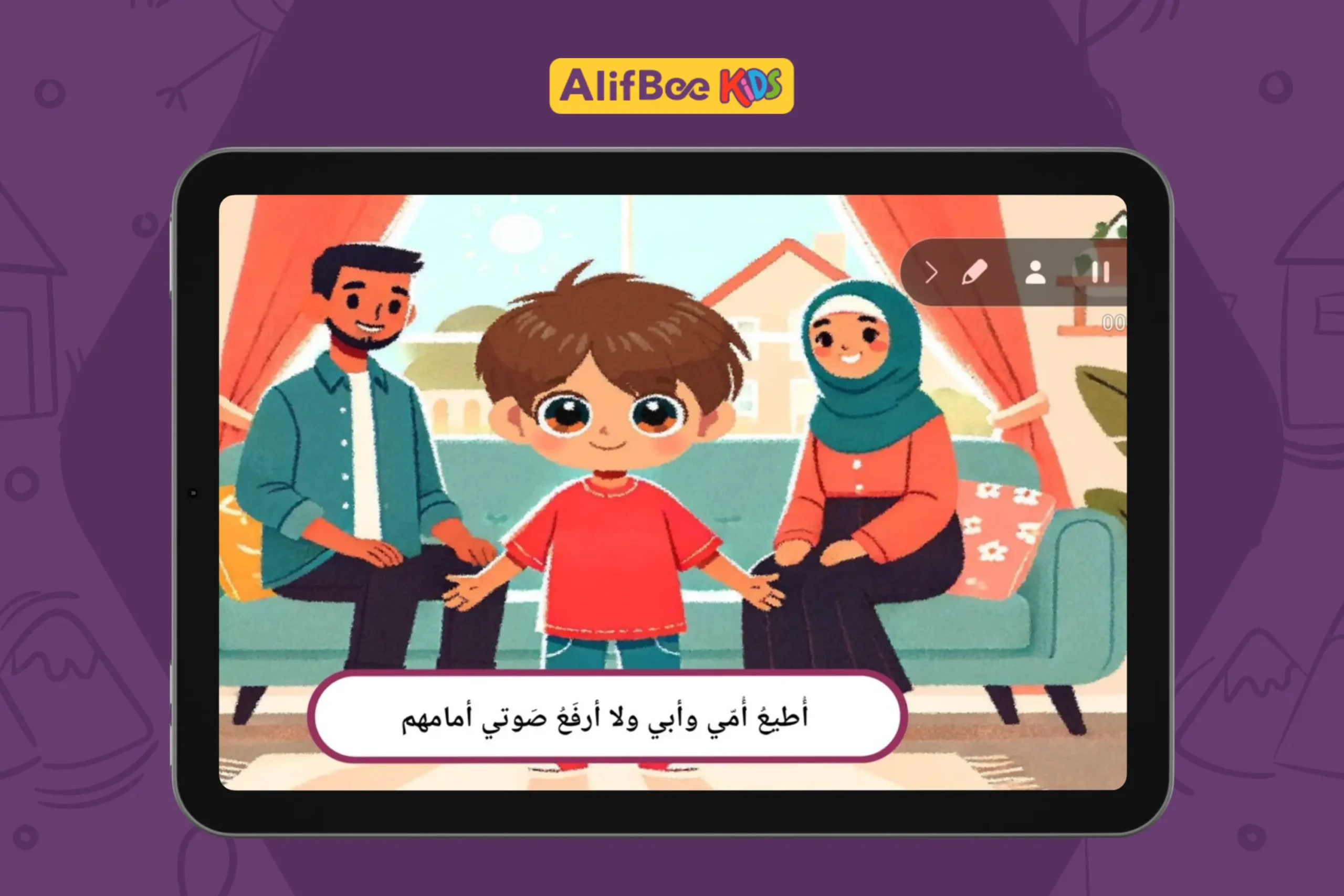
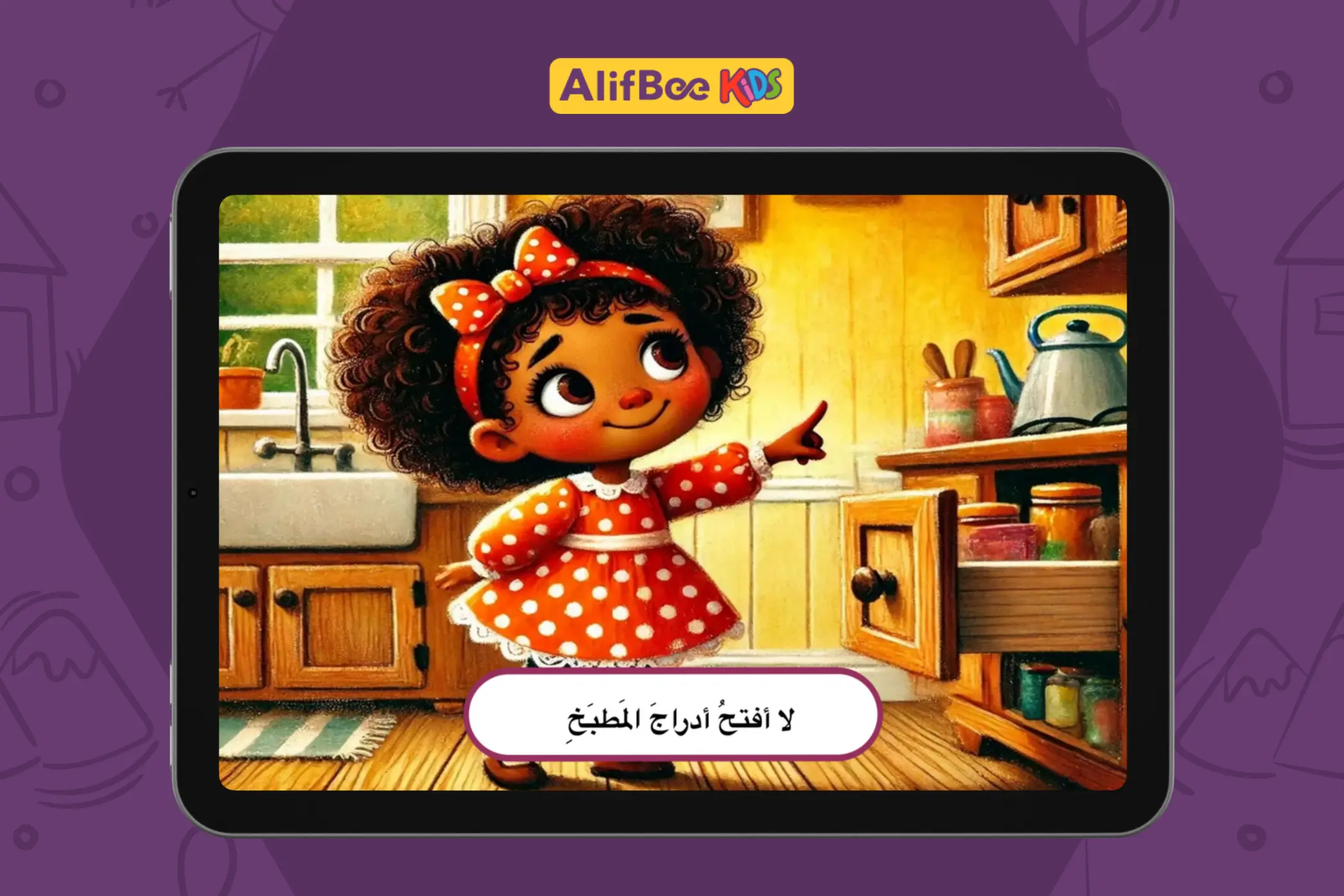
In the app, there is a dedicated section for interactive stories. These are simple stories in Arabic that kids from 3-10 can interact with and learn Arabic from while enjoying their time.
2- AlifBee’s YouTube Channel
Listening to short story videos is a great first step for early learners. AlifBee’s YouTube channel provides free Arabic videos of stories in both Arabic and English.
3- AlifBee Tamkeen
AlifBee Tamkeen is another Arabic learning resource from AlifBee. It is a great website that offers a wide selection of free stories you can start with before investing in your child’s own library. It will help you find the suitable story depending on your child’s age, level and interests.
Conclusion
Learning Arabic through stories is an intelligent choice that will benefit your child both in the short and long run. Visit AlifBee Kids for unlimited resources that will have your back through this amazing journey!